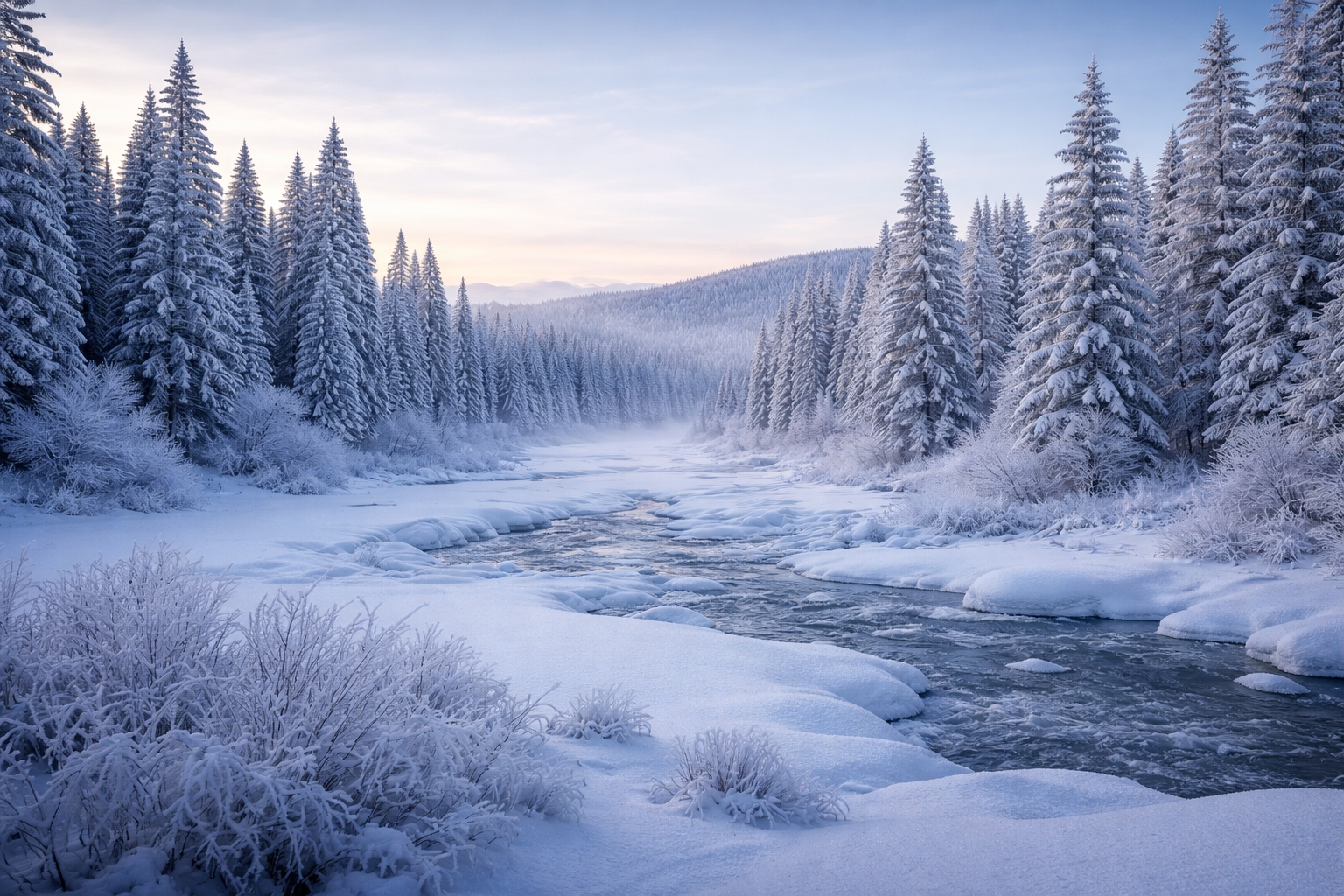
The Coldest It’s Ever Been in Michigan – Record-Breaking Temperatures Explained
Michigan has experienced some of the most extreme cold temperatures ever recorded in the continental United States. The coldest it has ever been in Michigan occurred when Arctic air masses collided with the state’s geography, producing record-setting lows that still stand today. Understanding how cold Michigan has gotten, where these extremes occurred, and why they happen provides essential context for travelers, historians, and anyone planning future visits to the state.
The coldest temperature ever recorded in Michigan was minus 51 degrees Fahrenheit, documented in the Upper Peninsula during the early twentieth century. This record remains unmatched and serves as a defining benchmark for Michigan’s winter climate. While such extreme cold is rare, Michigan’s position in the Midwest, surrounded by the Great Lakes and exposed to Arctic air, makes it uniquely susceptible to powerful cold outbreaks.
What Is the Coldest Temperature Ever Recorded in Michigan?
The coldest temperature ever recorded in Michigan was minus 51 degrees Fahrenheit, observed on February 9, 1934, in Vanderbilt, Michigan. This historic low occurred during a period of intense Arctic air intrusion, when continental polar air masses plunged deep into the Midwest.
Key facts about Michigan’s coldest temperature:
-
Temperature: minus 51 degrees Fahrenheit
-
Location: Vanderbilt, Michigan
-
Date: February 9, 1934
-
Region: Northern Lower Peninsula near the Upper Peninsula boundary
This temperature remains the official all-time low for the state and is frequently referenced in climatological studies, NOAA records, and historical weather analysis.
The Coldest Day in Michigan History
While the coldest temperature marks a single data point, the coldest day in Michigan history refers to widespread extreme cold affecting large portions of the state.
During early February 1934:
-
Multiple locations experienced temperatures below minus 40 degrees
-
Daytime highs failed to rise above zero in many regions
-
Wind chills reached life-threatening levels
-
Infrastructure and transportation were severely impacted
This period is widely regarded as the most severe cold event Michigan has ever experienced.
Coldest Places in Michigan
Michigan’s coldest temperatures are not evenly distributed across the state. Geography plays a major role.
Upper Peninsula Cold Extremes
The Upper Peninsula consistently records the lowest temperatures in Michigan due to:
-
Higher elevation
-
Distance from Lake Michigan’s moderating effects
-
Proximity to Arctic air pathways
Common cold-weather hotspots include:
-
Ironwood
-
Marquette County inland areas
-
Interior Upper Peninsula forests
Lower Peninsula Cold Zones
While generally milder than the Upper Peninsula, parts of the northern Lower Peninsula experience extreme cold, especially inland and away from lake influence.
Notable cold regions:
-
Vanderbilt
-
Grayling
-
Gaylord
-
Interior Otsego County
Why Michigan Gets So Cold
Michigan’s extreme cold is the result of several interacting climatological factors.
Arctic Air Masses
Michigan sits directly in the path of Arctic air masses that descend from northern Canada during winter. When these air masses move south without interference, temperatures can plummet rapidly.
Continental Climate Influence
Michigan experiences a continental climate, meaning:
-
Large temperature swings
-
Minimal mountain barriers to block cold air
-
Strong seasonal contrasts
Polar Vortex Events
The polar vortex refers to a large area of low pressure and cold air surrounding the poles. When the polar vortex weakens, cold air spills south into the Midwest, including Michigan.
Major polar vortex outbreaks occurred in:
-
1934
-
1979
-
1994
-
2014
-
2019
Coldest Winter Ever in Michigan
While individual days set records, some winters stand out for prolonged cold.
Winter of 1933–1934
This winter remains Michigan’s coldest on record due to:
-
Extended periods below zero
-
Multiple record lows
-
Persistent snow cover enhancing radiational cooling
Winter of 1978–1979
Known for:
-
Severe cold combined with historic snowfall
-
Extended subzero temperatures
-
Frozen Great Lakes shorelines
Winter of 2013–2014
While not record-setting for absolute cold, this winter featured:
-
Repeated polar vortex events
-
Prolonged below-average temperatures
-
Widespread infrastructure strain
Upper Peninsula vs Lower Peninsula Temperatures
The temperature difference between Michigan’s two peninsulas can be dramatic.
Upper Peninsula characteristics:
-
Colder winters
-
Longer snow season
-
More frequent subzero nights
Lower Peninsula characteristics:
-
Slightly moderated by Lake Michigan
-
Shorter duration of extreme cold
-
Greater variability near shorelines
In extreme events, however, both peninsulas can experience dangerous cold simultaneously.
Wind Chill and Extreme Cold Safety
Wind chill significantly amplifies the danger of extreme cold.
During Michigan’s coldest outbreaks:
-
Wind chills reached minus 60 degrees or colder
-
Frostbite occurred in minutes
-
Outdoor exposure became life-threatening
Historical cold events reshaped:
-
Building insulation standards
-
Emergency response planning
-
Cold weather preparedness guidelines
How Michigan Compares to Other Cold States
Michigan often ranks among the coldest states but is not always the coldest.
Comparison overview:
-
Minnesota holds the continental US record at minus 60 degrees
-
North Dakota frequently experiences colder average lows
-
Michigan’s extremes rival northern Plains states during Arctic outbreaks
Michigan’s combination of cold, wind, and snow makes it uniquely challenging during winter extremes.
The Role of the Great Lakes in Extreme Cold
The Great Lakes influence Michigan’s temperature in complex ways.
Moderating effects:
-
Lakes retain heat longer into early winter
-
Coastal areas experience milder lows initially
Enhancing effects:
-
Frozen lakes reduce heat transfer
-
Snow cover increases nighttime cooling
-
Lake effect snow can deepen cold conditions inland
During Michigan’s coldest historical events, large portions of the Great Lakes were partially frozen, reducing their moderating influence.
Climate Normals vs Extreme Records
It is important to distinguish between average winter temperatures and extreme records.
Typical winter lows:
-
Upper Peninsula: minus 10 to minus 20 degrees
-
Northern Lower Peninsula: minus 5 to minus 15 degrees
-
Southern Lower Peninsula: 0 to 10 degrees
Extreme records represent rare but impactful events rather than everyday conditions.
What This Means for Travel Planning
Michigan’s coldest temperatures are historical extremes and do not reflect typical travel conditions during the warmer months. Travelers planning trips should focus on Michigan’s seasonal diversity rather than winter extremes.
For those planning future visits:
-
Michigan’s prime travel season runs from May through October
-
Spring, summer, and fall offer mild temperatures and natural beauty
-
Winter travel is not representative of the state’s full experience
Seasonal Perspective for Mackinac Island and Northern Michigan
Northern Michigan experiences its most favorable conditions outside of winter. The region transforms during warmer months with cool summers, vibrant fall colors, and comfortable daytime temperatures.
Travelers planning for 2026 should focus on:
-
Late spring blooms
-
Summer lake breezes
-
Early fall foliage
Winter conditions, including historical cold records, serve as context rather than guidance for travel timing.
Frequently Asked Questions
Has Michigan ever reached minus 50 degrees?
Yes. Michigan recorded minus 51 degrees Fahrenheit in 1934, the coldest temperature in state history.
Is the Upper Peninsula colder than the Lower Peninsula?
Yes. The Upper Peninsula consistently experiences colder winters due to geography and elevation.
What caused Michigan’s coldest temperatures?
Strong Arctic air masses, polar vortex disruptions, and minimal atmospheric blocking.
Does Michigan still experience extreme cold today?
Extreme cold events still occur but are rare and typically shorter in duration than historic events.
Is Michigan colder than Minnesota?
Minnesota has recorded colder absolute temperatures, but Michigan experiences comparable cold during major Arctic outbreaks.
Planning Ahead for Michigan Travel in 2026
Understanding Michigan’s climate history helps travelers plan smarter and with confidence. While winter records highlight the state’s extremes, the warmer months reveal Michigan at its most accessible and inviting.
Explore Northern Michigan, Mackinac Island, and the Great Lakes region during the months when the landscape is vibrant, the air is fresh, and travel conditions are ideal.
Discover seasonal planning resources and lodging options for warmer-weather travel at
https://www.theinnatstonecliffe.com