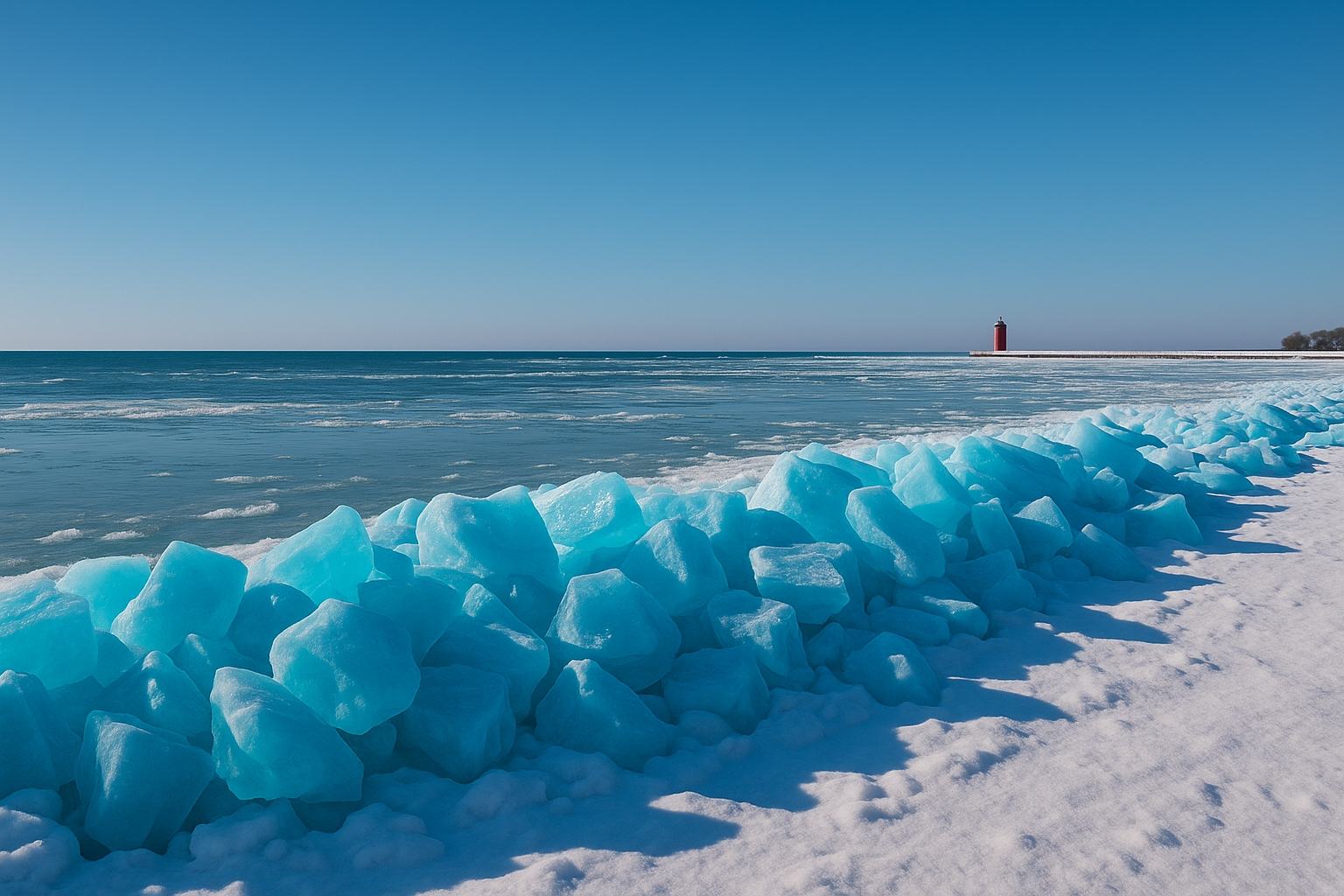
Blue Ice on Lake Michigan: Why It Happens and When to See It
Understanding Michigan’s Most Mesmerizing Winter Phenomenon
Along the frozen shores of Lake Michigan, something rare and visually stunning occasionally happens – vibrant, glacier-blue ice formations begin to appear. These dazzling structures seem lit from within, glowing with a sapphire hue that rivals the world's most iconic polar landscapes.
While these "blue ice" events are relatively rare and unpredictable, they’ve captured national attention in recent years – and sparked growing interest from winter photographers, nature lovers, and Great Lakes travelers.
This blog explains everything you need to know about the blue ice phenomenon on Lake Michigan, including:
-
Why the ice appears blue instead of white
-
Where to see blue ice along the Michigan shoreline
-
When it typically happens and what conditions are required
-
The difference between blue ice and normal lake ice
-
How it compares to glacier ice and other global ice formations
-
Why it draws travelers and photographers from across the Midwest
-
Planning ideas for warm-season travelers staying at The Inn at Stonecliffe
While The Inn at Stonecliffe is closed during winter, this guide helps future guests understand and appreciate Michigan’s year-round natural beauty – including how this rare winter event fits into the larger story of the Great Lakes region.
What Is Blue Ice on Lake Michigan?
Blue ice refers to a unique type of freshwater ice that appears bright blue, turquoise, or teal in color when viewed under the right conditions. While most ice on the Great Lakes appears white, gray, or clear, blue ice stands out as visually electric, often stacking up in jagged blocks along frozen shorelines.
The phenomenon is most often spotted in:
-
South Haven, Michigan
-
St. Joseph, Michigan
-
Sleeping Bear Dunes National Lakeshore
-
Leelanau Peninsula
-
Upper Peninsula shoreline parks
Why Does the Ice Turn Blue?
Blue ice forms when certain light and structural conditions are met during the freezing process. Here’s a breakdown of how it works:
Scientific Explanation:
-
Compression of snow-free ice
-
As ice layers form and refreeze under pressure, air bubbles are squeezed out
-
-
Ice becomes extremely dense
-
Dense ice absorbs longer wavelengths of light (reds, yellows)
-
-
Only shorter wavelengths (blue) are reflected
-
This causes the surface to appear blue to the human eye
-
Conditions Required for Blue Ice to Form
Not every cold spell produces blue ice. Several specific conditions need to align.
| Condition | Description |
|---|---|
| Sub-zero temperatures | Sustained freezing weather for 1–3 weeks |
| Calm waters | Minimal wave action during ice formation |
| No snow accumulation | Snow diffuses light, preventing blue hues |
| Refreezing of clear layers | Multiple layers increase density and purge air bubbles |
| Sunlight | Clear skies help reveal and enhance blue coloration |
Where to See Blue Ice on Lake Michigan
While blue ice can form anywhere along Lake Michigan, it’s most frequently spotted along western Michigan’s shoreline.
1. South Haven, Michigan
-
Famous viewing spot: South Haven Lighthouse Pier
-
Accessibility: Easy winter access from downtown
-
Photo appeal: Vibrant blue ice against red lighthouse
2. St. Joseph, Michigan
-
Location: Silver Beach County Park
-
Highlights: Layers of blue ice blocks washed ashore
-
Visuals: Wide beach exposure enhances sunlight refraction
3. Sleeping Bear Dunes National Lakeshore
-
Viewpoints: Empire Bluff Trail, Esch Road Beach
-
Rarity: Occasional, but stunning when conditions are right
-
Best during: February freezes with calm lake conditions
4. Leelanau Peninsula
-
Villages: Leland (Fishtown), Glen Arbor
-
Vantage points: Shoreline parks with minimal foot traffic
-
Bonus: Photogenic framing with snowy forests
When Is the Best Time to See Blue Ice?
The blue ice phenomenon typically occurs in late January through February, depending on weather fluctuations and storm patterns.
| Timeframe | Conditions You Need |
|---|---|
| Mid–Late January | Begin monitoring shoreline activity |
| Early February | Prime window for cold + clear skies |
| Late February | Peak ice formations if weather holds |
| March | Less likely due to melting and snowfall |
Note: There is no guarantee blue ice will form every year. It depends on environmental conditions that change annually.
Comparison: Blue Ice vs White Ice
| Feature | White Ice | Blue Ice |
|---|---|---|
| Color Appearance | White, gray, or opaque | Blue, turquoise, sometimes teal |
| Structure | Air pockets, fluffy snowpack | Dense, compact, refrozen layers |
| Formation Process | Standard lake ice under snow | Multiple freezing cycles under pressure |
| Visibility | Common across Great Lakes | Rare, location-specific |
| Photo Worthiness | Moderate | Extremely high |
Global Context: Where Else Does Blue Ice Occur?
Blue ice is not unique to Michigan. It also occurs in:
-
Glaciers – Antarctica, Alaska, Iceland, Patagonia
-
High mountain lakes – Himalayas, Canadian Rockies
-
Ocean ice fields – Greenland, Arctic circle
However, Lake Michigan is among the only places in the continental U.S. where inland freshwater blue ice is visible from shore and easily accessible to travelers.
Frequently Asked Questions About Blue Ice on Lake Michigan
What causes blue ice to appear on Lake Michigan?
Blue ice forms when ice layers freeze under pressure, exclude air bubbles, and reflect only blue wavelengths of sunlight.
Where can I see blue ice in Michigan?
South Haven and St. Joseph are the most reliable viewing spots, with occasional sightings at Sleeping Bear Dunes and the Leelanau shoreline.
When does blue ice happen?
Typically during cold, calm, and sunny weeks in late January through February.
Is blue ice dangerous?
While beautiful, do not walk on lake ice unless it has been professionally tested for safety. Shoreline viewing is the best option.
How rare is blue ice on the Great Lakes?
It’s relatively rare. Some years see no occurrences, while others offer a 1–2 week window of vivid blue ice near shore.
Planning a Summer Stay? How to Experience Michigan’s Natural Wonders Year-Round
While blue ice is strictly a winter phenomenon, Michigan’s natural beauty extends through all seasons. If you're planning a visit during the May–October season, The Inn at Stonecliffe offers a perfect base for exploring other Lake Michigan wonders.
Spring–Fall Natural Phenomena Near Mackinac Island:
-
Lilac bloom season (May–June)
-
Northern Lights (rare, but possible in September)
-
Fall foliage over the Straits of Mackinac (October)
-
Starry sky visibility from the West Bluff
-
Bioluminescence events (occasional along Michigan’s west coast)
Stay at The Inn at Stonecliffe (May–October Only)
-
Historic bluff-top mansion
-
Sunset views over Lake Michigan
-
Quiet, secluded setting above the Straits
-
Ideal for photographers, nature lovers, and couples
Blue Ice vs Glacier Ice: What’s the Difference?
| Characteristic | Blue Ice (Lake Michigan) | Glacier Ice |
|---|---|---|
| Location | Great Lakes shoreline | High-altitude or polar glaciers |
| Age | Days to weeks old | Often hundreds to thousands of years old |
| Source of Water | Surface freezing of freshwater | Snow compaction over time |
| Volume | Typically thin layers or piles | Massive, slow-moving rivers of ice |
| Accessibility | From shore, easy in Michigan | Remote, expedition-grade access |
Photography Tips for Capturing Blue Ice
If you’re in Michigan during the winter months, consider the following:
Best Gear:
-
Polarizing filter (to reduce glare and deepen blue tones)
-
Tripod (for early morning or twilight shots)
-
Drone (check local laws, ideal for aerial patterns)
-
Gloves with touchscreen tips
-
Lens hood to block snow glare
Best Times to Shoot:
-
Midday sunlight for purest blue reflection
-
Golden hour for contrast
-
Overcast days for diffused glow
Final Thoughts: Nature’s Rarest Colors on Display
Blue ice on Lake Michigan is one of those fleeting wonders that feels almost otherworldly — a glimpse into Arctic beauty right here in the Midwest. Whether you're an amateur photographer, a geology buff, or simply in awe of Earth's beauty, witnessing this phenomenon even once is unforgettable.
Though The Inn at Stonecliffe is closed during the winter when blue ice appears, the story of this rare event is part of the broader magic that makes Northern Michigan one of the most captivating natural regions in the United States.
Experience Lake Michigan’s Magic with The Inn at Stonecliffe
Plan your spring, summer, or fall getaway to Mackinac Island with a stay at The Inn at Stonecliffe, where you’ll enjoy:
-
Unrivaled views of the Straits of Mackinac
-
Quiet estate living on the West Bluff
-
Historic charm and modern amenities
-
Access to nature, history, and island culture
-
An ideal base to explore Northern Michigan year-round
Book your stay between May and October to enjoy the best of Mackinac Island and the surrounding region’s natural wonders — with or without blue ice, the magic of the lake never fades.
Read other posts