Devil’s Kitchen Mackinac Island: History, Legend, and How to Visit in 2026
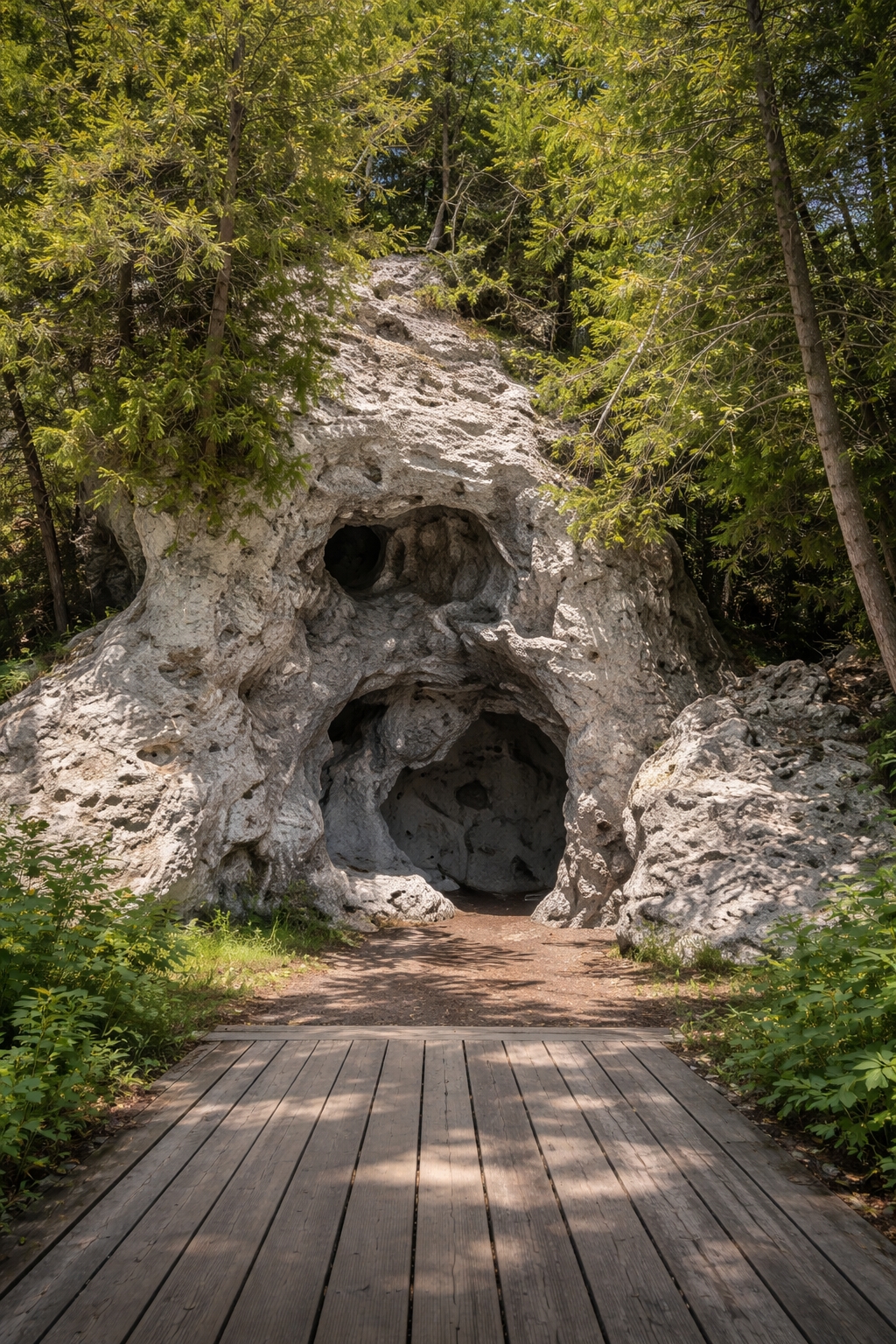
Devil’s Kitchen on Mackinac Island is one of the island’s most intriguing natural landmarks, blending geology, legend, and scenic beauty into a single destination. Located along the island’s eastern bluff, Devil’s Kitchen is a limestone formation shaped over thousands of years by erosion, groundwater movement, and the natural forces that define Mackinac Island’s landscape. Known for its dramatic appearance and mysterious name, it remains a must-see stop for travelers planning a Mackinac Island visit between May and October.
For visitors planning a 2026 Mackinac Island trip, Devil’s Kitchen offers a rare combination of accessible hiking, historical storytelling, and connection to other iconic sites like Arch Rock. Whether you are interested in natural history, Native American folklore, or scenic exploration, Devil’s Kitchen provides a deeper understanding of why Mackinac Island is unlike anywhere else in the Great Lakes.
What Is Devil’s Kitchen on Mackinac Island?
Devil’s Kitchen is a recessed limestone formation carved into the island’s eastern bluff. It appears as a shallow cave or hollowed chamber in the rock face, formed naturally through erosion rather than human construction. While it may look dramatic, Devil’s Kitchen is not a cave in the traditional sense. Instead, it is the result of water filtering through limestone layers, gradually dissolving and reshaping the rock over centuries.
The formation sits above Lake Huron and is part of the broader geological story that defines Mackinac Island, where ancient seabeds were lifted and sculpted into cliffs, arches, and bluffs.
Why Is It Called Devil’s Kitchen?
The name Devil’s Kitchen comes from early folklore rather than physical danger. According to traditional stories, Native American legends described the site as a place of spiritual significance, where powerful forces were believed to dwell. Early European settlers later adapted these stories, applying the name Devil’s Kitchen to reflect the mysterious and otherworldly nature of the formation.
In Ojibwe tradition, unusual rock formations were often associated with spirits rather than evil. Over time, the interpretation shifted, and the dramatic hollow in the rock face became known as Devil’s Kitchen.
Devil’s Kitchen Mackinac Island History and Folklore
Long before Mackinac Island became a summer retreat, it held deep cultural importance for Native American tribes, particularly the Ojibwe. The island was considered sacred due to its location at the confluence of major waterways and its striking geological features.
Devil’s Kitchen was believed to be a place where spirits gathered or passed through. Some stories describe it as a cooking place for powerful beings, while others frame it as a spiritual marker along the island’s natural ridgeline. These legends were passed down orally and later recorded by early historians and missionaries.
Today, Devil’s Kitchen stands as a reminder that Mackinac Island’s history extends far beyond Victorian hotels and horse-drawn carriages.
The Geology Behind Devil’s Kitchen
Devil’s Kitchen is composed primarily of limestone, a sedimentary rock formed from ancient marine organisms. During prehistoric periods, Mackinac Island was submerged under warm, shallow seas. As water levels receded and tectonic forces lifted the land, limestone layers were exposed to air, rain, and freeze-thaw cycles.
Over time, slightly acidic rainwater seeped into cracks in the limestone, slowly dissolving the rock and expanding natural cavities. This process, known as karst erosion, is responsible for many of Mackinac Island’s most famous formations, including Arch Rock and Sugar Loaf.
Where Is Devil’s Kitchen Located on Mackinac Island?
Devil’s Kitchen is located on the eastern side of Mackinac Island along the bluff between Fort Holmes and Arch Rock. It sits just off one of the island’s scenic walking paths, making it easy to include in a longer loop hike or bike ride.
Nearby landmarks include:
-
East Bluff scenic overlooks
Its location makes Devil’s Kitchen a natural stopping point while exploring the island’s higher elevations.
How to Get to Devil’s Kitchen Mackinac Island
Devil’s Kitchen is accessible by foot or bicycle using Mackinac Island’s trail system. Since motor vehicles are not permitted on the island, most visitors reach the site by walking from downtown or biking along the bluff trails.
Approximate walking times:
-
From downtown Mackinac Island: 25 to 35 minutes
-
From Arch Rock: 10 minutes
-
From Fort Holmes: 10 to 15 minutes
The trail is well-maintained and suitable for most fitness levels, though some inclines are present.
Devil’s Kitchen Mackinac Island Hiking Experience
The hike to Devil’s Kitchen is considered moderate and scenic rather than strenuous. Visitors can expect shaded paths, limestone outcroppings, and occasional lake views through the trees. The area around Devil’s Kitchen is quiet compared to downtown, making it ideal for travelers seeking a more peaceful experience.
This hike pairs well with visits to nearby natural landmarks, creating a rewarding half-day exploration of Mackinac Island’s eastern bluff.
Best Time to Visit Devil’s Kitchen Mackinac Island
Devil’s Kitchen is best visited between May and October, when Mackinac Island is fully accessible and the trails are open. Each season offers a different experience:
-
May and June feature cooler temperatures and spring greenery
-
July and August provide warm weather and extended daylight
-
September and October showcase fall colors and quieter trails
Winter visits are not recommended, as the island’s tourism infrastructure is seasonal and many services are unavailable.
Photography and Scenic Views at Devil’s Kitchen
Devil’s Kitchen offers excellent opportunities for photography, particularly for visitors interested in natural textures and geological details. The contrast between limestone rock, forest growth, and filtered light creates a dramatic visual environment.
While Devil’s Kitchen itself does not provide panoramic lake views, nearby overlooks along the bluff offer sweeping perspectives of Lake Huron.
Devil’s Kitchen and Arch Rock: A Natural Pair
Many visitors combine Devil’s Kitchen with a stop at Arch Rock, one of Mackinac Island’s most iconic landmarks. Both formations were shaped by the same geological processes and reflect the island’s limestone composition.
Visiting both sites provides a deeper appreciation for how water, time, and elevation shaped the island’s landscape.
Why Devil’s Kitchen Is Worth Visiting
Devil’s Kitchen is worth visiting for travelers who want more than surface-level sightseeing. It offers:
-
A connection to Native American history
-
Insight into Mackinac Island geology
-
A quieter alternative to heavily trafficked attractions
-
Easy access via scenic trails
For 2026 travelers focused on meaningful experiences, Devil’s Kitchen adds depth to any Mackinac Island itinerary.
Planning Your Mackinac Island Stay
Exploring Devil’s Kitchen and other natural landmarks is best enjoyed when staying near the island’s scenic bluffs and trail systems. Choosing accommodations that provide easy access to nature, historic sites, and quiet surroundings allows visitors to experience Mackinac Island at a slower, more intentional pace.
Travelers planning a Mackinac Island visit between May and October can explore lodging options that complement a nature-focused itinerary and provide a relaxing base for discovery.
Learn more about planning your Mackinac Island stay at https://www.theinnatstonecliffe.com
Read other posts