FAQs About the Great Lakes in Winter: Ice, Snow, Safety, and Natural Wonders
Explore the most frequently asked questions about the Great Lakes during winter — from freezing patterns and lake effect snow to safety, climate trends, and rare phenomena.
Table of Contents
-
Introduction: Why Are the Great Lakes So Fascinating in Winter?
-
Do the Great Lakes Freeze in Winter?
-
Which Great Lake Freezes First?
-
Do the Great Lakes Freeze Completely?
-
What Is Blue Ice and Where Can You See It?
-
What Causes Lake Effect Snow?
-
Where Does Lake Effect Snow Happen the Most?
-
What Are Ice Volcanoes and Ice Pancakes?
-
Are the Great Lakes Dangerous in Winter?
-
Can You Walk, Skate, or Drive on the Great Lakes in Winter?
-
How Is Climate Change Impacting Great Lakes Winters?
-
How Cold Does It Get on the Great Lakes in Winter?
-
Can You Visit the Great Lakes Region in Winter?
-
What Wildlife Survives Around the Great Lakes During Winter?
-
Rare Winter Weather Phenomena of the Great Lakes
-
Plan a Warmer-Season Visit to Mackinac Island and The Inn at Stonecliffe
-
FAQs Recap: Quick Answers to the Most Common Questions
-
Final Thoughts
1. Introduction: Why Are the Great Lakes So Fascinating in Winter?
The Great Lakes are the largest freshwater system in the world, and during winter they undergo some of the most dramatic transformations found in North America. From frozen shorelines and lake effect snowstorms to rare natural phenomena like blue ice, ice volcanoes, and steam fog, winter turns these inland seas into a frozen wilderness.
This guide answers the most commonly searched questions about the Great Lakes in winter and offers insight into the science, safety, natural beauty, and climate significance of this awe-inspiring region.
2. Do the Great Lakes Freeze in Winter?
Yes, the Great Lakes do freeze in winter, but not all the way across and not all at once.
Key Facts:
-
Ice typically begins forming in late November to early December.
-
Lake Erie freezes the most consistently due to its shallowness.
-
The lakes typically reach peak ice coverage in mid to late February.
Ice Coverage Statistics (NOAA Averages):
| Lake | Avg. Winter Ice Coverage (%) | Peak Ice Month |
|---|---|---|
| Lake Erie | 85 – 95% | February |
| Lake Huron | 70 – 85% | February |
| Lake Superior | 60 – 80% | March |
| Lake Michigan | 35 – 60% | February |
| Lake Ontario | 10 – 25% | February |
3. Which Great Lake Freezes First?
Lake Erie almost always freezes first.
Why?
-
It is the shallowest Great Lake (avg. depth: 62 feet).
-
It cools faster than deeper lakes like Superior or Michigan.
-
Cold winds from Canada often pass directly over Lake Erie.
4. Do the Great Lakes Freeze Completely?
No — even in extreme winters, the Great Lakes do not freeze solid.
The last time the lakes came close to total freeze was 2014, when 92.5% of surface area was frozen due to a polar vortex.
Why Not?
-
Depth and volume: Deeper lakes retain heat
-
Wind action: Keeps water moving and prevents full ice coverage
-
Thermal inertia: Water resists rapid temperature changes
5. What Is Blue Ice and Where Can You See It?
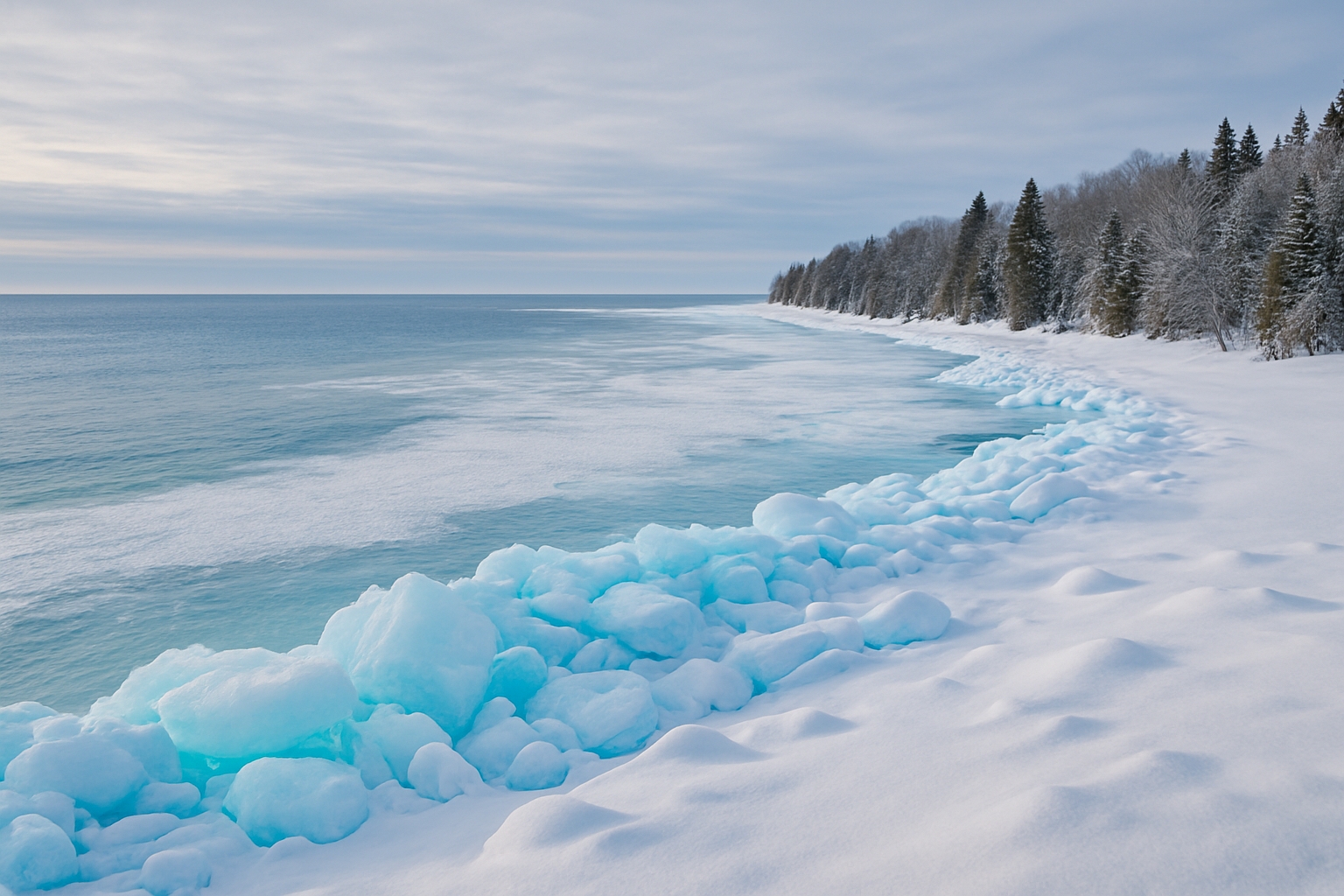
Blue ice is a rare phenomenon where highly compressed lake ice appears turquoise or deep blue.
Where It Appears:
-
Most common on Lake Michigan and Lake Huron
-
Often seen near Mackinac Island, Sleeping Bear Dunes, and St. Ignace
Conditions Needed:
-
Cold, dry air for several days
-
Minimal snow on the ice
-
Ice that forms in thick, slow layers
6. What Causes Lake Effect Snow?
Lake effect snow forms when cold, dry air moves across warmer lake water, picking up moisture and dumping it as snow when the air reaches land.
Conditions Required:
-
Open, unfrozen lake surface
-
Cold air at least 13°F colder than lake water
-
Sufficient fetch (distance air travels over water)
-
Aligned wind direction and lake axis
Most Impacted States:
-
Michigan
-
New York
-
Pennsylvania
-
Ohio
7. Where Does Lake Effect Snow Happen the Most?
| Location | Lake Source | Avg. Annual Snowfall |
| Buffalo, NY | Lake Erie | 90+ inches |
| Tug Hill Plateau | Lake Ontario | 200+ inches |
| Marquette, MI | Lake Superior | 150+ inches |
| Traverse City, MI | Lake Michigan | 100+ inches |
| Erie, PA | Lake Erie | 100+ inches |
Lake Michigan's Impact:
-
Both eastern and western shores of Lake Michigan receive heavy lake effect snow.
8. What Are Ice Volcanoes and Ice Pancakes?
Ice Volcanoes:
-
Cone-shaped mounds formed by wave spray erupting through shore ice
-
Most common on Lake Ontario and Lake Michigan
-
Appear during early winter and require strong onshore winds
Ice Pancakes:
-
Circular floating ice discs with raised edges
-
Created when slushy water is agitated by wind or waves
9. Are the Great Lakes Dangerous in Winter?
Yes — the lakes can be very dangerous due to:
-
Thin or unstable ice
-
Ice shelves that collapse under weight
-
Rapidly changing weather and whiteout conditions
-
Hypothermia risk from frigid water
Always check NOAA advisories, ice thickness reports, and avoid walking on unfamiliar ice.
10. Can You Walk, Skate, or Drive on the Great Lakes in Winter?
In some shallow, well-monitored areas, yes — but caution is essential.
Ice Thickness Guidelines:
| Activity | Minimum Ice Thickness |
| Walking | 4 inches |
| Snowmobiling | 5 – 6 inches |
| Small vehicle | 8 – 12 inches |
Do not walk on ice shelves or near warm discharge zones.
11. How Is Climate Change Impacting Great Lakes Winters?
Observed Trends:
-
Shorter freeze periods
-
Later ice formation and earlier thawing
-
More winter rain events
-
Initial increase in lake effect snow due to warmer lakes
Long-Term Forecasts:
-
Less frequent full-lake freezes
-
Increasing volatility in winter storms and temperatures
12. How Cold Does It Get on the Great Lakes in Winter?
Record Lows by Lake:
| Lake | Coldest Recorded Temp |
| Lake Superior | -36°F (Marquette, MI) |
| Lake Michigan | -28°F (Muskegon, MI) |
| Lake Erie | -18°F (Cleveland, OH) |
| Lake Ontario | -21°F (Watertown, NY) |
Wind Chill:
-
Can reach -40°F or lower during Arctic outbreaks
-
Lake winds amplify cold and increase risk of frostbite
13. Can You Visit the Great Lakes Region in Winter?
Yes, but most destinations require advanced planning and winter-specific gear.
Winter Travel Considerations:
-
Mackinac Island is closed to visitors in winter (including The Inn at Stonecliffe)
-
Roads may be icy or snow-covered
-
Some parks and trails may be closed or unmaintained
Instead, plan your visit to the region during the warmer months for safe access and full amenities.
14. What Wildlife Survives Around the Great Lakes During Winter?
Common Winter Survivors:
-
White-tailed deer
-
Snowy owls (along Lake Huron and Michigan)
-
Coyotes and foxes
-
Ice-fishing birds like bald eagles
Under the Ice:
-
Fish like lake trout, whitefish, and walleye remain active below the surface
15. Rare Winter Weather Phenomena of the Great Lakes
Top 5 Rarest Events:
-
Blue Ice
-
Ice Volcanoes
-
Steam Fog / Arctic Sea Smoke
-
Ice Pancakes
-
Sudden Thaw and Refreeze Cracking Events
These visually stunning occurrences are seasonal and weather-dependent, often best observed in January through February.
16. Plan a Warmer-Season Visit to Mackinac Island and The Inn at Stonecliffe
Open Season: May through October
While winter transforms the Great Lakes, The Inn at Stonecliffe reopens each spring to offer guests a peaceful, luxurious retreat on Mackinac Island.
Why Visit During Warm Months?
-
No winter travel hazards
-
Lush gardens, forest trails, and lake views
-
Perfect for weddings, honeymoons, and family getaways
Summer Activities:
-
Bike the 8.2-mile island loop along Lake Huron
-
Watch freighters sail past the Straits of Mackinac
-
Relax at The Inn’s historic mansion and modern suites
17. FAQs Recap: Quick Answers to the Most Common Questions
-
Do the Great Lakes freeze? Yes, but not completely.
-
Which lake freezes first? Lake Erie.
-
What is blue ice? Densely packed ice that appears blue due to light refraction.
-
Is lake effect snow caused by the lakes? Yes, when cold air passes over warm lake water.
-
Can I walk on the ice? Only when it’s thick enough and locally approved.
-
Is it safe to visit in winter? Some areas are accessible, but Mackinac Island is closed.
18. Final Thoughts
The Great Lakes in winter are both beautiful and extreme — a natural wonder filled with icy phenomena, rare weather events, and important climate insights. Whether you're planning a future trip, researching geography, or simply indulging your curiosity, these inland seas continue to captivate.
To experience the softer side of the Great Lakes, we invite you to visit Mackinac Island during our open season from May through October, when the forests are green, the waters shimmer, and the stories of winter give way to spring’s renewal.
Your lakeside escape begins when the ice melts — only at The Inn at Stonecliffe.
Read other posts