Fort Mackinac After the American Revolution: How a British Stronghold Shaped the Great Lakes Frontier
Fort Mackinac did not immediately become American after the American Revolution ended. Although the Treaty of Paris in 1783 formally recognized United States independence, Britain retained control of Fort Mackinac for more than a decade. This decision shaped military strategy, Native American relations, trade networks, and future conflict in the Great Lakes region. Understanding what happened to Fort Mackinac after the American Revolution reveals why this remote post remained one of the most strategically important forts in early American history.
Fort Mackinac at the End of the Revolutionary War
At the close of the American Revolution, Fort Mackinac occupied a powerful position on Mackinac Island, overlooking the straits connecting Lake Michigan and Lake Huron. Control of this narrow passage meant influence over trade routes, military movement, and alliances throughout the Upper Great Lakes.
Although the war ended in 1783, the realities on the frontier were far more complex than treaty language suggested.
The Treaty of Paris and the Problem of Frontier Control
The Treaty of Paris officially ended the American Revolution and required Britain to cede its forts in the Northwest Territory to the United States. On paper, Fort Mackinac should have been transferred shortly after the treaty was signed.
In practice, Britain delayed withdrawal for several reasons:
-
The United States lacked the military presence to enforce control
-
British officials questioned whether Americans would honor debts and Loyalist protections
-
Native American allies strongly opposed American expansion
-
The fur trade economy depended on British commercial networks
As a result, Fort Mackinac remained firmly under British control well into the 1790s.
Why Britain Kept Fort Mackinac After 1783
Fort Mackinac was more than a military outpost. It functioned as:
-
A center of the fur trade
-
A diplomatic hub for Native American alliances
-
A strategic chokepoint in the Great Lakes
By maintaining control of Fort Mackinac, Britain protected its economic interests and limited American influence in the region.
The Fur Trade and Economic Power
The Upper Great Lakes fur trade was dominated by British merchants and Indigenous trading networks. Fort Mackinac served as a distribution center linking:
-
Indigenous trappers
-
French Canadian traders
-
British commercial firms
Relinquishing the fort would have meant losing control over one of the most lucrative trade systems in North America.
Native American Alliances and British Strategy
Many Native American nations viewed Britain as a more reliable partner than the expanding United States. British officials used Fort Mackinac to:
-
Supply allied tribes
-
Coordinate diplomacy
-
Resist American settlement
This alliance system became a cornerstone of British frontier strategy.
Life at Fort Mackinac in the Late 1700s
After the Revolutionary War, Fort Mackinac evolved into a complex community that included:
-
British soldiers
-
Fur traders
-
Indigenous families
-
Civilian settlers
Daily life revolved around trade, military drills, supply shipments, and seasonal rhythms shaped by the Great Lakes climate.
Soldiers and Civilians
The garrison was small but disciplined. Soldiers performed routine duties such as:
-
Guarding the fort
-
Maintaining defenses
-
Escorting trade goods
Civilians lived both inside and outside the fort, creating one of the earliest permanent communities on Mackinac Island.
Fort Mackinac and Rising American-British Tensions
As the United States expanded westward, tensions escalated. Americans viewed the continued British presence as a violation of sovereignty, while Britain saw the fort as essential for maintaining stability on the frontier.
These unresolved disputes laid the groundwork for future conflict.
The Jay Treaty and the Delayed Transfer
The Jay Treaty of 1794 finally addressed British retention of frontier forts. Under its terms:
-
Britain agreed to withdraw from forts in the Northwest Territory
-
The United States gained formal control of Fort Mackinac in 1796
American troops arrived to take possession, marking the first time the fort flew the American flag.
Fort Mackinac Under Early American Control
Once under American control, Fort Mackinac faced new challenges:
-
Limited resources
-
Sparse military presence
-
Continued Native American resistance
The United States struggled to assert authority in the region, and the fort remained vulnerable.
Fort Mackinac and the War of 1812
Fort Mackinac’s importance became unmistakable in 1812. When war broke out between the United States and Britain, the fort became the site of one of the earliest engagements.
British Recapture of Fort Mackinac
In July 1812, British forces and Native American allies captured Fort Mackinac without bloodshed. American troops, unaware that war had been declared, surrendered quickly.
This victory:
-
Boosted British morale
-
Reinforced Indigenous alliances
-
Disrupted American control of the Upper Great Lakes
Strategic Importance During the War
Throughout the War of 1812, Fort Mackinac served as:
-
A British command center
-
A supply depot
-
A symbol of frontier power
The United States attempted but failed to retake the fort until after the war ended.
Final Transfer to the United States
After the Treaty of Ghent ended the War of 1812, Fort Mackinac was returned to American control in 1815. From that point forward, it remained a U.S. military installation until the late 19th century.
Fort Mackinac’s Long-Term Historical Impact
Fort Mackinac’s post-Revolutionary history illustrates broader themes in American history:
-
The limits of early U.S. power
-
The importance of Native American diplomacy
-
The strategic value of Great Lakes geography
-
The persistence of British influence after independence
Fort Mackinac Today
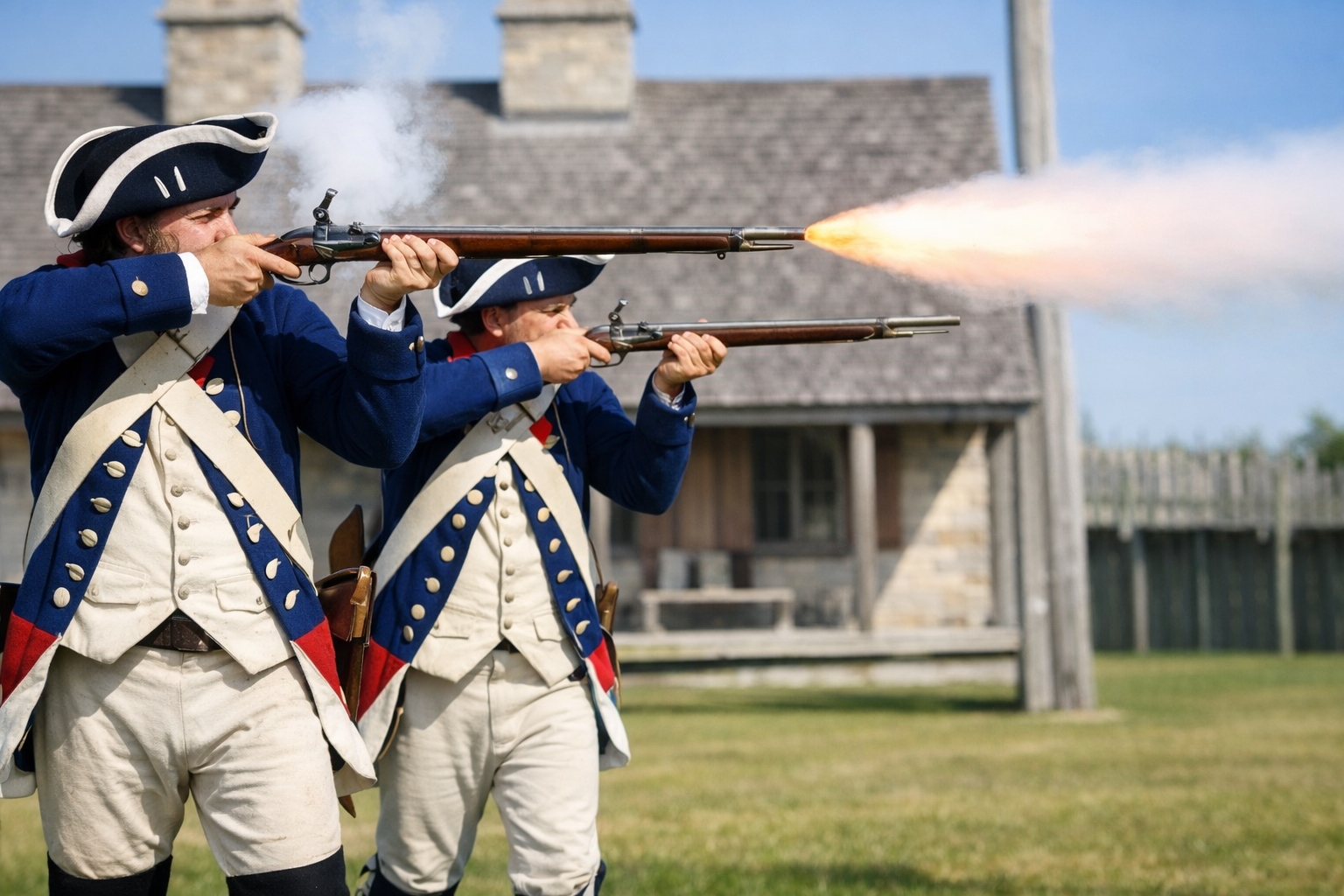
Today, Fort Mackinac stands as one of the best-preserved military outposts in the Great Lakes region. Visitors can explore:
-
Original buildings
-
Military demonstrations
-
Exhibits on British and American control
-
Panoramic views of the Straits of Mackinac
It remains a cornerstone of Mackinac Island’s historical identity.
Planning a Historic Mackinac Island Visit in 2026
For travelers planning a 2026 visit, Fort Mackinac offers an immersive look into the complex aftermath of the American Revolution. The fort is accessible during the island’s operating season from May through October, aligning with ideal weather and full historical programming.
Mackinac Island’s layered past is best experienced over multiple days, allowing time to explore its forts, natural landscapes, and cultural landmarks.
Those seeking a refined, peaceful base for exploring Mackinac Island’s history often look to the West Bluff area, where the island’s quiet atmosphere complements thoughtful exploration and historical discovery.
Explore lodging options and plan your Mackinac Island stay at https://www.theinnatstonecliffe.com
Read other posts