Fort Mackinac on Mackinac Island: History, Significance, and How to Visit in 2026
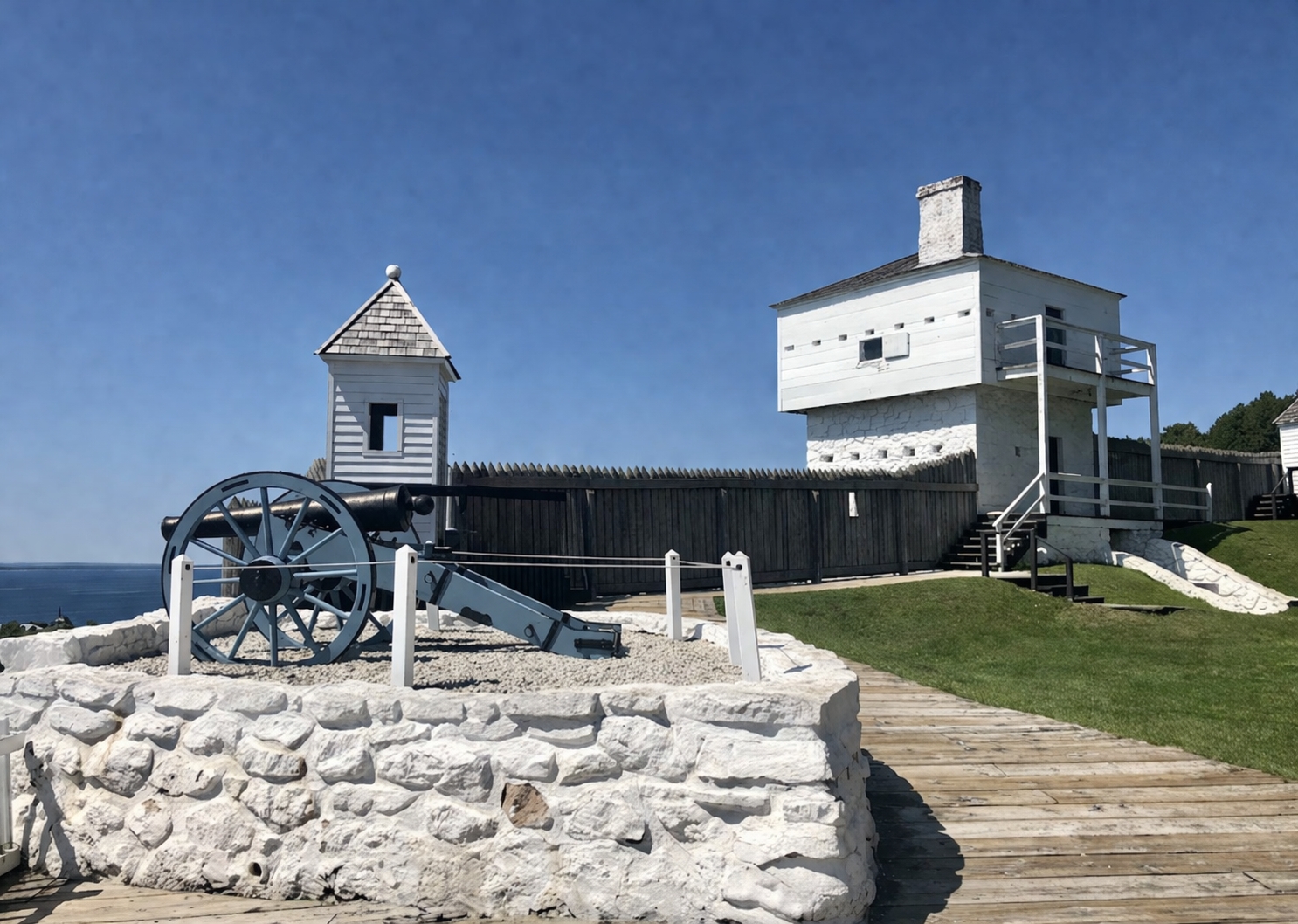
Fort Mackinac is one of the most historically significant landmarks on Mackinac Island, offering a rare, immersive look into military life on the Great Lakes frontier. Perched high above the Straits of Mackinac, this limestone fort played a central role in British and American control of the region, the War of 1812, and the development of Mackinac Island as a strategic and cultural crossroads. Today, Fort Mackinac stands as a preserved historic site where visitors can explore original buildings, watch live cannon demonstrations, and experience centuries of history in one of the most scenic settings in the Midwest.
What Is Fort Mackinac
Fort Mackinac is a preserved military outpost built in 1780 by the British during the American Revolutionary War. Unlike many frontier forts constructed of wood, Fort Mackinac was built from local limestone, making it one of the most durable and visually striking forts in the Great Lakes region.
Located on a limestone bluff above Mackinac Island’s downtown area, the fort overlooks Lake Huron and the Straits of Mackinac, offering both strategic military positioning and sweeping panoramic views.
Why Fort Mackinac Was Built
The British constructed Fort Mackinac to replace Fort Michilimackinac, which was located on the mainland near present-day Mackinaw City. Fort Michilimackinac proved vulnerable due to erosion, harsh weather, and limited defensive advantages.
Fort Mackinac offered:
-
Elevated defensive positioning
-
Clear visibility of ship traffic through the Straits
-
Improved protection against attacks
-
Proximity to key Great Lakes trade routes
Its location allowed whoever controlled the fort to dominate movement between Lake Michigan and Lake Huron.
Fort Mackinac and British Control
When Fort Mackinac was completed in 1780, it was firmly under British control. The British Empire viewed Mackinac Island as a critical hub for:
-
Fur trade operations
-
Military coordination
-
Diplomatic relations with Native American tribes
British soldiers stationed at Fort Mackinac maintained order and controlled commerce throughout the Upper Great Lakes.
Fort Mackinac After the American Revolution
Despite the end of the American Revolutionary War, the British retained control of Fort Mackinac until 1796. Under the terms of the Jay Treaty, Britain agreed to withdraw from forts on American territory, and Fort Mackinac was formally transferred to the United States.
This transition marked a significant moment in American expansion and control of the Great Lakes region.
Fort Mackinac During the War of 1812
Fort Mackinac played a dramatic role during the War of 1812. In one of the earliest engagements of the war, British forces captured Fort Mackinac from the United States without firing a shot.
Key events include:
-
Surprise British landing on Mackinac Island
-
American surrender due to lack of preparation
-
Reestablishment of British control over the fort
The British later defended the island against American attempts to retake it, reinforcing Mackinac Island’s strategic importance.
Return to American Control
After the War of 1812 ended, Fort Mackinac was returned to the United States in 1815. The U.S. Army rebuilt and expanded the fort, strengthening its defenses and infrastructure.
Under American control, Fort Mackinac evolved into:
-
A permanent military installation
-
A regional administrative center
-
A symbol of U.S. authority in the Great Lakes
Life at Fort Mackinac
Life at Fort Mackinac was structured, disciplined, and demanding. Soldiers stationed at the fort lived and worked within its limestone walls for months or years at a time.
Daily life included:
-
Military drills and inspections
-
Guard duty overlooking the Straits
-
Maintenance of weapons and buildings
-
Interaction with local civilians and traders
Officers and enlisted men lived in separate quarters, reflecting the strict social hierarchy of the time.
Fort Mackinac Architecture and Layout
Fort Mackinac features more than a dozen original buildings arranged around a central parade ground.
Notable structures include:
-
Officers’ Stone Quarters
-
Enlisted Men’s Barracks
-
The Guardhouse
-
The Post Hospital
-
Blockhouses and defensive walls
The limestone construction helped preserve the fort for centuries and gives it a distinctive appearance compared to wooden frontier forts.
Fort Mackinac Cannon Demonstrations
One of the most popular experiences at Fort Mackinac is the live cannon firing demonstration. These scheduled events provide insight into:
-
Artillery operations
-
Military signaling
-
Defensive tactics of the 18th and 19th centuries
The cannon firing also connects visitors directly to the sounds and sensations soldiers once experienced while stationed at the fort.
Costumed Interpreters and Reenactments
Fort Mackinac is known for its immersive historical interpretation. Costumed interpreters portray soldiers, officers, and civilians, bringing history to life through:
-
Demonstrations
-
Storytelling
-
Interactive conversations
These reenactments help visitors understand daily routines, military discipline, and the broader historical context of the fort.
Museum Exhibits Inside Fort Mackinac
Several buildings within Fort Mackinac house museum exhibits focused on:
-
Military uniforms and equipment
-
Personal artifacts from soldiers
-
Weapons and artillery
-
Mackinac Island’s role in regional history
These exhibits provide deeper context beyond the outdoor demonstrations.
Views From Fort Mackinac
Fort Mackinac offers some of the most impressive views on Mackinac Island. From its elevated position, visitors can see:
-
The Straits of Mackinac
-
Lake Huron
-
Downtown Mackinac Island
-
Passing freighters and ferries
These views were not only scenic but strategically vital during the fort’s active years.
Fort Mackinac vs Fort Michilimackinac
Many visitors compare Fort Mackinac with Fort Michilimackinac, another historic site located on the mainland.
Key differences include:
| Feature | Fort Mackinac | Fort Michilimackinac |
|---|---|---|
| Location | Mackinac Island bluff | Mainland shoreline |
| Construction | Limestone | Reconstructed wooden palisade |
| Era Focus | British and U.S. military | French and early British |
| Views | Elevated panoramic | Ground-level |
Visiting both sites provides a complete picture of Great Lakes military history.
How Long to Spend at Fort Mackinac
Most visitors spend:
-
1.5 to 2 hours exploring Fort Mackinac
-
Additional time watching demonstrations
-
Extra time enjoying views and exhibits
The fort can be easily combined with other nearby Mackinac Island attractions.
Best Time to Visit Fort Mackinac
Fort Mackinac is open seasonally, aligning with Mackinac Island’s travel season from May through October.
-
Summer offers the full schedule of demonstrations and reenactments
-
Fall provides cooler temperatures and fewer crowds while maintaining full access
The site is not open during the winter season.
Getting to Fort Mackinac
Fort Mackinac is accessible by foot, bicycle, or horse-drawn carriage from downtown Mackinac Island. The climb to the fort is steep but rewarding, with benches and overlooks along the way.
Other Historic Sites Near Fort Mackinac
Visitors interested in history often explore additional nearby sites, including:
-
Marquette Park
-
Avenue of Flags
-
Mackinac Island State Park landmarks
-
Historic downtown buildings
Together, these attractions create a comprehensive historical experience.
Why Fort Mackinac Still Matters
Fort Mackinac remains important because it represents:
-
The struggle for control of North America
-
The role of the Great Lakes in shaping history
-
The lived experiences of soldiers on the frontier
Its preservation allows modern visitors to connect directly with centuries of history.
Planning a 2026 Visit to Fort Mackinac
For travelers planning a 2026 visit, Fort Mackinac offers:
-
A deeply educational experience
-
Unique hands-on demonstrations
-
One of the most scenic historic settings in the Midwest
Combining history, views, and cultural interpretation, it stands as a must-see destination on Mackinac Island.
Where to Stay When Visiting Fort Mackinac
A visit to Fort Mackinac pairs naturally with staying at a property that reflects the island’s history, landscape, and sense of place. Travelers seeking a peaceful, elevated setting with easy access to historic sites often choose accommodations located away from the busiest downtown corridors while remaining close to Mackinac Island’s top attractions.
To explore lodging options and plan a 2026 Mackinac Island stay, visit https://www.theinnatstonecliffe.com
Read other posts