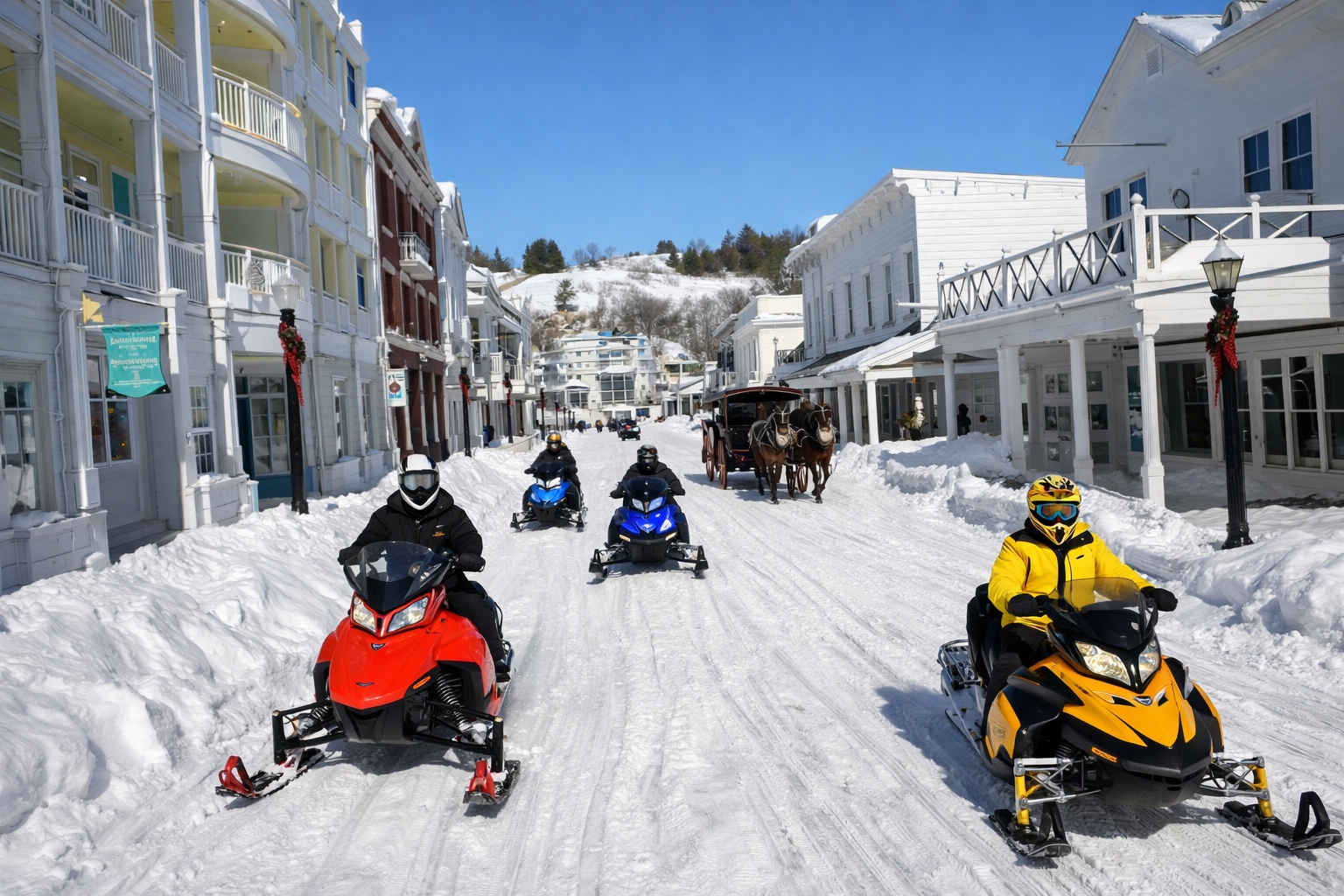
Getting Around Mackinac Island in Winter
Getting around Mackinac Island in winter looks nothing like transportation during the visitor season. Once tourism winds down and snow and ice take over, bicycles give way to snowmobiles, walking becomes weather-dependent, and movement across the island centers on practicality rather than convenience. Winter transportation exists almost entirely to support year-round residents and essential services. For travelers planning a 2026 visit, understanding winter mobility explains why Mackinac Island operates seasonally and why the April through October period offers the safest, most enjoyable way to experience the island.
Winter movement is functional, limited, and shaped by weather conditions rather than visitor needs.
How Transportation Shifts After the Visitor Season
At the close of fall, Mackinac Island undergoes a transportation reset.
Seasonal shifts include:
-
Bicycles removed from regular use
-
Snowmobiles becoming the primary motorized transport
-
Fewer horse-drawn vehicles operating
-
Increased reliance on walking for short distances
-
Snowplowing of main routes only
These changes reflect winter necessity, not tourism.
Snowmobiles as the Primary Winter Transportation
Snowmobiles replace bicycles as the island’s most efficient winter transportation method.
Why Snowmobiles Dominate Winter Travel
Snowmobiles are well-suited for winter because they:
-
Handle deep snow and ice
-
Travel efficiently across frozen surfaces
-
Require minimal infrastructure
-
Adapt to shifting weather conditions
They are used by residents for commuting, errands, and essential travel.
Snowmobile Routes and Usage
Winter snowmobile routes:
-
Follow plowed or packed paths
-
Avoid thin ice areas
-
Change frequently based on conditions
-
Are not marked for visitors
Snowmobile travel is informal and community-informed rather than regulated for tourism.
Horse Transportation During Winter
Horse-drawn transportation continues in a limited capacity during winter.
How Horses Adapt to Winter Conditions
Horses:
-
Pull sleds instead of wheeled carriages
-
Operate only when footing is safe
-
Travel shorter routes
-
Serve essential transport needs
Winter horse transportation is far less frequent than during summer.
Walking on Mackinac Island in Winter
Walking remains an option for residents, but conditions are challenging.
Winter walking realities include:
-
Snow-packed or icy sidewalks
-
Reduced daylight hours
-
Wind exposure
-
Limited cleared paths
Residents plan routes carefully and minimize unnecessary travel.
Road and Path Conditions in Winter
Only critical routes receive consistent maintenance.
Winter maintenance focuses on:
-
Main access paths
-
Emergency routes
-
Municipal service areas
-
Medical and supply corridors
Secondary paths may remain snow-covered for extended periods.
Winter Transportation vs Summer Transportation
| Category | Summer | Winter |
|---|---|---|
| Primary travel | Bicycles | Snowmobiles |
| Horse transport | Widespread | Limited |
| Walking | Easy and scenic | Weather-dependent |
| Visitor suitability | Excellent | Not suitable |
| Infrastructure | Fully maintained | Essentials only |
This contrast underscores the island’s seasonal nature.
Who Winter Transportation Is Designed For
Winter transportation serves:
-
Year-round residents
-
Emergency responders
-
Medical staff
-
Utility and municipal workers
-
Supply deliveries
It is not intended for tourists or recreational visitors.
Safety Considerations for Winter Mobility
Winter travel requires constant caution.
Key safety concerns include:
-
Ice thickness variability
-
Sudden weather changes
-
Limited emergency access
-
Reduced visibility
Residents rely on local knowledge and experience.
Why Winter Transportation Is Not Visitor-Friendly
Winter mobility is unsuitable for visitors because:
-
Routes are not clearly marked
-
Conditions change rapidly
-
Equipment and knowledge are required
-
Services are limited
These realities reinforce seasonal travel planning.
When Transportation Transitions Back to Visitor Mode
Transportation gradually shifts back in spring.
Typical timeline:
-
Snowmobiles phased out
-
Bicycles return to regular use
-
Horse-drawn vehicles increase
-
Walking paths are cleared
-
Visitor-friendly infrastructure restored
This transition marks the reopening of the island.
Best Time to Experience Mackinac Island Transportation
The best time to experience Mackinac Island’s iconic transportation is during the April through October season, when:
-
Bicycles dominate the streets
-
Horse-drawn carriages operate regularly
-
Walking is safe and scenic
-
Transportation is accessible and intuitive
Winter transportation is functional, not experiential.
How The Inn at Stonecliffe Aligns With Seasonal Transportation
The Inn at Stonecliffe operates from April through October, aligning with:
-
Safe and reliable transportation
-
Full access to island amenities
-
Visitor-friendly mobility
-
Comfortable travel conditions
This ensures guests experience Mackinac Island as intended.
Frequently Asked Questions
How do people get around Mackinac Island in winter?
Residents primarily use snowmobiles, with limited horse-drawn transport and walking for short distances.
Are bicycles used on Mackinac Island in winter?
Bicycles are generally not practical during winter due to snow and ice.
Is winter transportation meant for visitors?
No. Winter transportation exists to support residents and essential services.
When is the best time to visit Mackinac Island?
The best time to visit is during the April–October season when transportation is fully accessible.
Planning a Mackinac Island Visit the Right Way
Understanding how people get around Mackinac Island in winter provides valuable context for planning a future visit during the open season, when transportation is safe, intuitive, and enjoyable.
Explore seasonal accommodations and begin planning your visit at
https://www.theinnatstonecliffe.com