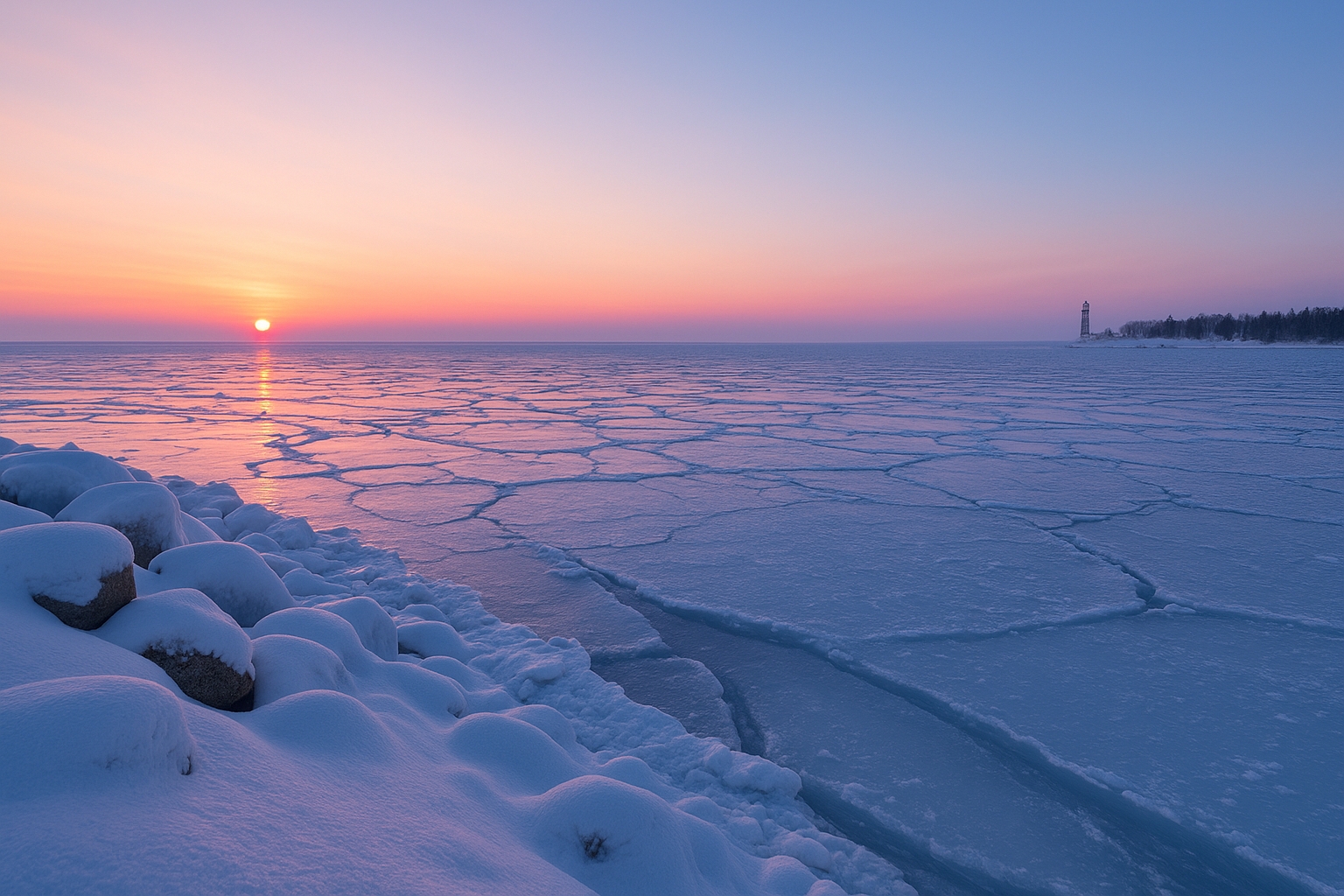
Has Lake Michigan Ever Fully Frozen?
Introduction: The Frozen Mystique of the Great Lakes
Lake Michigan, one of North America’s largest freshwater lakes, is an awe-inspiring natural wonder known for its depth, expanse, and seasonal transformations. In winter, ice forms across vast portions of the lake, prompting questions from curious travelers and meteorology enthusiasts alike: Has Lake Michigan ever completely frozen over? The answer, rooted in historical data, scientific records, and regional folklore, reveals the fascinating nature of this icy enigma.
While The Inn at Stonecliffe on Mackinac Island offers guests a front-row seat to Lake Michigan’s breathtaking beauty during its open season, we explore the legacy of winter in this blog without suggesting visitation during the colder months, when the Inn is closed. Instead, we uncover the story of Lake Michigan's coldest winters, maximum ice coverage events, and why full freezing remains elusive.
Has Lake Michigan Ever Fully Frozen Over?
Short Answer: No, Not Completely
Despite its location in the Upper Midwest and exposure to harsh Arctic outbreaks, Lake Michigan has never fully frozen over in recorded history. Ice has covered significant portions of the lake—sometimes exceeding 90%—but a complete shore-to-shore freeze has never occurred.
Closest Approaches to Full Freeze
Notable winters when Lake Michigan came closest to freezing:
-
1903–1904: Estimated ice coverage around 90%–95%
-
1976–1977: Among the harshest winters on record
-
1978–1979: Exceptionally long-lasting cold
-
1993–1994: Ice cover exceeded 90%
-
2013–2014: Nearly 93.3% ice coverage by early March
These near-record events show how intense winter conditions can impact even a massive body of water like Lake Michigan.
Why Doesn’t Lake Michigan Fully Freeze?
Physical and Meteorological Factors
Several key reasons prevent Lake Michigan from completely freezing:
-
Immense Size and Volume: With over 1,600 cubic miles of water, Lake Michigan has a thermal inertia that resists freezing.
-
Greatest Depth: Its deepest point reaches 923 feet, making the water temperature more stable at deeper levels.
-
Water Movement: Currents, wind-driven waves, and inflows disrupt ice formation.
-
Urban Heat Effects: Cities along the shoreline (like Chicago and Milwaukee) create localized warming.
-
Lake-Effect Dynamics: Warm lake air masses frequently moderate surrounding cold fronts.
These elements combine to make complete surface freezing highly unlikely even in extreme polar outbreaks.
Ice Coverage Records for Lake Michigan
Decadal Ice Cover Trends
Below is a comparative table of maximum ice coverage by winter season for Lake Michigan, according to NOAA and the Great Lakes Environmental Research Laboratory (GLERL):
| Winter Season | Max Ice Coverage (%) | Notes |
|---|---|---|
| 1976–77 | 93.1% | Deep freeze year |
| 1978–79 | 93.9% | One of the longest cold stretches |
| 1993–94 | 90.7% | Ice lasted into late March |
| 2013–14 | 93.3% | Result of polar vortex events |
| 2014–15 | 88.4% | Consecutive cold winters |
| 2018–19 | 56.7% | Moderate freeze year |
| 2022–23 | 23.1% | Mild winter, ice cover well below avg |
Note: Data fluctuates yearly due to jet stream patterns, air temperature trends, and snow cover.
How Lake Michigan Compares to Other Great Lakes
Full Freeze Frequency
| Great Lake | Has It Fully Frozen? | Last Full Freeze | Typical Max Ice (%) |
| Lake Superior | Rarely | 1996 | 80–95% |
| Lake Huron | Occasionally | 1994 | 85–95% |
| Lake Erie | Frequently | 2015 | 90–100% |
| Lake Ontario | Almost Never | Never Recorded | 10–20% |
| Lake Michigan | Never | N/A | 80–93% |
Lake Michigan and Lake Ontario stand apart as the only two Great Lakes to have never fully frozen—due to depth, thermal mass, and water movement.
Years with the Most Ice on Lake Michigan
Top 5 Deep Freeze Years
-
1978–1979: Coldest winter in modern history with sustained below-zero days.
-
2013–2014: Polar vortex brought record-low temperatures across the Midwest.
-
1993–1994: High snow cover and extended cold pushed ice beyond 90%.
-
1976–1977: Intense cold early in the season locked in widespread ice.
-
1903–1904: Earliest known near-freeze with anecdotal evidence.
These years contributed to some of the most dramatic winter landscapes in Northern Michigan history.
Frequently Asked Questions
When did Lake Michigan come closest to freezing?
The winters of 1978–79 and 2013–14 brought Lake Michigan the closest to a full freeze, with ice coverage reaching over 93%.
Has Lake Michigan ever frozen solid from shore to shore?
No. Even in its coldest winters, Lake Michigan retained open water zones due to its size, depth, and currents.
What is the average ice coverage on Lake Michigan?
Long-term average winter maximum ice coverage is around 40–45%, though it varies significantly year to year.
Is climate change affecting Lake Michigan’s freezing?
Yes. Trends show declining average ice cover across all Great Lakes over the past 40 years, influenced by warming air temperatures and shifting weather patterns.
Which lake freezes more: Lake Erie or Lake Michigan?
Lake Erie freezes more frequently and completely due to its shallow depth. Lake Michigan is deeper and more resistant to freezing.
Climate Trends: Is a Full Freeze Possible in the Future?
Scientific Perspective
While it's not impossible, a full freeze would require a perfect storm of environmental factors:
-
Early snowpack followed by prolonged Arctic air mass
-
Lack of wind and water current disruption
-
Extremely low temperatures sustained for weeks
Given current climate trends, full freezing is becoming less likely over time. Studies from GLISA and NOAA indicate declining trends in both duration and extent of ice coverage.
Why This Matters: Historical and Ecological Significance
Environmental Impacts of Ice Cover
-
Albedo effect: High ice coverage reflects sunlight, regulating water temperature
-
Fish habitat: Ice reduces turbulence, aiding fish spawning in some areas
-
Shipping and navigation: Extensive ice hampers transit and demands Coast Guard icebreakers
-
Water levels: Evaporation rates decline with more ice, affecting lake levels
Cultural Significance
-
Stories of extreme winters live on in local folklore
-
Freeze patterns impact winter tourism economies and local planning
Conclusion: The Myth and Reality of a Frozen Lake Michigan
Lake Michigan has never fully frozen—and likely never will under current climate trajectories. Yet, its icy extremes, particularly during historic winters like 1979 and 2014, remain etched into regional memory.
For those who admire winter's beauty, the lake’s transformation into a sprawling ice field is nothing short of majestic—from a safe, observational distance. At The Inn at Stonecliffe, while we close each winter for the season, we celebrate the legacy of this great lake’s winter history through stories, photos, and timeless natural wonder.
Stay with us during our open seasons to explore Mackinac’s summer magic, while reflecting on the deep freeze chapters that helped shape the legend of Lake Michigan.
Read other posts