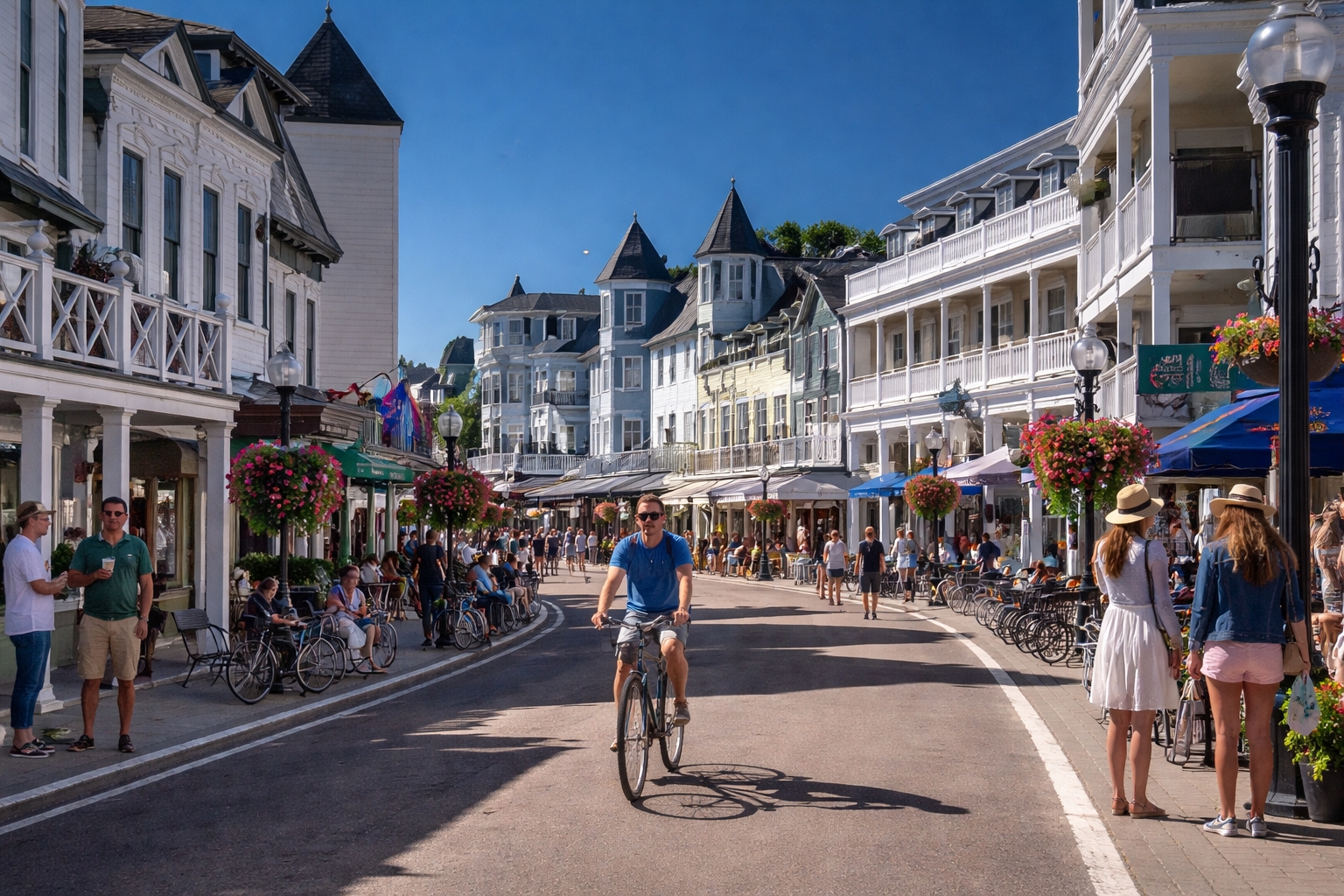
Historic Downtown Mackinac Island – A Living Time Capsule on the Great Lakes
Historic downtown Mackinac Island is one of the most intact and immersive historic districts in the United States. Located along the island’s southern shoreline, this compact waterfront corridor preserves more than 200 years of continuous history, from Indigenous trade routes and French fur trading posts to Victorian-era tourism and modern car-free travel. For visitors planning a Mackinac Island trip in 2026, downtown serves as both the cultural heart of the island and the starting point for nearly every meaningful experience.
Unlike many historic districts that rely on reconstructions, downtown Mackinac Island remains active, walkable, and authentically preserved. Original buildings still house shops, museums, churches, and restaurants, while horse-drawn carriages and bicycles replace cars entirely. The result is a place where history is not staged or interpreted from a distance, but experienced in motion, step by step.
What Is Historic Downtown Mackinac Island
Historic downtown Mackinac Island refers to the dense stretch of development between the ferry docks and Fort Mackinac, centered primarily along Main Street and the harborfront. This area forms part of the Mackinac Island National Historic Landmark designation, recognizing its exceptional preservation and historical significance.
Downtown includes:
-
Original 18th and 19th century structures
-
Active churches, museums, and shops
-
The island’s primary harbor and ferry arrival points
-
Direct access to Fort Mackinac and historic neighborhoods
Because Mackinac Island has prohibited automobiles since the late 1800s, downtown has remained physically unchanged in ways few American towns have managed.
The Deep History of Downtown Mackinac Island
Long before European settlement, the area now known as downtown Mackinac Island served as a critical meeting and trading point for Native American tribes, particularly the Odawa people. The island’s location at the narrow passage between Lake Michigan and Lake Huron made it a natural hub for travel, trade, and diplomacy.
French Fur Trading Era
In the early 1700s, French traders established Mackinac as a central outpost in the North American fur trade. Downtown’s earliest footprint developed around these trading activities, with structures built close to the water for ease of transport.
Remnants of this era remain visible in:
-
Street layouts
-
Building placement near the harbor
-
Early mission sites
British and American Influence
Following British control and later American governance, downtown Mackinac evolved into a military and administrative center. Fort Mackinac, located just above downtown, played a central role in shaping development patterns below.
As military importance declined, tourism began to rise.
Victorian-Era Tourism and Downtown Growth
The late 19th century marked a turning point for downtown Mackinac Island. As steamship travel expanded, wealthy families from Chicago, Detroit, and beyond began arriving for extended summer stays.
Downtown transformed into:
-
A promenade for strolling and socializing
-
A retail corridor for visitors
-
A cultural center with churches, hotels, and entertainment
Many buildings from this period still stand today, creating the distinctive Victorian character downtown is known for.
Architecture of Historic Downtown Mackinac Island
Downtown Mackinac Island features an extraordinary range of preserved architectural styles, reflecting centuries of layered history.
Common styles include:
-
Colonial-era wood structures
-
Greek Revival influences
-
Victorian commercial storefronts
-
Early resort-era boarding houses
Because demolition and modernization were limited, downtown offers architectural continuity rarely seen elsewhere.
Walking Through Downtown Mackinac Island
Downtown Mackinac Island is best experienced on foot. The entire district can be walked comfortably, with frequent stops encouraged.
A typical downtown walking experience includes:
-
Arrival at the ferry docks
-
Strolling along Main Street
-
Exploring side streets and historic homes
-
Gradual ascent toward Fort Mackinac
Most visitors spend two to four hours exploring downtown without rushing.
Major Historic Landmarks in Downtown Mackinac Island
Fort Mackinac
Overlooking downtown, Fort Mackinac anchors the historic narrative of the island. Built in 1780, the fort provides panoramic views and interpretive exhibits that contextualize downtown development.
Mission Church
Mission Church stands as one of the oldest surviving church structures in Michigan. Located near downtown, it reflects early missionary influence and Indigenous history.
Benjamin Blacksmith Shop
This working blacksmith shop demonstrates 19th century trades and craftsmanship, offering insight into daily life during downtown’s early years.
Biddle House
The Biddle House museum preserves the story of early multicultural families on Mackinac Island, highlighting Native American and European intersections.
Shopping in Historic Downtown Mackinac Island
Downtown shopping is deeply tied to the island’s history. Many shops operate out of original buildings and continue long-standing traditions.
Shopping highlights include:
-
Historic fudge shops
-
Artisan boutiques
-
Local craft and souvenir stores
-
Specialty food shops
Fudge, in particular, has become inseparable from downtown Mackinac Island’s identity, with traditions dating back more than a century.
Restaurants and Dining Downtown
Dining in downtown Mackinac Island blends historic settings with regional flavors. Many restaurants occupy restored buildings and offer views of the harbor or Main Street.
Common dining experiences include:
-
Casual waterfront dining
-
Historic taverns
-
Ice cream and confectionery shops
-
Seasonal menus highlighting Great Lakes ingredients
The Harbor and Waterfront Experience
Downtown Mackinac Island’s harbor is both functional and scenic. Ferries, private boats, and tour vessels create constant movement, reinforcing the island’s maritime heritage.
The waterfront offers:
-
Public seating areas
-
Views of the Straits of Mackinac
-
Easy access to boat tours and excursions
This connection between land and water has defined downtown since its earliest days.
Car-Free Culture and Downtown Atmosphere
One of downtown Mackinac Island’s defining characteristics is the absence of cars. Transportation relies on walking, bicycles, and horse-drawn carriages.
This creates:
-
Quiet streets
-
Clean air
-
A slower pace of exploration
-
Enhanced historic immersion
The car-free environment preserves not just buildings, but the sensory experience of an earlier era.
Best Time to Visit Historic Downtown Mackinac Island
Downtown Mackinac Island is accessible during the island’s operating season, typically May through October.
Seasonal highlights include:
-
Late spring for blooming lilacs and lighter crowds
-
Summer for peak activity and extended hours
-
Early fall for cooler temperatures and fewer visitors
Winter travel is not recommended, as most businesses and lodging, including The Inn at Stonecliffe, are closed during that season.
How Downtown Connects to the Rest of the Island
Downtown serves as the gateway to the island’s broader experiences.
From downtown, visitors can easily reach:
-
Fort Mackinac
-
Residential historic neighborhoods
-
Island trails and natural areas
-
West Bluff and elevated viewpoints
This makes downtown the natural starting point for any Mackinac Island itinerary.
Where to Stay When Exploring Downtown Mackinac Island
While downtown itself contains lodging options, many travelers prefer accommodations that balance access with privacy.
Located on Mackinac Island’s West Bluff, The Inn at Stonecliffe offers:
-
A quieter setting away from downtown crowds
-
Easy transportation access to downtown
-
Elevated views and historic surroundings
-
A refined alternative to staying directly on Main Street
This positioning allows visitors to explore downtown fully while returning to a more secluded environment.
Downtown Mackinac Island in 2026 – Why It Still Matters
As travelers increasingly seek authentic, walkable, and meaningful destinations, historic downtown Mackinac Island continues to stand out. Its preservation is not accidental, but the result of decades of intentional stewardship.
For 2026 travelers, downtown Mackinac Island represents:
-
A rare intact historic district
-
A car-free cultural experience
-
A destination that rewards slow exploration
-
A living connection to Great Lakes history
Frequently Asked Questions About Historic Downtown Mackinac Island
Is downtown Mackinac Island walkable
Yes. Downtown Mackinac Island is compact and fully walkable, with flat terrain along the waterfront and gradual elevation changes toward Fort Mackinac.
How long does it take to explore downtown Mackinac Island
Most visitors spend two to four hours exploring downtown, not including museums or extended dining.
What makes downtown Mackinac Island historic
Downtown Mackinac Island preserves original buildings, street layouts, and transportation traditions dating back over 200 years.
Can you visit downtown Mackinac Island without staying there
Yes. Downtown is accessible to all island visitors and serves as the primary arrival point via ferry.
What is the best season to visit downtown Mackinac Island
Late spring through early fall offers the best combination of accessibility, weather, and open attractions.
Planning Your Historic Downtown Mackinac Island Visit
Exploring historic downtown Mackinac Island is essential for understanding the island as a whole. Whether you are drawn by architecture, history, waterfront views, or simply the experience of a car-free town, downtown offers a depth that unfolds gradually with time and attention.
To plan a Mackinac Island stay that balances downtown access with a more serene setting, explore accommodations at The Inn at Stonecliffe and begin shaping a 2026 itinerary that captures the full character of the island.
https://www.theinnatstonecliffe.com/