Horseback Riding on Mackinac Island: Experiencing the Island’s Living History in 2026
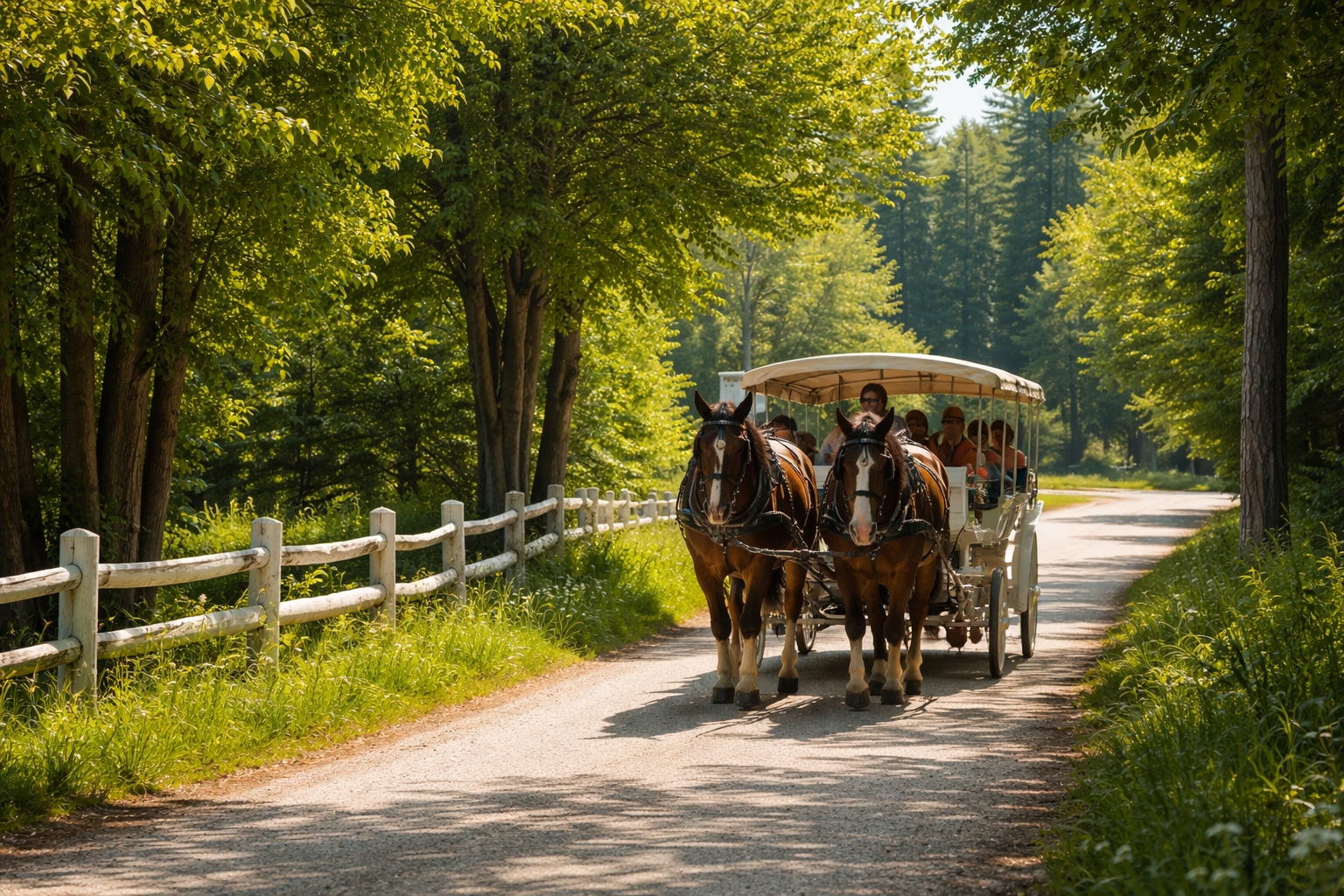
Horseback riding on Mackinac Island is not simply an activity – it is part of how the island functions, moves, and preserves its identity. Mackinac Island is famously car-free, and horses have remained the primary form of transportation for more than a century. While traditional horseback riding is limited compared to mainland destinations, the island offers one of the most immersive horse-centered experiences in the United States through working stables, carriage tours, historic routes, and daily life shaped by draft horses.
For travelers planning a 2026 visit between May and October, understanding how horseback riding and horse culture fit into the Mackinac Island experience is essential for making the most of the trip.
Can You Go Horseback Riding on Mackinac Island?
Yes, visitors can experience horseback riding on Mackinac Island, though it is structured differently than typical trail-riding destinations. The island prioritizes horse-drawn transportation, preservation, and safety, which means riding opportunities are limited and regulated.
Rather than open trail rides throughout the island, horseback riding is available through select stables and guided experiences that focus on horsemanship, education, and historic continuity. The emphasis is on maintaining the island’s horse culture rather than offering commercial riding excursions at scale.
Why Horses Are Central to Mackinac Island
Mackinac Island banned automobiles in the late 1800s, long before car-free travel became fashionable. Horses stepped in as the primary mode of transportation, shaping the island’s infrastructure, pace, and atmosphere.
Today, more than 500 horses live and work on Mackinac Island during the active season. These horses pull carriages, deliver goods, transport luggage, and maintain the rhythm of daily life. Their presence is not performative – it is functional, historic, and deeply ingrained.
Key reasons horses remain essential:
-
Preservation of historic character
-
Environmental sustainability
-
Quiet, slow-paced travel
-
Cultural continuity
Horseback Riding vs Horse-Drawn Carriage Rides
Understanding the difference between horseback riding and carriage rides is important for setting expectations.
Horseback Riding
-
Limited availability
-
Typically guided or supervised
-
Focuses on horsemanship and controlled environments
-
Best suited for experienced or serious riders
Horse-Drawn Carriage Rides
-
Widely available
-
Accessible for all ages
-
Covers scenic routes around the island
-
The most common way visitors experience horses
For most travelers, carriage rides provide the most immersive and scenic horse-related experience, while horseback riding offers a more personal connection for those specifically seeking time in the saddle.
Mackinac Island Horse Stables and Riding Opportunities
Several stables on Mackinac Island support the island’s horse population and offer limited visitor engagement.
Mission Point Stables
Mission Point is home to one of the most well-known stables on the island. The stables play a role in housing and caring for horses used throughout the island.
Depending on the season and availability, visitors may:
-
Observe daily horse care routines
-
Learn about training and tack
-
Participate in limited riding experiences
Private and Operational Stables
Many stables on Mackinac Island are working facilities not open for general riding. These support carriage companies, freight transport, and municipal services.
While not offering rides, they provide a unique opportunity to see:
-
Draft horses at work
-
Harnessing and preparation
-
Behind-the-scenes horse operations
Horseback Riding Within Mackinac Island State Park
Mackinac Island State Park covers more than 80 percent of the island, with miles of scenic roads and trails. While horseback riding within the park is restricted and regulated, horses travel these routes daily as part of carriage tours and operational transport.
Visitors experience the park’s landscapes by horse through:
-
Carriage rides around the perimeter
-
Interior routes passing Arch Rock and Fort Mackinac
-
Forested paths that remain unchanged for decades
This creates a unique dynamic where horses are not an attraction within the park – they are part of the park’s living system.
What It’s Like to Experience Mackinac Island by Horse
Experiencing Mackinac Island by horse changes how visitors perceive distance, sound, and time. The absence of engines allows hoofbeats, wind, and water to define the atmosphere.
Notable elements of the experience include:
-
Quiet travel through historic roads
-
Scenic pacing that encourages observation
-
Authentic connection to 19th-century transportation
-
Interaction with horses throughout the island
Even visitors who never mount a horse still engage deeply with horse culture simply by moving through the island.
Best Time to Experience Horses on Mackinac Island
The active horse season on Mackinac Island runs from May through October. This aligns with ferry schedules, hotel operations, and visitor services.
Peak Horse Activity Months
-
June through September
-
Warm temperatures
-
Full stable operations
-
Maximum carriage availability
Shoulder Season Benefits
-
May and October offer fewer crowds
-
Cooler temperatures
-
Continued horse presence
-
More relaxed pacing
Visitors planning a 2026 trip should avoid winter months entirely, as the island’s lodging and services are closed and horses are not part of visitor experiences during that time.
Family-Friendly Horse Experiences
Horses are one of the most family-friendly elements of Mackinac Island. Children often find the experience memorable and engaging.
Family-friendly highlights include:
-
Carriage tours suitable for all ages
-
Stable visits and observation
-
Educational conversations with drivers and caretakers
-
Safe, structured environments
Because horses are integrated into daily operations, families experience them naturally rather than as staged attractions.
Horse Culture and Preservation on Mackinac Island
Mackinac Island’s horse culture is carefully protected. Regulations ensure animal welfare, route management, and seasonal balance.
Preservation efforts include:
-
Veterinary oversight
-
Limited workloads
-
Seasonal rotation
-
Historic training practices
This commitment ensures horses remain healthy and respected contributors to island life rather than novelty experiences.
How Horseback Riding Fits Into a 2026 Mackinac Island Itinerary
For travelers planning Mackinac Island in 2026, horseback riding and horse-centered experiences work best as part of a broader itinerary.
Ideal pairing includes:
-
Scenic carriage tour on arrival day
-
State Park exploration by horse-drawn route
-
Stable visit for deeper understanding
-
Slow-paced walking and biking between horse encounters
This layered approach creates a complete understanding of how horses shape the island.
Where to Stay to Experience Mackinac Island Horse Culture
Location matters when planning a horse-focused Mackinac Island visit. Staying near scenic routes and quieter areas allows visitors to observe horses throughout the day without crowds.
The Inn at Stonecliffe offers a peaceful setting that aligns with the island’s slow travel philosophy. Located away from the busiest corridors, it provides proximity to natural landscapes where horse-drawn transportation remains a daily presence during the open season from May through October.
Learn more and plan a 2026 Mackinac Island stay at
https://www.theinnatstonecliffe.com