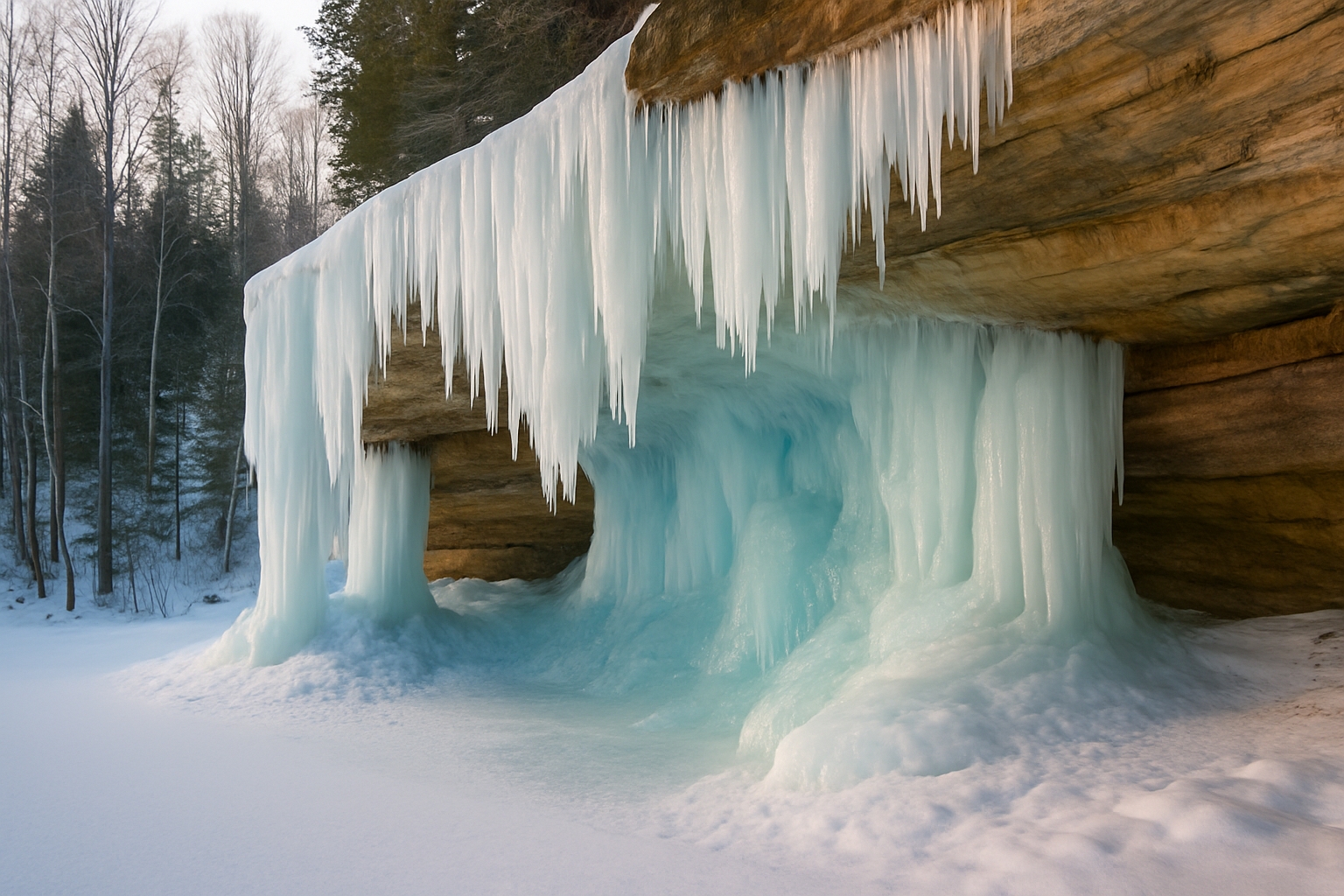
Ice Caves of Michigan: Nature’s Most Unexpected Winter Formation
While The Inn at Stonecliffe is closed during the snowy months, our guests often return between May and October with stories of Michigan’s awe-inspiring winter landscapes. Among the most mysterious and visually striking of these are the Ice Caves of Michigan — a rare natural phenomenon where freezing temperatures and mineral-rich water transform rocky caverns into crystalline palaces of ice. Though we invite you to stay with us during the warmer months, this guide offers an in-depth exploration of Michigan’s ice caves, providing everything you need to know for a future winter adventure — from formation and locations to planning tips and geological insight.
What Are the Ice Caves of Michigan?
Definition of Ice Caves
Michigan's ice caves are natural geological formations, often small caverns or overhangs, that become coated in thick layers of ice during the coldest months of the year. These icy environments are not permanent caves made of ice, like those in Alaska or Iceland, but rather seasonal features that depend on freezing water and prolonged sub-zero temperatures.
How Michigan’s Ice Caves Form
Understanding the natural process behind these formations enhances appreciation and safety during visits.
Primary Formation Factors
-
Freeze–Thaw Cycles: Melting snow and water seeps into rock crevices and freezes overnight, expanding into ice layers.
-
Groundwater Seepage: Constantly trickling groundwater freezes as it emerges from the rock face.
-
Lake Spray: Strong Lake Superior winds blow icy mist onto rock walls, freezing into curtains of ice.
-
Snowpack Insulation: Dense snow cover helps maintain freezing temperatures, preserving cave structures.
Common Locations for Formation
-
Rocky cliffs and bluffs
-
Limestone and sandstone overhangs
-
Waterfalls and narrow ravines
-
Areas near Lake Superior’s southern shoreline
Top Ice Cave Destinations in Michigan
| Ice Cave | Location | Known For |
|---|---|---|
| Eben Ice Caves | Near Eben Junction, UP | Easy hike, thick icicle walls, family-friendly route |
| Grand Island Ice Curtains | Munising, UP | Towering frozen walls on Lake Superior’s shore |
| Houghton Ice Formations | Houghton, UP | Challenging hikes, great for photography |
| Miners Falls Ice Formations | Pictured Rocks, UP | Waterfall caves with dramatic frozen columns |
| Jacobsville Ice Caves | Keweenaw Peninsula, UP | Remote access, multi-colored ice walls, less crowded |
Spotlight: The Eben Ice Caves
Overview
The most accessible and well-known of Michigan’s ice caves, the Eben Ice Caves (also known as the Rock River Canyon Ice Caves), offer an immersive experience with walls of ice towering overhead like a frozen cathedral.
Highlights
-
Family-friendly hike (about 1 mile each way)
-
Icy trail that opens into a shallow cave behind a waterfall
-
Popular with photographers, families, and adventurers
How to Get There
-
Nearest Town: Eben Junction, MI
-
Trail Access: Park in the designated area near Frey Road, then follow signs across the open field into the forest
What to Expect
-
Slippery conditions — bring traction cleats
-
No facilities or staff on-site
-
Best viewed January through early March
Ice Cave Safety Tips and Gear Checklist
Safety First: Ice Cave Hazards
-
Falling icicles
-
Slippery trail conditions
-
Thin or unstable ice
-
Hypothermia risk from extended exposure
Recommended Gear
-
Insulated, waterproof boots
-
Yaktrax or microspikes
-
Trekking poles for balance
-
Thermal base layers and windproof outerwear
-
Headlamp for cave interiors
-
Crampons (for advanced terrain like Grand Island)
Michigan Ice Caves vs Other States
| Feature | Michigan Ice Caves | Wisconsin Ice Caves | Minnesota Ice Caves |
|---|---|---|---|
| Accessibility | Moderate, with some short hikes | Difficult in some areas | Limited due to location |
| Proximity to Towns | Often near small towns | Close to Bayfield | Mostly remote areas |
| Size of Formations | Medium – thick walls and icicles | Larger ceilings | Small but intricate |
| Tourism Infrastructure | Low – mostly DIY visits | Guided tours sometimes | Minimal |
| Photography Opportunities | Excellent due to lighting and access | Good with gear | Requires advanced planning |
When to Visit the Ice Caves
Seasonal Timing
-
Peak Months: Late January to early March
-
Ideal Conditions: Consecutive weeks of below-freezing temps
Weather Considerations
-
Heavy snow can block access
-
Sudden thawing can make caves unstable
-
Wind chill around Lake Superior can be intense
How to Prepare for an Ice Cave Trip
Planning Checklist
-
Research Trail Conditions: Use local DNR websites or Facebook groups
-
Check the Forecast: Only go in freezing weather
-
Map Your Route: Offline GPS or printed maps are crucial
-
Pack Properly: See gear list above
-
Travel with Others: Never explore ice caves alone
-
Leave No Trace: Respect fragile formations and natural spaces
Ice Caves Near Mackinac Island: What to Know
While there are no ice caves on Mackinac Island itself, the Upper Peninsula — located across the Mackinac Bridge — is home to many winter wonders. From our seasonal vantage point at The Inn at Stonecliffe (open May through October), we encourage guests to plan a return winter trip or explore ice cave content year-round through our blog.
Nearby Points of Interest (For Future Winter Visits)
-
Munising – Gateway to Grand Island and Pictured Rocks
-
Marquette – Closest city to Eben Junction
-
Houghton – Northern access to remote cave formations
Photographing Ice Caves: Best Practices
Lighting Tips
-
Visit midday for best natural light
-
Use long exposure for low-light interior shots
-
A tripod is essential for steady frames
Camera Recommendations
-
DSLR or mirrorless cameras with wide-angle lenses
-
Smartphone night mode for casual shots
-
Bring backup batteries — cold drains power fast
FAQs About Michigan Ice Caves
What months are the ice caves in Michigan open?
Typically January through early March, depending on freeze conditions.
Are dogs allowed at Michigan’s ice caves?
Yes, but leash is required. Trails can be slippery for pets.
Is there an entrance fee?
No. Most sites are on public land.
Can kids visit the ice caves?
Yes — with caution. The Eben Ice Caves are the best for families.
How long is the hike to the Eben Ice Caves?
Approximately 1 mile one-way, across a field and forested trail.
Future Adventure: Staying at The Inn at Stonecliffe
Although The Inn at Stonecliffe is closed during winter (November through April), we provide the perfect home base for spring, summer, and early fall adventures. Whether you're planning a future ice cave road trip or just love exploring Michigan’s natural beauty, our boutique hotel on Mackinac Island offers seasonal hospitality with timeless charm.
Why Visit Us May–October
-
Private access to trails, nature, and stargazing
-
Close to ferry access for Upper Peninsula trips
-
Breathtaking views of Lake Huron and the Mackinac Bridge
-
Unique packages for couples, families, and adventure travelers
Plan Your Michigan Ice Cave Adventure
Suggested 3-Day Winter Itinerary (For Planning Purposes Only)
| Day | Activities |
|---|---|
| Day 1 | Drive to Eben Junction – hike to Eben Ice Caves |
| Day 2 | Explore Grand Island Ice Curtains – snowshoe rentals |
| Day 3 | Scenic stops along Pictured Rocks and waterfalls |
Note: The Inn at Stonecliffe is closed during winter months. Reopen season begins in May.
Conclusion: Michigan’s Hidden Ice Kingdom
Michigan’s ice caves are among the most enchanting winter phenomena in the Midwest. These natural ice formations are fleeting, awe-inspiring, and deeply rooted in the state's geological history. While we at The Inn at Stonecliffe do not operate during the winter season, our connection to Michigan’s year-round beauty continues through stories, guides, and resources that help you explore all corners of the state. Begin planning your warm-weather visit to Mackinac Island today — and consider a future winter return to witness the icy wonderlands of the Upper Peninsula.
Read other posts