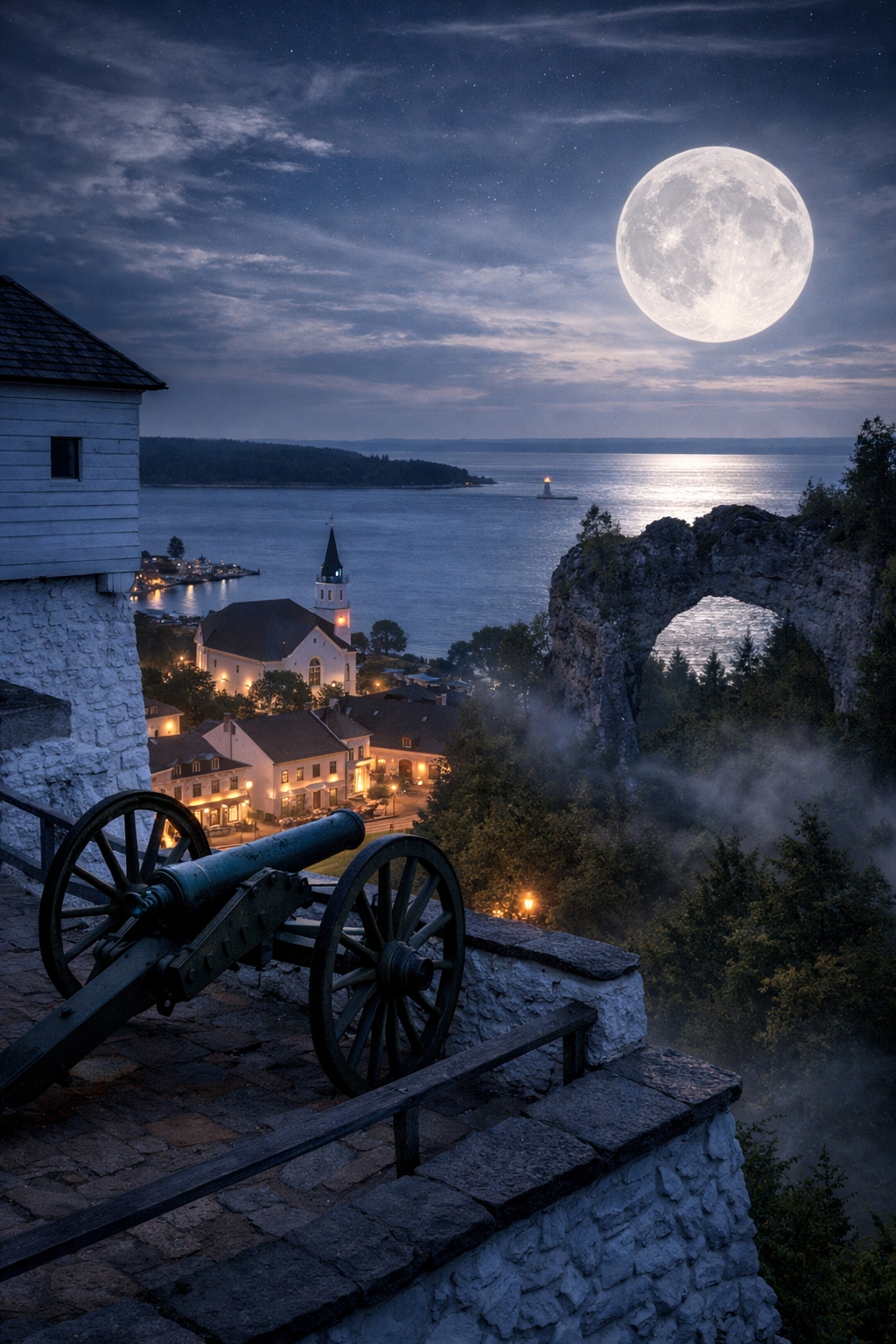
Is Mackinac Island Haunted?
Mackinac Island is widely regarded as one of the most haunted places in Michigan, not because of novelty attractions or exaggerated folklore, but because its history has remained unusually intact. For centuries, people have lived, worked, suffered, celebrated, and died on the same ground visitors walk today. The island’s haunted reputation is rooted in continuity. History was never erased here. It was preserved.
From Native American spiritual traditions to military occupation, epidemics, isolation, and frontier hardship, Mackinac Island has accumulated layers of lived experience that many believe still echo through its forests, bluffs, and historic buildings. Some visitors describe this as paranormal activity. Others describe it as an atmosphere that feels heavier, quieter, and more emotionally charged than other historic destinations.
Whether Mackinac Island is truly haunted depends on perspective. What is not in dispute is that the island holds one of the densest concentrations of preserved history in the Great Lakes region, and that history continues to shape how the island feels today.
Why Mackinac Island Has a Reputation for Being Haunted
Mackinac Island’s reputation as a haunted place did not emerge from a single event or legend. It developed gradually as stories accumulated across generations, passed down by residents, soldiers, clergy, caretakers, and later, visitors. Unlike many towns that were rebuilt or modernized, Mackinac Island changed slowly, allowing memories to remain attached to physical spaces.
Several historical realities contributed to this reputation.
First, Mackinac Island has been continuously inhabited for centuries. Long before European settlement, Indigenous tribes lived on and revered the island. French traders arrived in the 1600s, followed by British and American military forces. Each era overlapped rather than replaced the one before it.
Second, life on the island was often difficult. Harsh winters, limited medical care, isolation from the mainland, and military discipline created conditions where illness and death were common. Many people died far from home, buried near where they lived and worked.
Third, preservation played a major role. Historic buildings were maintained rather than demolished. Fort Mackinac, Mission Church, early residences, and commercial structures still stand, anchoring memory to place. When environments remain unchanged, stories tend to linger.
Finally, Mackinac Island’s isolation amplified emotional intensity. Residents lived closely with one another, and events like illness, accidents, and funerals were communal experiences. This collective memory became part of the island’s identity.
Native American Legends and Spiritual History
Long before Mackinac Island became a military outpost or tourist destination, it held deep spiritual significance for Indigenous peoples, particularly the Anishinaabe. The island was believed to be a sacred place where the physical and spiritual worlds intersected. This belief was shaped by geography, natural formations, and long-standing cultural traditions.
Indigenous oral history describes Mackinac Island as:
-
A resting place for spirits after death
-
A location where ancestors remained present
-
A site of ceremonial importance
Certain areas of the island were considered sacred, particularly elevated bluffs, forested ridges, and limestone formations. Burial practices often reflected spiritual beliefs about proximity to the sky and water, reinforcing the idea that spirits continued to move through the landscape.
These beliefs were not symbolic abstractions. They guided daily life, rituals, and burial customs. When European settlers arrived, many built structures near or atop areas that already carried spiritual meaning. This layering of belief systems contributed to later stories of unexplained activity.
For many historians, Indigenous spiritual traditions provide essential context for understanding why Mackinac Island has long been perceived as a place where the past remains present.
Mackinac Island During the Colonial and Fur Trade Era
In the 17th and 18th centuries, Mackinac Island became a hub for the fur trade, drawing French traders, missionaries, and later British interests. Life during this period was precarious. Disease spread easily, medical knowledge was limited, and travel was dangerous.
Many early settlers died young. Accidents, exposure, and illness were common, particularly during winter months when supplies were scarce. Death was not an abstraction but a constant presence.
Settlements were small and tightly knit, meaning losses were deeply felt across the community. Oral histories from this period describe funerals held in extreme conditions and burials conducted near homes or places of worship.
These early colonial hardships laid the groundwork for later ghost stories tied to specific locations, particularly older structures that survived into the modern era.
Fort Mackinac Ghost Stories and Paranormal Sightings
Fort Mackinac is the most frequently cited haunted location on Mackinac Island, and its reputation is supported by both historical record and repeated eyewitness accounts. Constructed in the late 18th century, the fort played a strategic role in controlling access to the Great Lakes.
Life at Fort Mackinac was grueling. Soldiers faced strict discipline, limited comforts, and isolation from family. Disease spread rapidly in close quarters, and medical care was rudimentary. Accidents and violence were part of daily life, particularly during periods of conflict.
During the War of 1812 and subsequent military occupation, deaths occurred from illness, injury, and combat-related incidents. Many soldiers were buried nearby, far from their places of origin.
Over the years, reports associated with Fort Mackinac have included:
-
Apparitions of uniformed soldiers walking through barracks
-
Footsteps heard in empty rooms
-
Objects moved without explanation
-
Sudden cold spots in specific areas
What distinguishes these accounts is consistency. Reports have come from visitors, staff, and historians across decades, often describing similar experiences without prior knowledge of the stories.
Historic Homes, Hospitals, and Boarding Houses
Beyond Fort Mackinac, many of the island’s historic buildings carry their own stories. During the 19th century, Mackinac Island had homes, boarding houses, and medical facilities that served both residents and transient populations.
Illness was common, particularly during outbreaks of influenza and other diseases. Medical facilities were limited, and many patients died where they were treated. Women faced significant risks during childbirth, and accidents were frequent in an era before modern safety standards.
Reports tied to historic residential buildings often include:
-
Sounds of movement in empty rooms
-
Lights turning on or off unexpectedly
-
Feelings of presence
These experiences are often described as subtle rather than dramatic, reinforcing the idea that the island’s haunted reputation is rooted in atmosphere rather than spectacle.
Mission Church and Religious Folklore
Mission Church, built in the early 19th century, stands as one of Michigan’s oldest surviving churches. For generations, it served as the spiritual center of Mackinac Island, hosting baptisms, weddings, funerals, and community gatherings.
Because the church was central to life events, it naturally became associated with moments of grief and remembrance. Funerals were common, and burial sites were located nearby.
Stories associated with Mission Church include:
-
Shadowy figures near the altar
-
Sounds of organ music when the building is empty
-
Doors opening or closing without drafts
These accounts are often shared quietly rather than sensationalized, contributing to the church’s understated mystique.
The Grand Hotel and Gilded Age Legends
The Grand Hotel, built in the late 19th century, represents a different chapter in Mackinac Island’s history. While often associated with luxury and leisure, it has also accumulated stories tied to its long operation and many guests.
Legends connected to the Grand Hotel tend to be framed as folklore rather than frightening hauntings. Stories include apparitions of former guests and unexplained sounds in historic wings.
Because the hotel has been continuously occupied and meticulously maintained, stories persist through staff tradition rather than documented investigations. These legends add to the island’s broader narrative rather than defining it.
Why Mackinac Island Feels So Atmospheric at Night
Even without ghost stories, Mackinac Island feels distinct after dark. Several environmental factors contribute to this sensation.
There are no cars on the island, eliminating engine noise. Artificial lighting is limited, allowing darkness to settle more completely than in urban environments. Fog from Lake Huron can roll in quickly, altering visibility and sound.
Forested paths absorb noise, while limestone bluffs reflect moonlight in unexpected ways. Combined, these elements create an environment where history feels close and imagination fills the quiet.
For many visitors, this atmosphere alone explains why Mackinac Island inspires stories of hauntings.
Ghost Tours and After-Dark History Experiences
Seasonal ghost and history tours operate during the island’s open season from May through October. These tours typically emphasize education rather than fear.
Most focus on:
-
Verified historical events
-
Architectural history
-
Firsthand accounts from caretakers and staff
-
Indigenous legends and early settlement history
Rather than presenting hauntings as fact, guides encourage visitors to engage with the island’s past and decide for themselves what they believe.
Check out the Haunts of Mackinac - Haunted History Tours at their official website: www.hauntsofmackinac.com
Is Mackinac Island Haunted or Simply Historic?
This question lies at the heart of the island’s mystique. Mackinac Island occupies a space where documented history and unexplained experience overlap.
Historically, the island has:
-
A high concentration of preserved structures
-
Documented deaths tied to specific locations
-
Continuous oral history
Paranormally, reports share:
-
Similar descriptions across generations
-
Location-specific experiences
-
Accounts from people unfamiliar with the stories
Whether interpreted as hauntings or emotional resonance, the island’s past remains deeply present.
Best Time to Experience Mackinac Island’s Haunted History
Mackinac Island is open seasonally from May through October. Visitors interested in atmosphere often prefer:
-
Late summer evenings
-
Early fall when nights grow longer
-
September and October when storytelling traditions peak
The island is closed during winter, and visitors should plan accordingly.
Experiencing Mackinac Island History Without the Crowds
Quiet moments often offer the strongest connection to the island’s past.
Recommended experiences include:
-
Early morning walks near Fort Mackinac
-
Sunset along the bluffs
-
Evening strolls through historic districts
These experiences allow reflection without distraction.
Where to Stay When Exploring Mackinac Island History
Travelers drawn to Mackinac Island’s history often prefer accommodations that allow quiet reflection and distance from crowds. A more secluded setting enhances the experience, particularly in the evenings.
The Inn at Stonecliffe offers a peaceful retreat during the island’s open season, providing space, privacy, and proximity to historic landscapes without congestion.
Plan your seasonal stay at
https://www.theinnatstonecliffe.com
Expert FAQ – Mackinac Island Hauntings
Is Mackinac Island actually haunted?
Mackinac Island is widely considered haunted due to centuries of documented history, preserved buildings, and consistent eyewitness accounts. Whether these experiences are interpreted as paranormal or historical resonance depends on personal belief.
What is the most haunted place on Mackinac Island?
Fort Mackinac is most frequently cited due to repeated reports of apparitions, sounds, and unexplained activity tied to documented military history.
Are there real ghost sightings on Mackinac Island?
Many visitors and staff have reported unexplained sightings and sensations. These accounts often describe similar experiences across different time periods.
Why does Mackinac Island feel eerie at night?
The absence of cars, limited artificial lighting, natural fog, and preserved historic environments create a quiet, atmospheric setting that amplifies the island’s sense of mystery.
Can you take ghost tours on Mackinac Island?
Yes. Seasonal ghost and history tours operate from May through October and focus on verified history and folklore rather than sensationalism.
Is Mackinac Island open in the winter for ghost tours?
No. Mackinac Island is closed during the winter season and only accessible to visitors from May through October.
Are Mackinac Island ghost stories based on real history?
Yes. Most stories are tied to documented events such as military occupation, illness, accidents, and early settlement hardships.
Is Mackinac Island suitable for travelers who are not interested in ghosts?
Absolutely. Many visitors enjoy the island purely for its history, scenery, and peaceful atmosphere without engaging in paranormal themes.
Read other posts