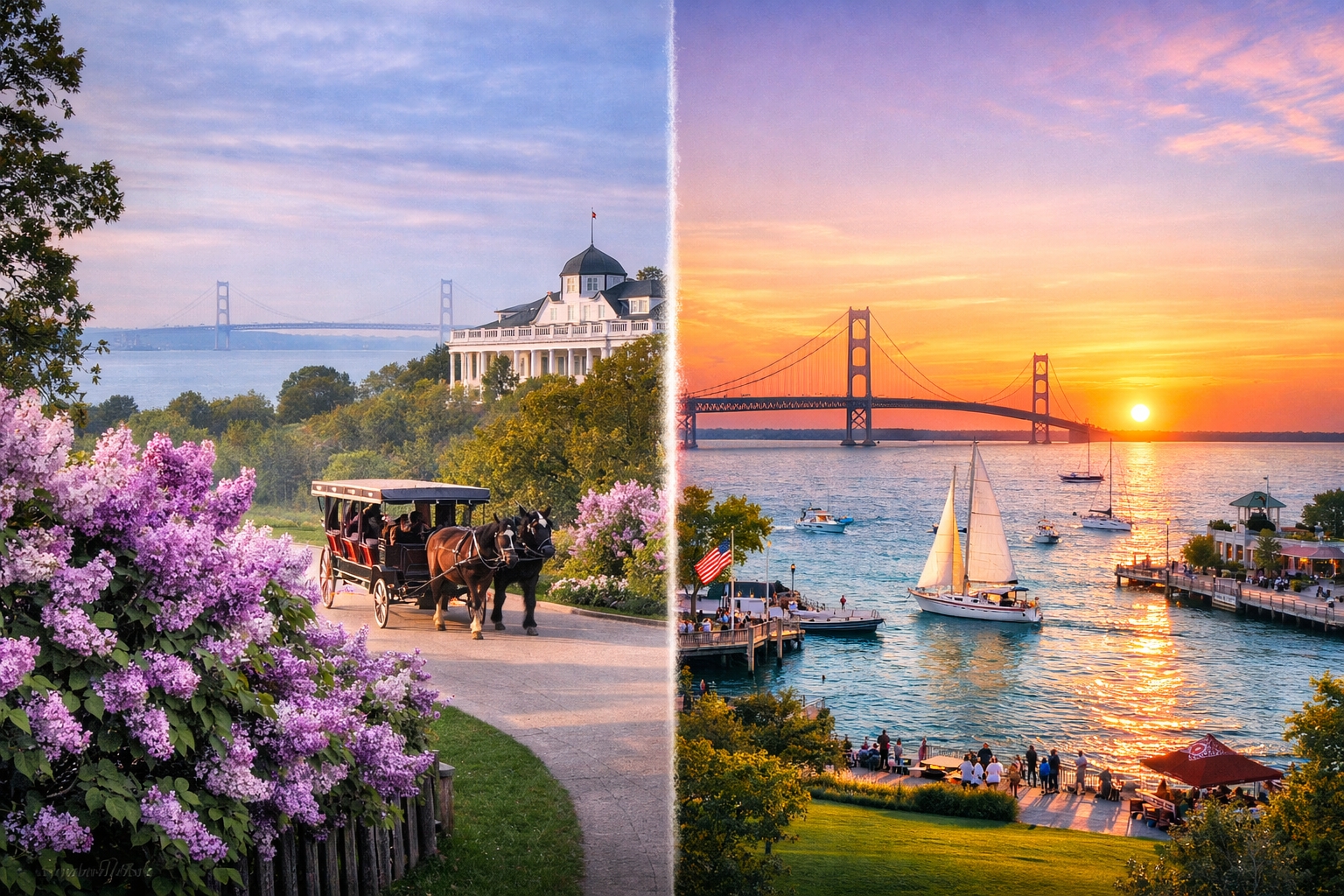
Mackinac Island Spring vs Summer: Best Time to Visit in 2026
Planning a trip to Mackinac Island often comes down to one big question: Is it better to visit in spring or in summer? The answer depends on what you value most. Spring brings quiet trails, blooming lilacs and lower rates, while summer delivers warm lake breezes, lively festivals and long sunny days. According to the island’s tourism bureau, crowds are smallest in spring before Memorial Day and in fall after Labor Day, whereas July and August are the busiest months. Weather is another key factor: May highs hover around 60 °F with cool nights, while July is the warmest month with daytime highs around 76 °F. In 2025 United Airlines also began daily flights from Chicago to nearby Pellston Regional Airport, making it easier to enjoy either season. Ultimately, spring is ideal for those seeking serenity, blooming gardens and value; summer is perfect for travelers who crave energy, events and warm swims.
Why it matters now
A landmark reimagined
The Inn at Stonecliffe, a 1904 estate on the island’s quiet west bluff, reopened in June 2024 after a $40 million renovation. Its first full seasons in 2025 and 2026 coincide with new direct flights from Chicago, making this the perfect time to discover the island’s most private resort. All profits from stays at Stonecliffe go to charity, so every visit becomes a purposeful getaway.
Shoulder‑season travel is trending
Travelers nationwide are embracing shoulder‑season trips. NerdWallet’s 2026 travel report notes that one‑third of Americans plan off‑peak trips and Gen Z is leading the trend. That makes spring on Mackinac Island more appealing than ever. Low crowd levels and discounted rates, paired with moderate weather and blooming lilacs, provide the perfect alternative to summer’s busy streets.
Events and access
Mackinac Island is only open to visitors from May through October. Spring kicks off with the Lilac Festival, a ten‑day celebration of the island’s signature blooms (June 5 – 14 in 2026). Summer peaks with the Fourth of July fireworks, concerts in the park and the August Fudge Festival. Thanks to new daily flights from Chicago O’Hare to Pellston Regional Airport starting May 8 2025, travelers can reach the island in under two hours and be on Stonecliffe’s lawn by sunset.
Spring on Mackinac Island
Storytelling: A serene awakening
Imagine stepping off the ferry on a crisp May morning. The air carries the scent of fresh earth and lake breezes. Horse‑drawn carriages clip‑clop through quiet streets, and a soft mist rises over Lake Huron. As you make your way up the bluff toward The Inn at Stonecliffe, you pass hedges bursting with purple and white lilacs. The mansion’s stone façade feels like a castle in a storybook. Inside, a warm fire crackles in the mansion lounge and a barista hands you a cappuccino made with a Nespresso machine. You sit by the window, watching spring unfold across the Straits of Mackinac.
Why spring is special
- Fewer crowds: The tourism bureau notes that visitor traffic is much lighter before Memorial Day weekend. Many restaurants and shops are just reopening, so you’ll enjoy short lines and attentive service.
- Blooming lilacs: May and early June bring the island’s famous lilac blooms. The Lilac Festival runs June 5 – 14 in 2026 and includes walking tours, planting seminars, a 10K run and a grand parade.
- Lower rates: Lodging and ferry prices are often lower in May and early June. Stonecliffe’s spring packages include stay discounts, nightly dining credits and wellness classes.
- Cooler weather: Average highs in May reach about 60 °F with lows near 40 °F. June warms to around 70 °F, making it ideal for biking the 8.2‑mile perimeter trail or practicing yoga on Stonecliffe’s lawn.
- Quiet trails: Spring mornings are perfect for hiking up Fort Holmes to see wildflowers, renting a bike without a long queue or exploring off‑the‑beaten‑path spots like Arch Rock in relative solitude.
Signature experiences at Stonecliffe in spring
Lilac mornings and lakeside afternoons
Wake up to birdsong in a mansion suite overlooking the Straits. After a breakfast of fresh pastries and local fruit, join a guided lilac tour with the resort’s horticulturist. Learn about the island’s ancient lilac trees and why Mackinac’s microclimate nurtures their intense scent. In the afternoon, take a yoga class on the hilltop lawn or join a curated painting workshop; the purple blooms and distant bridge provide inspiration. Finish the day with a private dining experience in the Grotto, a wooded enclave where Stonecliffe’s chefs serve five courses paired with Michigan wines. As dusk settles, enjoy s’mores by the firepit and listen to a local musician strum acoustic tunes.
Spring weddings & events
Spring is a coveted time for intimate weddings and corporate retreats. The Sunset Pavilion accommodates up to 150 seated guests with panoramic views of Lake Huron. The North Lawn offers a mansion backdrop for ceremonies. Stonecliffe’s team designs bespoke experiences: think flower‑crown workshops before the vows, cocktail classes on the patio or a sip‑and‑sail cruise along the coastline. Because spring crowds are lighter, couples often secure prime dates and enjoy more privacy.
Summer on Mackinac Island
Storytelling: A vibrant celebration
By late June, the island transforms. Warm sunlight dances on the water, sailboats dot the horizon and the hum of happy vacationers fills the air. The scent of fudge wafts from downtown shops, and bicycle bells ring along the car‑free streets. After an afternoon exploring, you retreat to The Inn at Stonecliffe. The path winds through lush gardens to the hillside pools. Children splash in the family pool while adults sip cocktails at the adults‑only pool, both with views of the Mackinac Bridge. After dinner, you lounge on the back lawn with a blanket, watching the Fourth of July fireworks explode over Lake Huron. No need to push through downtown crowds – Stonecliffe’s blufftop perch delivers the best seat in the house.
Why summer shines
- Warm temperatures: July is typically the warmest month with highs averaging 76 °F and lows around 57 °F. August remains warm but slightly cooler. This is the only time the lake warms enough for comfortable swims; water temperatures reach the mid‑60s.
- Festivals and events: Summer brings nonstop entertainment. In addition to the Fourth of July festivities, there are weekly outdoor concerts, the Fudge Festival in August, vintage bicycle rallies and farmers’ markets. The island buzzes with energy.
- Longer days: Summer’s extended daylight allows for leisurely bike rides, extended lawn games and sunset sails. It’s also prime time for horseback riding, kayaking and paddleboarding.
- Full services: All restaurants, shops and attractions operate at full capacity. You can indulge in everything from fine dining at Stonecliffe’s Straits restaurant to homemade fudge downtown, browse art galleries, join carriage tours or rent a private boat.
- Family fun: Kids love the island’s car‑free safety, fudge shops and historic sites. Stonecliffe’s family pool, lawn games and kids’ crafts keep younger guests entertained.
Signature experiences at Stonecliffe in summer
Sunset soirées and garden gatherings
At Stonecliffe, summer nights take on a festive air. Start with cocktails on the Straits Lawn as the sky turns pink. Take part in a pizza‑making class with the resort’s chef or sample local spirits at a tasting bar. Live music floats across the lawn – perhaps a jazz trio during a midweek escape or a lively cover band for a weekend wedding. After dinner, join a night‑time pool party under string lights at the adults‑only pool or stroll to the blufftop viewpoint for stargazing.
Summer weddings & celebrations
Summer remains the most popular season for weddings because of the warm weather and lush scenery. Couples host elaborate celebrations on the North Lawn, with cocktail hours at the Sunset Pavilion and receptions in the Straits Pavilion. Corporate groups utilize the Grotto for team‑building sessions during the day and celebrate with lawn games, barbecue stations and a live band at night. Because demand is high, bookings fill quickly; Stonecliffe recommends reserving wedding dates 12–18 months in advance.
Spring vs Summer comparison
Storytelling: Two sides of one island
Think of Mackinac Island as a living storybook with two distinct chapters. In spring, the pages turn slowly; the island wakes gently, and you can hear the flutter of songbirds in the trees. In summer, the story bursts into full color; music, laughter and the aroma of fudge fill every scene. Each chapter offers its own delights. The question isn’t which season is better – it’s which chapter you want to star in.
Key differences at a glance
| Aspect | Spring (May – early June) | Summer (late June – August) |
|---|---|---|
| Crowds | Fewer visitors; quieter streets and shorter lines | Peak season; July and August are busiest |
| Weather | Average highs around 60–70 °F; cooler nights | Warmest months; highs 74–76 °F |
| Rates & availability | Lower lodging rates and more availability; easier to book preferred rooms and venues | Higher rates; prime rooms and event venues sell out early; book 12 months ahead |
| Events | Lilac Festival, lilac tours, spring wildlife; quiet evenings | Fourth of July fireworks, Fudge Festival, weekly concerts and markets |
| Atmosphere | Serene, restorative, intimate; perfect for romance, wellness and reflection | Energetic, festive, family‑friendly; ideal for social gatherings and celebrations |
| Activities | Hiking wildflower trails, early‑morning yoga, painting workshops | Swimming, sailing, bicycle races, sunset cruises, lawn parties |
| Stonecliffe vibe | Cozy fireside chats, boutique privacy, personal attention | Resort‑style energy, poolside cocktails, lively events |
Choosing the right season for you
- For quiet escapes and wellness: Pick spring. You’ll enjoy discounted rates, blooming gardens, personal attention and the ability to roam the island without crowds. Spring is also perfect for elopements and small weddings where privacy is paramount.
- For festival lovers and families: Choose summer. It’s the only time you can swim comfortably in the lake and experience the island’s famous events. Kids adore the lively atmosphere, fudge shops and vibrant downtown.
- For photographers and nature enthusiasts: Late spring offers fields of lilacs and dramatic skies. Summer provides golden light, sailboats and bustling scenes. Both seasons yield stunning images, but spring’s softer light and fewer people make it easier to capture peaceful moments.
- For value seekers: Spring travel often comes with packages that include ferry tickets, dining credits and wellness classes. NerdWallet notes that shoulder‑season travelers enjoy lower airfare and hotel rates, plus easier access to reservations.
- For event planners: Spring offers more date flexibility for weddings and corporate retreats, while summer requires long‑range planning. Stonecliffe’s event team helps tailor experiences year‑round.
Planning details and travel logistics
Getting to the island
- By air: United Airlines began offering daily flights from Chicago O’Hare to Pellston Regional Airport starting May 8 2025. During summer peak, a second daily flight operates through early September. The flight takes about 90 minutes. From Pellston it’s a 20‑minute shuttle ride to the Mackinaw City ferry docks. Another daily flight from O’Hare to Chippewa County International Airport (CIU) near Sault Ste. Marie starts May 15; the drive to the St. Ignace ferry docks takes about 40 minutes.
- By car: Mackinac Island is roughly a five‑hour drive from Chicago and a four‑hour drive from Detroit. Parking is available at the ferry docks in Mackinaw City and St. Ignace.
- By ferry: Shepler’s Ferry and Star Line operate regular ferry service from early May through late October. The ride to the island takes about 15–20 minutes. In spring, ferry schedules are less frequent; check times in advance. Ferries transport luggage directly to your accommodation, usually within three hours.
- On‑island transport: Cars are prohibited. Horse‑drawn taxis run hourly from the ferry dock to Stonecliffe. Guests can also rent bikes or join group carriage tours. Stonecliffe offers on‑site bike rentals, eliminating the need to queue downtown.
Packing tips
- Layers: Spring weather fluctuates from chilly mornings to warm afternoons. Pack sweaters, jackets and rain gear. In summer, bring light layers for cool evenings and a swimsuit for the pool or lake.
- Footwear: Comfortable walking shoes are essential. Paths are cobblestone or gravel. In spring, waterproof shoes help with muddy trails; in summer, sandals and boat shoes are suitable.
- Accessories: Sun protection (hat, sunglasses, sunscreen) is needed even in spring. For summer, pack insect repellent and a reusable water bottle.
- Dress code: Mackinac Island remains relaxed, but Stonecliffe’s dining venues favor resort casual attire. Bring a sundress or collared shirt for dinner. For weddings or special events, pack formalwear.
Booking advice
- Spring: Reserve lodging at least two months in advance for May and early June; more if you want a specific suite or event space. Look for special packages that include ferry tickets or wellness experiences.
- Summer: Book 12–18 months ahead for July and August stays, especially for weddings and group events. Secure ferry tickets and dinner reservations when they become available.
- Midweek travel: Regardless of season, weekdays tend to be less busy and more affordable. Consider Tuesday–Thursday stays for quieter experiences.
- Events: If attending the Lilac Festival, arrive during the first weekend to catch the Queen coronation and daily walking tours. For the Fudge Festival in August, plan ahead for fudge‑making demonstrations and tasting events.
Main guide to spring experiences
Lilac Festival highlights
The Lilac Festival is the island’s signature spring event. It began in 1949 and has become one of Michigan’s oldest running flower festivals. The 2026 festival runs June 5 – 14.
Must‑see events
- Lilac Queen coronation: Watch as a young local woman is crowned queen at the festival’s opening ceremony. The event celebrates community spirit and tradition.
- Lilac walking tours: Guided walks through Mackinac’s neighborhoods reveal heritage trees dating back more than a century. Learn why the island’s unique climate fosters lush blooms.
- Lilac planting seminars: Gardeners teach how to propagate lilacs and care for different varieties.
- 10K run/walk: Join locals and visitors on a scenic race around the island. Runners pass by lilac‑lined streets, water views and Stonecliffe’s grounds.
- Grand Parade: Bands, horse‑drawn floats and costumed characters march down Main Street in a colorful finale.
Off‑festival activities
While the festival draws visitors downtown, spring days at Stonecliffe remain peaceful. Hike the Tranquil Bluff Trail to Arch Rock, explore the island’s interior by horseback or schedule a spa treatment at the resort. At night, enjoy a live‑music series on the lawn featuring local singer‑songwriters.
Spring wildlife and nature
Mackinac Island is part of a migratory corridor for birds. In May you’ll spot warblers, thrushes and hummingbirds flitting through budding trees. Butterflies drift around wildflowers, and deer occasionally wander into Stonecliffe’s orchards. Forest floor ephemerals like trillium, spring beauty and trout lily bloom early in the season. Photographers can capture misty sunrises from British Landing or the iconic view from Fort Holmes.
Culinary delights in spring
Many restaurants roll out seasonal menus featuring fiddlehead ferns, asparagus and wild mushrooms. Stonecliffe’s Straits restaurant serves dishes like herb‑crusted Great Lakes whitefish with lemon beurre blanc and lavender panna cotta inspired by the lilac blooms. Casual spring fare includes picnic baskets filled with artisan cheeses, locally cured meats and bakery‑fresh bread. Join a fudge and wine pairing class or learn the art of making Mackinac’s famous fudge using a century‑old recipe.
Main guide to summer experiences
July 4th celebrations
Independence Day is one of Mackinac Island’s biggest events. Fireworks light up the night sky over Lake Huron; the spectacle is best viewed from Stonecliffe’s blufftop lawn or by booking a seat on a Sip‑n‑Sail boat. Daytime activities include a patriotic parade, flag‑raising ceremony, sack races and old‑fashioned children’s games on the Grand Hotel lawn. Downtown fills with live music and street performers. Plan to arrive early and secure dinner reservations; the island is at capacity.
Fudge Festival fun
Held in mid‑August, the Fudge Festival pays homage to the confection that put Mackinac Island on the sweet‑tooth map. Events include fudge‑making demonstrations, fudge flavoured beer tastings, a fudge flavor contest, a fudge‑packaging relay race and fudge‑paired wine dinners. Stonecliffe offers its own twist with a Make Your Own Fudge class followed by a sunset wine tasting.
Outdoor adventures
Summer invites you to explore the island by land and water.
- Biking: Rent a bicycle and ride the 8.2‑mile perimeter trail or venture up hilly interior roads. Stonecliffe guests can borrow bikes on property and skip the downtown lines.
- Sailing and kayaking: Launch a kayak from the island’s shoreline to paddle along limestone cliffs. Join a sailing cruise to learn the ropes, or book a private charter for a sunset sail with champagne.
- Horseback riding: Several stables offer guided rides through forested trails. Kids can join pony rides or horse‑drawn carriage driving lessons.
- Golf: Tee off at Wawashkamo Golf Club, an 1898 links course rated one of the nation’s top nine‑hole courses.
- Swimming and beach outings: Warm water temperatures make July and August ideal for swimming. Visit the small sandy beach near Mission Point or lounge at Stonecliffe’s pools with Straits views.
- Nature tours: Take a guided ecology walk to learn about the island’s geology and rare plants. Join a Night at the Fort tour for stories of 18th‑century soldiers under the stars.
Culinary and nightlife
Summer menus showcase fresh produce and fish. Enjoy perch tacos at a waterfront café, sample Great Lakes whitefish at The Carriage House or indulge in a gourmet tasting menu at Stonecliffe’s Straits. Don’t miss an ice‑cream cone or fudge sample downtown. Evening entertainment ranges from jazz on hotel verandas to DJ‑led dance parties at island bars. On weekends, Stonecliffe hosts Parties with a Purpose – philanthropic celebrations where proceeds support local charities.
Frequently asked questions (FAQs)
When is Mackinac Island least crowded? Early May and late September offer the lightest crowds, with weekdays even quieter.
What is the weather like in May compared to July? May sees average highs around 60 °F and cooler nights; July warms to about 76 °F with comfortable evenings.
When is the Lilac Festival? The festival runs June 5 – 14 in 2026 and celebrates Mackinac Island’s historic lilac trees.
Are there direct flights to Mackinac Island? United Airlines offers daily flights from Chicago O’Hare to Pellston Regional Airport starting May 8 2025, with additional flights during summer.
Is the island open year‑round? No. Visitor season runs from May through late October. Most accommodations close for winter.
Can I swim in Lake Huron? Yes, July and August are best when water temperatures reach the mid‑60s.
How far is Stonecliffe from downtown? The Inn at Stonecliffe sits on a bluff about two miles west of the ferry dock. A horse‑drawn taxi or bike ride takes 10–15 minutes.
Are pets allowed at Stonecliffe? Service animals are welcomed; contact the resort for policies on other pets.
Stonecliffe integration: Why stay here?
The most private resort on Mackinac Island
Perched on a wooded bluff overlooking the Straits of Mackinac, The Inn at Stonecliffe feels worlds away from downtown. Its boutique scale and private location offer respite from crowds and noise. Two pools (adult‑only and family) ensure everyone has their own space. Suites and cottages feature water views, Nespresso machines and curated décor. The estate’s lawns, patios and gardens provide endless space to roam and relax.
Purpose‑driven luxury
Stonecliffe operates under the humanitarian hotel concept: 100 percent of profits fund charitable initiatives through the Pulte Family Foundation. Staying here means enjoying elevated luxury while supporting communities in need. Guests are invited to learn about the foundation’s impact and attend Parties with a Purpose, where all proceeds go to charity.
Experiential stays
- Curated wellness: Sunrise yoga sessions, Pilates, guided meditation and a 24/7 wellness center with gym and sauna.
- Culinary exploration: On‑site restaurants serve farm‑to‑table cuisine, while cooking classes and tasting events expand your palate.
- Creative workshops: Painting classes, mixology lessons and fudge‑making sessions encourage guests to learn new skills.
- Outdoor adventures: On‑site bike rentals, lawn games, bee‑keeping demonstrations and bonfires under the stars.
- Exclusive events: Stonecliffe hosts a Summer Concert Series, Sip‑n‑Sail boat tours, private carriage rides and Late‑Night Pool Parties at the adult pool.
Venues and group gatherings
Stonecliffe is a premier venue for weddings and corporate retreats. The Sunset Pavilion and North Lawn each hold up to 150 seated guests, while the Grotto offers an enchanting forest setting. Experienced planners tailor every detail – from cocktail classes to live music – and all food and beverage service is billed to the final guaranteed count. Corporate groups can add sailing excursions, painting classes or late‑night pool parties to build camaraderie.
Logistics made easy
Stonecliffe’s concierge coordinates everything from ferry tickets to carriage rides. Luggage is transferred directly to your suite. Guests arriving on the Chicago–Pellston flight enjoy a shuttle to the ferry dock and can be checked into their room by late afternoon. On property, bikes allow you to explore without heading downtown. After a day of adventure, retreat to the resort’s quiet grounds for sunset cocktails and restful nights.
History and island culture
Storytelling: Carriages and fudge shops
As you wander Mackinac Island, you are walking through living history. Step back to a time when horse‑drawn carriages were not a novelty but a necessity. On streets where cars are banned, the rhythm of hooves replaces the rumble of engines. Downtown, the air is rich with the scent of caramelizing sugar as traditional fudge makers stir copper kettles by hand. Shoppers peer into wood‑framed storefronts that have stood for over a century. Above them, colorful flags flap in the breeze, echoing the maritime heritage of a town built on trade and tourism. At The Inn at Stonecliffe, the mansion itself is part of this story — a 1904 estate built during the island’s Gilded Age and lovingly restored to preserve its narrative.
Car‑free tradition
Mackinac Island banned motor vehicles in 1898, long before sustainability was a buzzword. This decision, originally made to prevent accidents when horses spooked, has created a unique island environment where the pace is naturally slow. Visitors arrive by ferry and immediately switch to bikes, horses or their own two feet. This lack of cars not only reduces noise and pollution but also fosters a sense of community — people greet one another from bicycles and carriages, and children play safely in the streets. For spring travelers, this car‑free quiet makes the island feel like a secret garden. In summer, it creates a festive, pedestrian‑friendly atmosphere.
Fudge and the island’s sweet legacy
The aroma that wafts through downtown is more than a marketing ploy — fudge is part of Mackinac Island’s identity. Confectioners have been perfecting their craft since the late 1800s, developing recipes that rely on hand‑poured slabs and marble tables to cool the fudge at just the right temperature. During summer the island hosts a Fudge Festival, complete with fudge‑making demonstrations and tasting events. Whether you visit in spring or summer, you’ll find at least a dozen fudge shops competing for your taste buds, each claiming to be the original. Sampling slices and shipping boxes home becomes a delicious ritual.
Heritage buildings and Gilded Age grandeur
Mackinac Island’s built environment tells a story of luxury and leisure. The Grand Hotel’s porch is the longest in the world, while tiny cottages and clapboard homes date back to the Victorian era. Fort Mackinac, perched on a limestone bluff, predates the American Revolution and offers insight into the island’s strategic military importance. The lighthouse at Round Island flashes across the channel, guiding ferries as they have for generations. Stonecliffe, constructed in 1904, was part of a Gilded Age boom when wealthy families built summer “cottages” to escape city heat. Its $40 million renovation preserved that grandeur while adding modern comforts like pools, wellness facilities and curated dining.
Deeper spring breakdown: May vs June
Spring on Mackinac Island is not monolithic. It evolves from crisp mornings and budding trees in early May to blooming lilacs and lively streets by mid‑June. Understanding the differences between months helps travelers choose the experience that suits them best.
May — the island awakens
May is a month of anticipation. Ice has melted from Lake Huron, ferries resume regular schedules and hotels unlock their doors. Daytime highs hover around 60 °F and evenings dip into the 40s. Wildflowers blanket forest paths, and migratory birds return. The tourism bureau notes that visitor traffic is lightest before Memorial Day. Restaurants and shops reopen in stages — you might be among the first to sip a latte at a downtown café or dine at The Inn at Stonecliffe’s Straits restaurant. Many resorts, including Stonecliffe, offer opening‑season specials like complimentary ferry tickets and wellness classes. It’s the perfect time for photographers, wildlife enthusiasts and couples seeking solitude.
Early June — lilacs and long sunsets
June ushers in the island’s most fragrant event: the Lilac Festival. Held June 5 – 14 in 2026, this ten‑day celebration features walking tours, a 10K run, planting seminars and a grand parade. By early June, average highs reach the upper 60s or low 70s. Sunset arrives around 9 p.m., making evenings long and golden. More shops and restaurants open, though crowds remain manageable until the second half of the month. Early June travelers enjoy both the quietness of spring and the energy of a community gearing up for summer.
Deeper summer breakdown: July vs August
Summer is peak season for good reason — warm weather, full events calendars and the magic of long daylight hours. Yet July and August differ subtly in character.
July — the heart of summer
By July, the island is buzzing. Average highs around 76 °F make swimming in Lake Huron comfortable, and water sports like kayaking and paddleboarding are in full swing. The Fourth of July weekend brings fireworks, parades and the W.T. Rabe Stone Skipping Competition. Mid‑month, the Chicago Yacht Club Race to Mackinac and the Bayview Mackinac Race fill the harbor with tall masts and colorful sails. Families plan entire vacations around these events, booking year ahead. The island can feel busy, but Stonecliffe’s secluded blufftop location offers a peaceful retreat after a day in the crowds.
August — mellow warmth and late‑summer festivals
August remains warm, with highs in the low 70s and slightly cooler nights. The pace softens compared with July; some travelers return to school, and weekdays become less hectic. Highlights include the Vintage Baseball Game in late July, followed by August’s farmers’ markets and the Fall Fudge Festival preview. Because the lake has been warming all summer, August offers the best swimming — water temperatures hover in the mid‑60s. For those seeking a balance between energy and relaxation, August is ideal.
Evenings on Mackinac Island: Spring vs Summer
Storytelling: Dusk on the bluff
No matter the season, evening on Mackinac Island holds its own magic. At Stonecliffe, twilight brings long shadows across the lawn and a cooling breeze off the Straits. In spring, dusk arrives earlier. Guests gather around firepits wrapped in blankets, sipping hot cider and listening to loons call from the water. Stars appear brighter through crisp, clear skies; constellations seem within reach. The quiet hum of the island settling for the night makes conversations intimate and laughter softer. Couples often choose to stroll hand in hand along the carriage paths, pausing to admire the moon rising above the Mackinac Bridge.
Spring nights: Cozy and introspective
In spring, temperatures drop quickly after sunset. Evenings are best spent indoors by the fireplace or in the mansion’s historic library with a glass of local wine. Stonecliffe hosts storytelling sessions where local historians share tales of the island’s fur‑trading days and ghostly legends. For a touch of adventure, join a guided night hike to Fort Holmes — the summit offers panoramic views of the island’s twinkling lights. Because businesses close earlier in the shoulder season, spring travelers often retire early, rising with the sun to enjoy uncrowded mornings.
Summer nights: Festive and vibrant
Summer evenings stretch well past 10 p.m. The air remains warm, and the island comes alive with music and celebration. Downtown, outdoor patios fill with diners enjoying live bands. On the lawn at Stonecliffe, movie nights project classic films against a backdrop of swaying trees, while kids chase fireflies and adults share craft cocktails under string lights. Local bars host trivia nights, karaoke and DJ dance parties. After big events like the Fourth of July fireworks or the yacht races, spontaneous gatherings spill onto the streets. Yet there are still quiet escapes: an evening paddle along the shoreline, a sunset horseback ride or simply lying on a blanket at the resort’s viewpoint watching shooting stars. The contrast between spring’s introspective coziness and summer’s jubilant energy offers travelers another lens through which to choose their ideal season.
Personal stories: Choosing your season
While data and weather charts help, sometimes the best way to decide is through stories. Here are two fictional yet typical narratives that illustrate how spring and summer experiences differ.
A couple’s spring retreat
Samantha and Lucas, both busy professionals from Detroit, crave a quiet getaway. They arrive on Mackinac Island the first week of May. The ferry is half‑full, and the air smells like rain and pine. After checking into a mansion suite at Stonecliffe, they spend their first afternoon strolling through wildflower‑covered trails to Arch Rock. At dinner, the Straits restaurant is intimate; the chef chats about the season’s first whitefish catch. The next morning, they join a yoga session on the dew‑dotted lawn, followed by a guided lilac tour. On their last day they rent bikes at Stonecliffe, pedal around the island without passing a single tour group, then enjoy a private painting workshop that helps them reconnect with their creativity. The entire trip feels restorative; when they leave, they already plan to return in September.
A family’s summer adventure
In contrast, Jason and Maya bring their two children, ages 7 and 10, to Mackinac Island in late July. The ferry ride is lively — kids point at the bridge and race to see who can spot the Grand Hotel first. The family rents a horse‑drawn taxi to Stonecliffe, where the kids rush to the family pool. Over the next four days they bike the perimeter trail, watch the Chicago Yacht Club racers cross the finish line, and sample fudge at every opportunity. They attend the Fourth of July parade, catch fireflies on the lawn at night and share s’mores at Stonecliffe’s firepit. Maya enjoys a cocktail class while the kids join a craft session. On their last evening, they sail on a Sip‑n‑Sail cruise, watching the sunset over the bridge. The trip is energetic, joyful and filled with shared laughter.
These stories illustrate how the same island can deliver profoundly different memories depending on the season. Couples seeking connection may prefer the introspective quiet of spring, while families hungry for adventure might gravitate to summer’s festival atmosphere.
Purpose‑driven travel and the humanitarian hotel model
Travel with impact
The modern traveler increasingly seeks meaning alongside luxury. According to travel trend reports, more than two‑thirds of travelers express interest in purpose‑driven experiences. This shift reflects a broader societal desire to align personal choices with positive impact. The humanitarian hotel model directly answers this call, channeling profits into charitable causes rather than shareholder dividends.
Stonecliffe’s philanthropic mission
The Inn at Stonecliffe, owned by the Pulte Family Foundation, embodies this model by pledging that all profits support scholarships, local community development, disaster relief and sustainability initiatives. The $40 million renovation preserved the estate’s heritage while adding modern amenities. Guests experience two pools, a 24/7 wellness center, curated activities and water‑view rooms; meanwhile their spending fuels tangible good in the world.
Guests as donors
At Stonecliffe, every stay is an act of generosity. Weddings become weddings with a purpose, where celebrations fund community impact. Corporate retreats align with corporate social responsibility goals. Even a weekend getaway contributes to educational scholarships and relief efforts. Guests can learn more at on‑site presentations or attend Parties with a Purpose, where ticket sales and auction proceeds go directly to charity. Transparency about where funds go ensures that travelers feel connected to the impact of their stay.
Changing the way we travel
Humanitarian hotels represent a departure from traditional hospitality models, which prioritize profit over purpose. The difference is stark: in a traditional luxury resort, profits flow to investors; at Stonecliffe, profits are reinvested in philanthropy. By choosing Stonecliffe, guests participate in a movement where travel becomes a force for good. This concept aligns perfectly with the island’s ethos of community and preservation, inviting visitors to leave a positive legacy on a place they cherish.
Planning your visit: Month‑by‑month guide and logistics
Choosing a month to visit Mackinac Island involves balancing weather preferences, event interest and crowd tolerance. Here is a concise breakdown of what to expect each month from May through August, along with practical tips on getting there and booking accommodations.
May
- Weather: Cool days and chilly nights with highs around 60 °F. Layering is essential.
- Crowds: Quiet; locals are prepping for season launch. Perfect for solitude and nature walks.
- Events: Opening Day on May 1; Fort2Fort Race on May 9; restaurants and shops reopen gradually.
- Pros: Lowest lodging rates, abundant wildlife, early wildflowers.
- Cons: Some attractions may still be closed; water temperatures are cold.
June
- Weather: Warming to the low 70s by mid‑month; long daylight hours.
- Crowds: Increasing but still manageable until the Lilac Festival and after Memorial Day.
- Events: Lilac Festival (June 5 – 14), Lilac Festival 10K on June 6 and Grand Parade on June 14. The island comes alive with concerts and farmers’ markets.
- Pros: Blooming lilacs, moderate temperatures, early summer energy.
- Cons: Rates begin to rise; some event crowds downtown.
July
- Weather: Peak warmth with highs around 76 °F; evenings remain comfortable.
- Crowds: Highest; bookings require advance planning.
- Events: Fourth of July fireworks and Stone Skipping Competition, Chicago Yacht Club Race to Mackinac (July 10 – 14) and Bayview Mackinac Race (July 18 – 21), Vintage Baseball Game (July 25). Weekly concerts, farmers’ markets and outdoor movies.
- Pros: Best for festivals, water sports and long days; Stonecliffe’s lawn provides front‑row seats to fireworks.
- Cons: High demand; make reservations 12–18 months ahead for weddings and group events.
August
- Weather: Warm with highs in the low 70s and slightly cooler nights.
- Crowds: Slightly lighter than July; midweek travel is quieter.
- Events: Farmers’ markets, Fudge Festival preview and August concerts. Though the official Fall Fudge Festival is scheduled for October 2–3, fudge‑related events occur throughout August.
- Pros: Warm swimming, balanced energy, often easier to secure last‑minute reservations.
- Cons: Rates still high; some families return to school mid‑month.
Getting there from the Midwest
- Flights: United Airlines began daily flights from Chicago O’Hare to Pellston Regional Airport on May 8 2025. A second daily flight operates from late May through early September. Flights to Chippewa County International Airport near Sault Ste. Marie start May 15. Both airports are within an hour’s drive of ferry docks.
- Ferries: Shepler’s Ferry and Star Line provide service from Mackinaw City and St. Ignace. Schedules are more limited in May and October; check departure times and book in advance, especially for summer weekends. The crossing takes about 15 minutes and includes luggage transfer.
- Driving: Mackinac Island is roughly five hours from Chicago and four hours from Detroit. Parking is available at the ferry docks for a fee. Road trips allow for scenic stops at wineries, lighthouses and small towns along Lake Michigan.
- Trains & buses: Amtrak does not service Mackinaw City directly, but travelers can take a train to St. Ignace or Michigan’s Upper Peninsula and rent a car for the final leg.
Booking early: When to reserve
For spring visits, booking two to three months ahead usually secures your preferred room. To participate in the Lilac Festival 10K run, register early and consider staying on the island for at least three nights. For summer stays, especially around July 4 or the yacht races, plan 12–18 months in advance. Stonecliffe offers wedding and corporate event bookings up to two years out; early planning ensures access to coveted venues like the Sunset Pavilion and North Lawn.
Additional FAQs
What are the top historical sites on Mackinac Island? Don’t miss Fort Mackinac, built in 1780, which offers daily musket and cannon demonstrations. Trinity Episcopal Church, built in 1882, boasts Tiffany windows. The historic Mission Church and Biddle House museum highlight the island’s early missionary and fur‑trade history.
Where can I learn about Native American history? The Richard and Jane Manoogian Mackinac Art Museum features exhibits on Anishinaabe culture, while the Father Marquette Park markers tell the story of Jesuit missionary Jacques Marquette’s time on the island.
How late do ferries run? In spring and fall, ferry service typically ends by 6 p.m. In summer, ferries run later into the evening with special twilight cruises on event nights. Always check the schedule and allow extra time for luggage transfer.
Are there quiet beaches? While Mackinac Island isn’t known for expansive beaches, you can find small sandy stretches near Mission Point and British Landing. In summer, Stonecliffe’s pools provide a serene alternative to crowded public spots.
What makes the lilac trees on Mackinac Island special? Many of the island’s lilac trees are over 100 years old and have been cultivated to thrive in the island’s limestone‑rich soil. Their large blooms and intense fragrance have become a signature of Mackinac’s spring.
Is the Grand Hotel open in spring? The Grand Hotel typically opens in early May, around the same time as Stonecliffe. Spring guests can enjoy the famous porch without summer crowds. Remember that a coat and tie are required for dinner.
What activities can teens enjoy? In addition to biking, horseback riding and water sports, teens can explore ghost tours, sign up for sailing lessons or join an evening kayak excursion under the stars. Stonecliffe’s summer concerts and late‑night pool parties appeal to older kids looking for social experiences.
Encouragement & next steps
Whether you crave the serenity of spring or the celebratory spirit of summer, Mackinac Island offers unforgettable moments. Spring invites you to stroll beneath blooming lilacs, breathe in crisp lake air and savor intimate moments at The Inn at Stonecliffe. Summer beckons with warm sunshine, festivals and a vibrant social scene balanced by Stonecliffe’s secluded haven. Now is the time to plan your 2026 escape — new flights, a newly reinvented resort and a season of purpose await.
Ready to discover your perfect season? Explore packages and book your stay at The Inn at Stonecliffe. Every reservation helps support humanitarian causes, so your vacation becomes a force for good. Join us on the bluff and experience the magic of Mackinac Island, no matter when you visit.
Read other posts