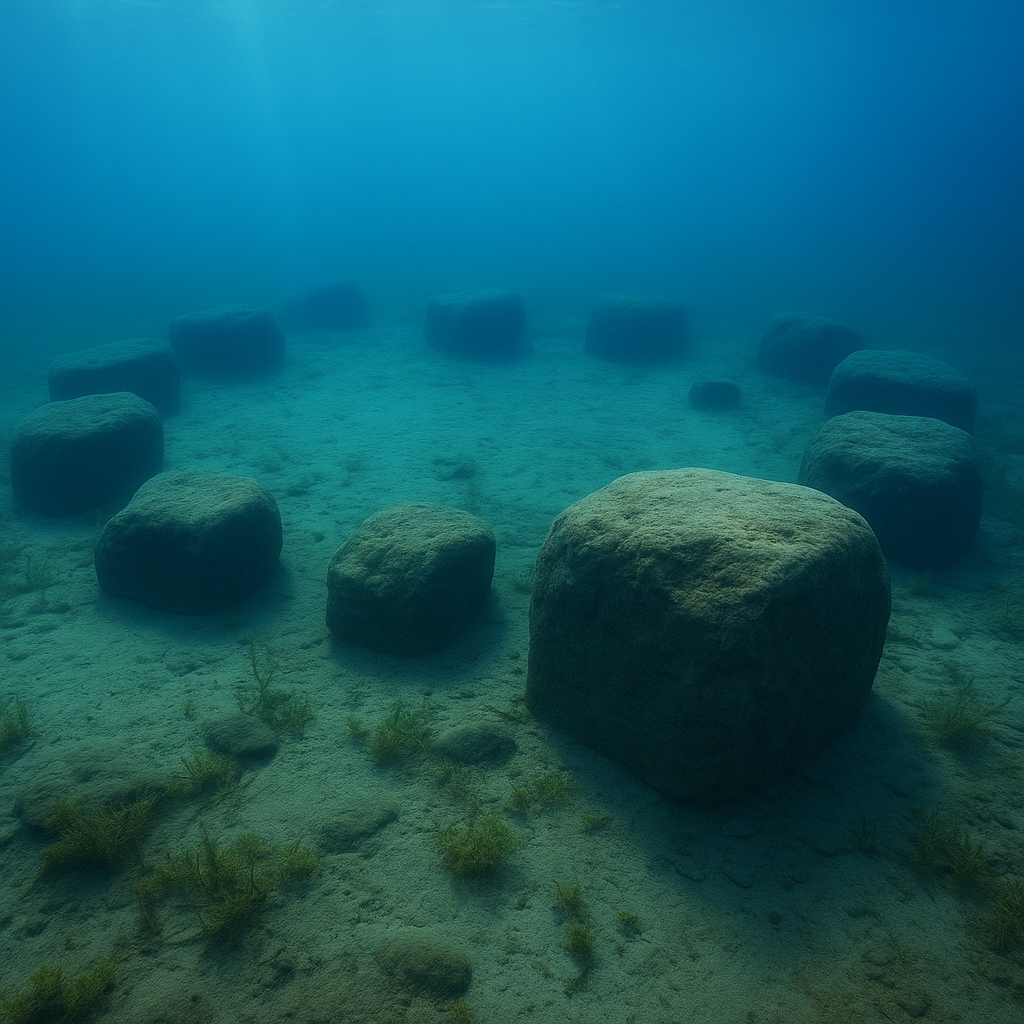
Michigan's Underwater Stonehenge: Lake Michigan's Deepest Mystery
Mackinac Island visitors are used to breathtaking vistas, rich history, and Victorian charm. But lurking just beneath the surface of nearby Lake Michigan lies one of the Midwest’s most intriguing mysteries: a submerged rock formation some claim rivals England’s Stonehenge. Dubbed Michigan's Underwater Stonehenge, this hidden archaeological enigma sits nearly 40 feet below the surface of Grand Traverse Bay and continues to fuel debate among scientists, divers, and curious travelers alike. Could it be an ancient spiritual site, evidence of prehistoric civilization, or a remarkable geological coincidence?
For guests of The Inn at Stonecliffe, this tale offers the perfect blend of Michigan mystery and cultural curiosity to explore during your May through October visit.
What Is Michigan's Underwater Stonehenge?
Discovery and Location
In 2007, Professor Mark Holley, a marine archaeologist from Northwestern Michigan College, was conducting a routine sonar scan of Grand Traverse Bay when he made a startling discovery: a formation of large stones arranged in what appeared to be a circular pattern, 40 feet beneath the lake's surface.
Coordinates and Access
-
Location: Grand Traverse Bay, Lake Michigan
-
Depth: Approx. 40 feet (12 meters)
-
Accessibility: Not a commercial dive site, only accessible to skilled divers or through sonar imaging tours
Although not visible to casual swimmers or boaters, the site has captured the imagination of underwater archaeologists and fringe theorists around the world.
The Mastodon Carving: Myth or Proof of Prehistoric Civilization?
Alleged Petroglyph
One of the rocks in the formation allegedly bears an image of a mastodon, an ancient elephant-like creature that roamed North America over 10,000 years ago. If authenticated, this would suggest human habitation in the Great Lakes region long before previously confirmed.
Scientific Skepticism
-
Some experts argue that the carving may be a natural feature, like a fracture or mineral stain.
-
No definitive proof has yet been provided that the carving is man-made.
Still, the notion of a mastodon petroglyph lends fuel to the theory that the rocks were arranged by ancient humans.
Theories About the Formation
1. Prehistoric Ceremonial Site
Many researchers speculate that the stones were placed by humans, possibly as part of a hunting structure or spiritual site.
2. Natural Geological Occurrence
Skeptics point out that underwater currents, glacial movement, and erosion could account for the apparent arrangement.
3. Michigan’s Ancient Alien Theory
More speculative thinkers have added the site to the pantheon of so-called "ancient alien" landmarks, similar to Nazca Lines or Pumapunku.
Comparison Table: Lake Michigan Stonehenge vs. Other Submerged Sites
| Feature | Michigan Underwater Stonehenge | Yonaguni Monument (Japan) | Dwarka Ruins (India) |
|---|---|---|---|
| Depth | 40 feet | 82–131 feet | 70–131 feet |
| Discovered | 2007 | 1986 | 2000 |
| Alleged Age | 10,000+ years (theoretical) | 10,000 years | 3,500+ years |
| Verified Human Construction | No | Disputed | Partial |
| Accessible to Public | No | Yes (dive tours) | Yes (dive tours) |
Can You Visit Michigan’s Underwater Stonehenge?
Dive Tours: Not Yet Commercialized
While the site is not open for tourism or diving, sonar imaging tours in nearby Grand Traverse Bay may reference the area.
Stonehenge-Inspired Attractions Nearby
-
Petoskey Stones State Park – Explore geological marvels along the shore.
-
Great Lakes Shipwreck Museum – Offers insights into underwater archaeology of the region.
Tips for Visitors
-
The Inn at Stonecliffe on Mackinac Island makes a perfect home base to explore Michigan’s lakeside mysteries and dive into the story of Michigan’s hidden past.
-
Visit May through October for peak travel weather and ferry service.
Timeline of the Discovery
-
2007 – Prof. Mark Holley discovers the formation during a sonar scan.
-
2008–2010 – Underwater imaging and initial academic presentations.
-
2011–2018 – Rise in fringe theories, inclusion in Ancient Aliens community forums.
-
2019–Present – Periodic scientific attention, but no further excavation or confirmation.
Related Sites and Mysteries in Michigan
The Lake Michigan Triangle
This region between Ludington, Benton Harbor, and Manitowoc has long been associated with shipwrecks, aircraft disappearances, and strange phenomena.
Petroglyphs of Sanilac County
Authentic Native American rock carvings in Michigan confirm the region’s long history of symbolic stonework.
Quick Facts: Michigan’s Underwater Stonehenge
-
Discovered: 2007
-
Located in: Grand Traverse Bay, Lake Michigan
-
Depth: 40 feet below surface
-
Features: Circular rock formation, alleged mastodon carving
-
Status: Not officially recognized as archaeological site
Why This Mystery Captures Imagination
Educational Appeal
From geology to anthropology to folklore, the site stimulates discussion across disciplines.
Media Exposure
The site has appeared in TV shows, podcasts, and YouTube documentaries covering unexplained phenomena and underwater archaeology.
Tourism Curiosity
Although not directly accessible, it draws interest to the surrounding regions including Traverse City and Mackinac Island.
Planning Your Stay: Why The Inn at Stonecliffe Is the Perfect Base
Guests of The Inn at Stonecliffe can enjoy:
-
Proximity to Lake Michigan’s scenic wonders
-
Historic mansion accommodations from May through October
-
Educational walking tours of Mackinac Island
-
Easy ferry access to mainland Michigan and nearby sites of interest
Ideal Itinerary
-
Day 1: Arrive at The Inn at Stonecliffe, sunset views of the Mackinac Bridge
-
Day 2: Visit Fort Mackinac and local museums
-
Day 3: Take a ferry to Traverse City and join a bay tour highlighting the underwater formation’s discovery
Frequently Asked Questions (FAQs)
Q: Where exactly is Michigan’s Underwater Stonehenge?
A: It is located in Grand Traverse Bay, about 40 feet underwater, and is not open for public diving.
Q: Can you see the mastodon carving?
A: The carving is alleged and remains unconfirmed. It can only be viewed via sonar scans shared in academic settings.
Q: Is the site older than England’s Stonehenge?
A: Possibly. If the formation is verified to be man-made, it could predate England’s Stonehenge by thousands of years.
Q: Is it worth planning a trip around this site?
A: While you cannot visit the site directly, exploring the surrounding region—including Mackinac Island—offers rich history, lake views, and plenty of cultural intrigue.
The Verdict: Legend, Landmark, or Layer of the Past?
Michigan’s underwater Stonehenge may remain unconfirmed, but it continues to captivate explorers and historians alike. As you stroll the scenic lawns of The Inn at Stonecliffe or gaze over Lake Huron’s shimmering surface, remember: somewhere nearby, beneath another Great Lake’s depths, lies a mystery still waiting to be solved.
Read other posts