Prehistoric Copper Heist: The Vanished Billions of the Keweenaw Peninsula
Unsolved Ancient Mining, Mysterious Booms, and Lost Technologies in Michigan’s Upper Peninsula
Introduction: A Mystery Buried in Stone
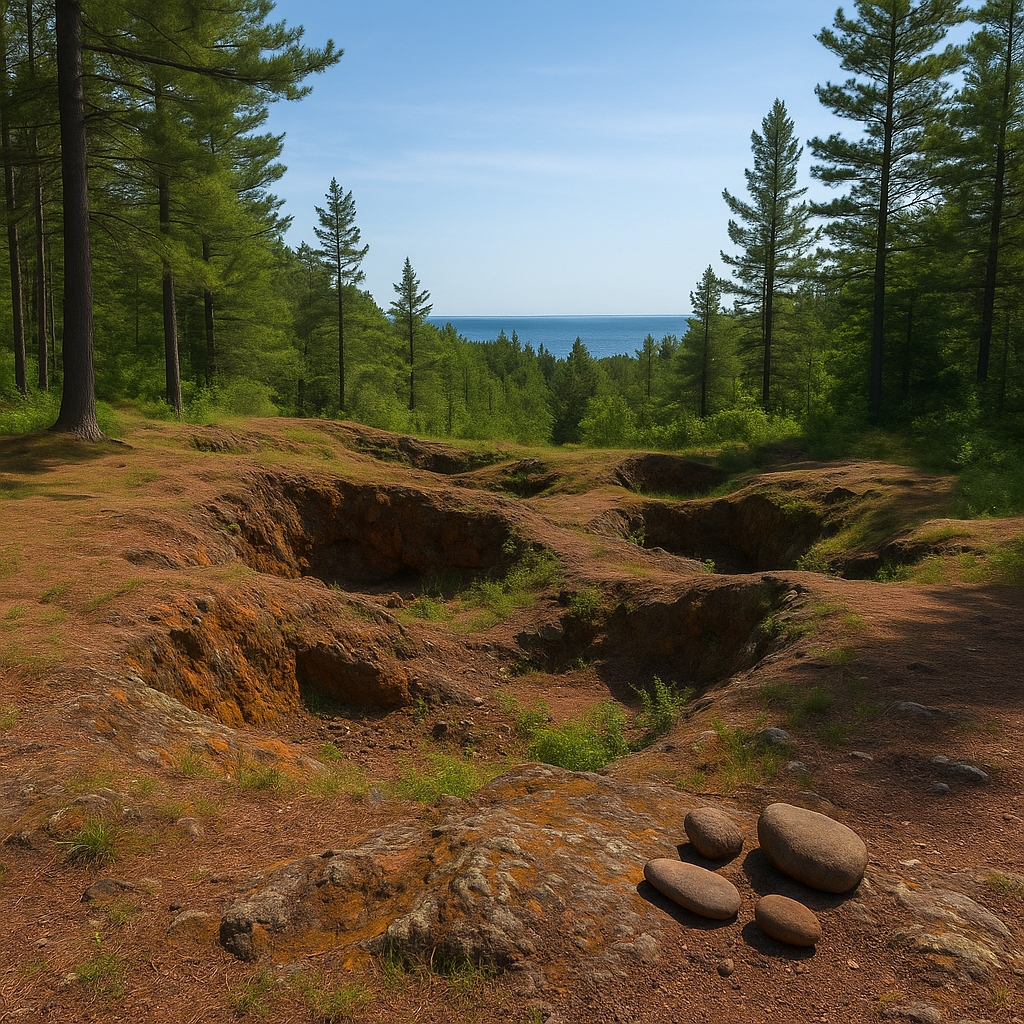
Tucked deep in the forested ridges of Michigan’s Keweenaw Peninsula, copper-stained rocks tell a story older than the pyramids. Over 1.5 billion pounds of pure copper were extracted from the earth between 3000 BCE and 1200 BCE—long before modern mining equipment or written history in the region. This wasn't industrial-era excavation. These were prehistoric open-pit copper mines, dug with stone hammers and fire-setting techniques by ancient hands, at a scale that still defies explanation.
Yet, most of that copper is missing.
Despite extensive mining, only a tiny fraction of the ancient copper remains in the archaeological record. No evidence of mass storage, no burial caches, and no clear explanation for where it all went. This has led historians, scientists, and theorists alike to ask a stunning question:
Where did the copper go?
The Scope of the Mystery: What Do We Know?
Estimated Output of Ancient Copper Mines
-
Timeframe: 5000 BCE to 1200 BCE
-
Location: Keweenaw Peninsula and Isle Royale
-
Estimated copper removed: 1.5 billion pounds
-
Tools used: Stone hammers, bone tools, fire to fracture rock
-
Number of mine pits discovered: 5,000+
These figures dwarf any known ancient mining operation in North America and challenge what we thought was possible without modern machinery.
What Makes Keweenaw Copper Unique?
-
99.9 percent purity — This copper required no smelting
-
Easy malleability — Ready for tool and ornament production
-
Abundant surface deposits — Often lying just beneath the soil
-
Geological antiquity — The deposits are over 1.1 billion years old
Its purity and accessibility made it ideal for prehistoric cultures, yet the scale of extraction far exceeds the needs of local tribal societies.
Who Were the Ancient Copper Miners?
Indigenous Tribes and Oral Histories
Archaeological evidence links copper tool use to Old Copper Complex cultures, but oral traditions from the Ojibwe and other Anishinaabe tribes speak of:
-
Thunder beings guarding the copper
-
Booming noises coming from the earth
-
Sacred restrictions on removing too much copper
Some legends imply that mining was abandoned due to divine warning, possibly connected to the eerie geological phenomena still recorded today.
Where Did the Copper Go? Major Theories
1. It Was Lost or Recycled
-
Tools and ornaments may have eroded, been buried, or melted down over time
-
Lack of preservation in acidic soils
-
Burial with owners in sites not yet discovered
Objection: Even with loss, the sheer volume cannot be accounted for by natural degradation alone.
2. Trade with Eastern North America
-
Copper artifacts found in Hopewell and Mississippian cultures
-
Trade networks stretched from Michigan to Florida
-
Some tools found as far as the Appalachian Mountains
Objection: These uses account for only 1 percent or less of total mined copper.
3. Transoceanic Contact Hypothesis
-
Claims copper was traded to Minoans, Phoenicians, or Egyptians
-
Pseudohistorical theory often labeled speculative or fringe
-
Based on supposed Old World metallurgy that matches Lake Superior copper isotopes
Objection: No solid archaeological proof of transatlantic travel until Viking contact in Newfoundland (~1000 CE)
4. The Lost Civilization Theory
-
Suggests a forgotten prehistoric North American civilization mined and hoarded the copper
-
Implies large-scale organization, labor systems, and storage
-
Some link this to Atlantis-style myths or mound builder legends
Objection: No cities or infrastructure have been found to support this idea.
Sound from the Deep: The Mystery of the Shaking Grounds
Visitors to the Keweenaw and parts of Lake Superior occasionally report:
-
Unexplained booming sounds (known as “Baraga Booms” or “Seneca Guns”)
-
Ground shaking with no seismic activity
-
Sudden lake reverberations on clear days
These phenomena echo oral traditions of “shaking copper hills” and are still being investigated. Theories range from:
-
Cryoseisms (frost quakes)
-
Subterranean gas pockets
-
Glacial rebound effects
Others believe the sounds are remnants of ancient mining collapses or energy releases from long-lost structures underground.
What Tools Did Ancient Miners Use?
| Tool Type | Description | Discovery Sites |
|---|---|---|
| Stone hammers | Rounded stones with handle grooves | Thousands found near mine pits |
| Fire-setting | Heating rocks to crack them | Charcoal remains in mine areas |
| Bone/Antler chisels | Used to pry loose rock | Limited findings |
| Wooden ladders | Access to deeper shafts | Reconstructed based on impressions |
Despite the rudimentary tools, miners carved out massive pits and tunnels, some measuring over 20 feet deep.
What Are the Best Places to Explore the Ancient Copper Mystery?
1. Keweenaw National Historical Park
-
Preserves former copper mining sites
-
Open-air trails, interpretive centers, and guided tours (May through October)
2. Quincy Mine Hoist
-
Historic industrial-era mine that overlays ancient mining zones
-
Offers underground mine tours in summer months
3. Isle Royale National Park
-
Remote island mining pits dated back 7,000 years
-
Accessible by ferry in summer, weather permitting
4. Copper Harbor and Brockway Mountain Drive
-
Scenic drives through geologically significant regions
-
Erosion exposes ancient copper-bearing layers
Planning a Trip from Mackinac Island to Keweenaw
Best Travel Months: May through October (avoid winter closures and ferry service suspension)
Suggested Itinerary:
-
Stay at The Inn at Stonecliffe (Mackinac Island)
Enjoy nature, lake views, and history at a peaceful summer resort -
Take a Ferry to St. Ignace, Then Drive to Houghton
A scenic 6-hour drive through the Upper Peninsula -
Visit Copper Mining Heritage Sites
Schedule museum tours and guided hikes around Keweenaw -
Explore Local Legends
Ask guides about shaking grounds, lost copper, and local lore -
Return to The Inn for Reflection and Rest
Recharge in comfort surrounded by natural Northern Michigan beauty
FAQs About the Prehistoric Copper Heist
Was 1.5 billion pounds of copper really mined by ancient people?
Yes. Geological surveys, tool remains, and pit excavations strongly support this figure.
Where is all the ancient copper now?
That remains a mystery. Only a fraction exists in known artifacts. Theories range from erosion to transatlantic trade.
Did ancient Americans trade copper with Egyptians?
There is no archaeological consensus. Some researchers point to copper isotopic similarities, but no conclusive evidence exists.
What are the booming sounds heard in the Keweenaw?
These "shaking grounds" are real but unexplained. They could be geological or atmospheric, though some tie them to ancient myths.
Can I visit the ancient copper sites?
Yes – from May through October, Keweenaw sites, Isle Royale, and historic parks are accessible to the public.
Why This Matters: Hidden History in Plain Sight
The mystery of Michigan’s missing copper is more than a curiosity—it is a window into a forgotten age. Whether the answer lies in lost civilizations, buried trade routes, or misunderstood geology, the Keweenaw Peninsula remains one of the most fascinating and underexplored historical sites in North America.
Conclusion: The Great Copper Enigma
As you gaze over the sparkling waters of Lake Superior, it's hard to imagine that billions of pounds of copper once flowed out of the ground here—only to disappear without a trace. The ancient mining pits, scattered stone tools, and ghostly booms of the “shaking hills” continue to puzzle scientists and storytellers alike.
For those intrigued by unsolved history, ancient technology, and the enduring spirit of the North, this region offers more than speculation—it offers the chance to walk the very ground where one of America’s greatest prehistoric mysteries unfolded.
When planning your exploration, make The Inn at Stonecliffe on Mackinac Island your elegant summer base. From May through October, enjoy peaceful lake views, historic charm, and easy access to the legends of the Upper Peninsula.
Read other posts