Robinson’s Folly on Mackinac Island: History, Location, and the Story Behind the Name
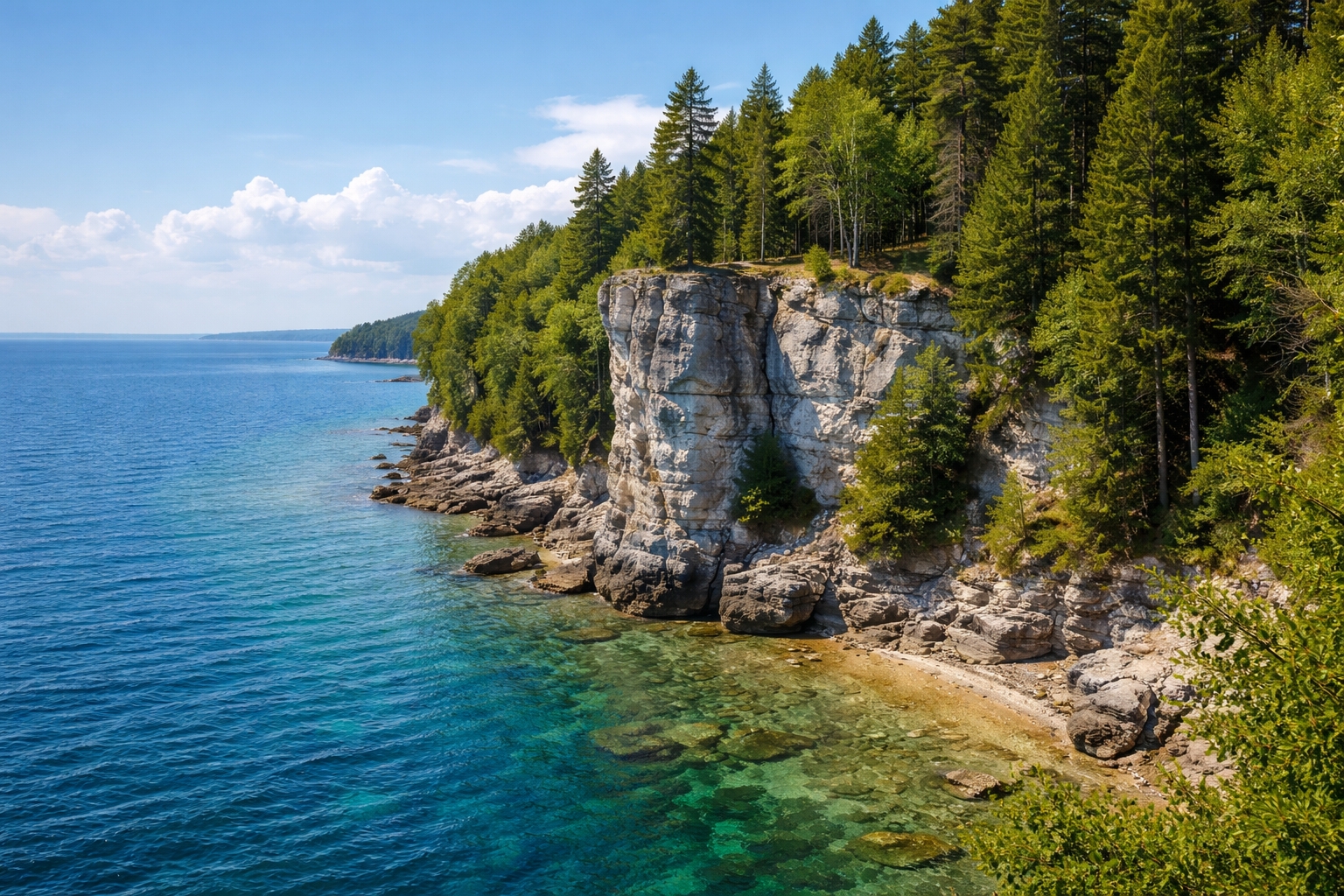
Robinson’s Folly is one of Mackinac Island’s lesser-known but historically significant landmarks, tied directly to the island’s British military period in the late 18th century. Unlike Arch Rock or Sugar Loaf, Robinson’s Folly is not a dramatic freestanding formation or a vanished natural wonder. Instead, it refers to a limestone bluff on the island’s southeast side near present-day Mission Point, named after a failed structure associated with British command.
Understanding Robinson’s Folly offers insight into Mackinac Island’s strategic importance, early colonial mistakes, and how the island’s landscape and history are deeply intertwined. For travelers planning a thoughtful visit to Mackinac Island between May and October, the story of Robinson’s Folly adds historical depth to a part of the island many pass without realizing its significance.
What Is Robinson’s Folly
Robinson’s Folly refers to a limestone bluff or outcrop on the southeast side of Mackinac Island. The name originates from a short-lived structure built near or atop the bluff during the British occupation of the island in the late 1700s.
The folly itself was not the rock formation, but the ill-advised construction placed in a vulnerable position. When part of the bluff collapsed, the structure fell, earning the site its enduring name.
Today, the bluff remains, but the structure does not.
Where Robinson’s Folly Is Located on Mackinac Island
Robinson’s Folly is located on the southeastern shoreline of Mackinac Island, in the area now associated with Mission Point. The site overlooks Lake Huron and the Straits of Mackinac, an area historically valued for visibility and strategic positioning.
This location mattered greatly in the 18th century, when Mackinac Island functioned as a military and trading outpost rather than a tourist destination.
Who Robinson Was and Why the Site Was Named
The name Robinson’s Folly is widely believed to reference Captain Daniel Robertson, a British officer who served as commandant of Fort Mackinac from 1782 to 1787. Some historical references shorten or alter the name to Robinson, a common occurrence in early records.
Robertson ordered or allowed construction of a structure near the bluff that proved structurally unsound. When part of the limestone gave way, the structure collapsed, reinforcing the idea that the project was a folly, meaning a costly or foolish undertaking.
What the Word Folly Means in Historical Context
In historical usage, folly does not mean comedy or absurdity. It refers to a misguided or impractical structure, often one that failed due to poor judgment.
Robinson’s Folly earned its name not because of how it looked, but because of why it failed.
The British Military Period on Mackinac Island
To understand Robinson’s Folly, it helps to understand Mackinac Island’s role in the late 1700s.
During this period, the island was:
-
A critical point in the Great Lakes fur trade
-
A strategic military position controlling movement through the Straits
-
Contested territory between British and American forces
Fort Mackinac served as the island’s military center, and outlying positions like Robinson’s Folly were attempts to extend control or observation.
Why the Structure at Robinson’s Folly Failed
The failure of the structure was due to natural limestone instability, not enemy action.
Mackinac Island’s limestone:
-
Is porous and subject to erosion
-
Experiences freeze-thaw cycles that weaken rock
-
Can collapse suddenly when undermined
Building close to the edge of a bluff without understanding these forces was a mistake that quickly became obvious.
The Geological Setting of Robinson’s Folly
The bluff at Robinson’s Folly is part of the same limestone system that created:
-
Arch Rock
-
Sugar Loaf
-
The island’s caves and shoreline cliffs
These features were formed hundreds of millions of years ago when the region was covered by shallow seas. Over time, erosion sculpted dramatic landforms, but also created inherent instability.
Robinson’s Folly vs Arch Rock
Robinson’s Folly is often confused with Arch Rock, but they are fundamentally different.
| Feature | Robinson’s Folly | Arch Rock |
|---|---|---|
| Type | Limestone bluff | Natural limestone arch |
| Status | Bluff still exists | Arch still exists |
| Name origin | Failed structure | Natural formation |
| Location | Southeast shoreline | Inland eastern side |
| Purpose | Military | Natural landmark |
Arch Rock was never built upon. Robinson’s Folly was.
Why Robinson’s Folly Is Often Misunderstood
Many modern descriptions exaggerate Robinson’s Folly into a lost rock formation. This confusion likely stems from:
-
The dramatic nature of the name
-
Lack of visible ruins
-
Conflation with other Mackinac Island landmarks
In reality, the history is subtler but more instructive.
Robinson’s Folly and Mackinac Island’s Approach to Preservation
The failure at Robinson’s Folly serves as an early lesson in respecting the island’s natural landscape. Today, Mackinac Island:
-
Prohibits cars
-
Limits modern development
-
Protects natural and historic sites
The island’s preservation ethic is partly shaped by early mistakes like Robinson’s Folly.
Visiting the Area of Robinson’s Folly Today
Visitors can still experience the landscape around Robinson’s Folly by:
-
Walking or biking the island’s southeast paths
-
Exploring the Mission Point area
-
Observing limestone bluffs along the shoreline
While there is no monument marking the exact spot, understanding the history transforms the experience.
Why Robinson’s Folly Matters to Modern Travelers
Robinson’s Folly matters because it represents:
-
Early European misjudgment of natural forces
-
Mackinac Island’s military past
-
The fragile balance between history and landscape
For travelers who value meaning over spectacle, it adds depth to the island experience.
Best Time to Explore Mackinac Island History
Mackinac Island is best explored from May through October, when:
-
Historic sites are open
-
Trails and paths are accessible
-
Guided history tours operate
The island does not support overnight stays during winter, making seasonal planning essential.
Experiencing Mackinac Island with Historical Perspective
Understanding sites like Robinson’s Folly encourages slower travel:
-
Walking rather than rushing
-
Observing rather than checking off attractions
-
Connecting place with story
This approach aligns naturally with Mackinac Island’s quieter corners.
Frequently Asked Questions
Is Robinson’s Folly still on Mackinac Island?
Yes. The limestone bluff remains, but the structure that gave it its name does not.
Was Robinson’s Folly a natural rock formation?
The bluff is natural. The folly refers to a failed structure built near it.
Where is Robinson’s Folly located?
On the southeast side of Mackinac Island near Mission Point.
Why is it called a folly?
Because the structure collapsed due to poor placement and judgment.
Is Robinson’s Folly the same as Arch Rock?
No. They are separate sites with different histories.
Planning a Meaningful Mackinac Island Stay in 2026
Mackinac Island rewards travelers who seek context, calm, and connection. Pairing natural exploration with historical understanding elevates the experience beyond sightseeing.
For travelers planning a 2026 visit during the May through October season, refined lodging that reflects the island’s quieter, historic side provides the ideal base.
Explore seasonal stays and island experiences at
https://www.theinnatstonecliffe.com
Learn More about Mackinac Island's other Attractions by visiting The Ultimate Guide for 2026: Mackinac Island Attractions: The Ultimate 2026 Travel Guide
Read other posts