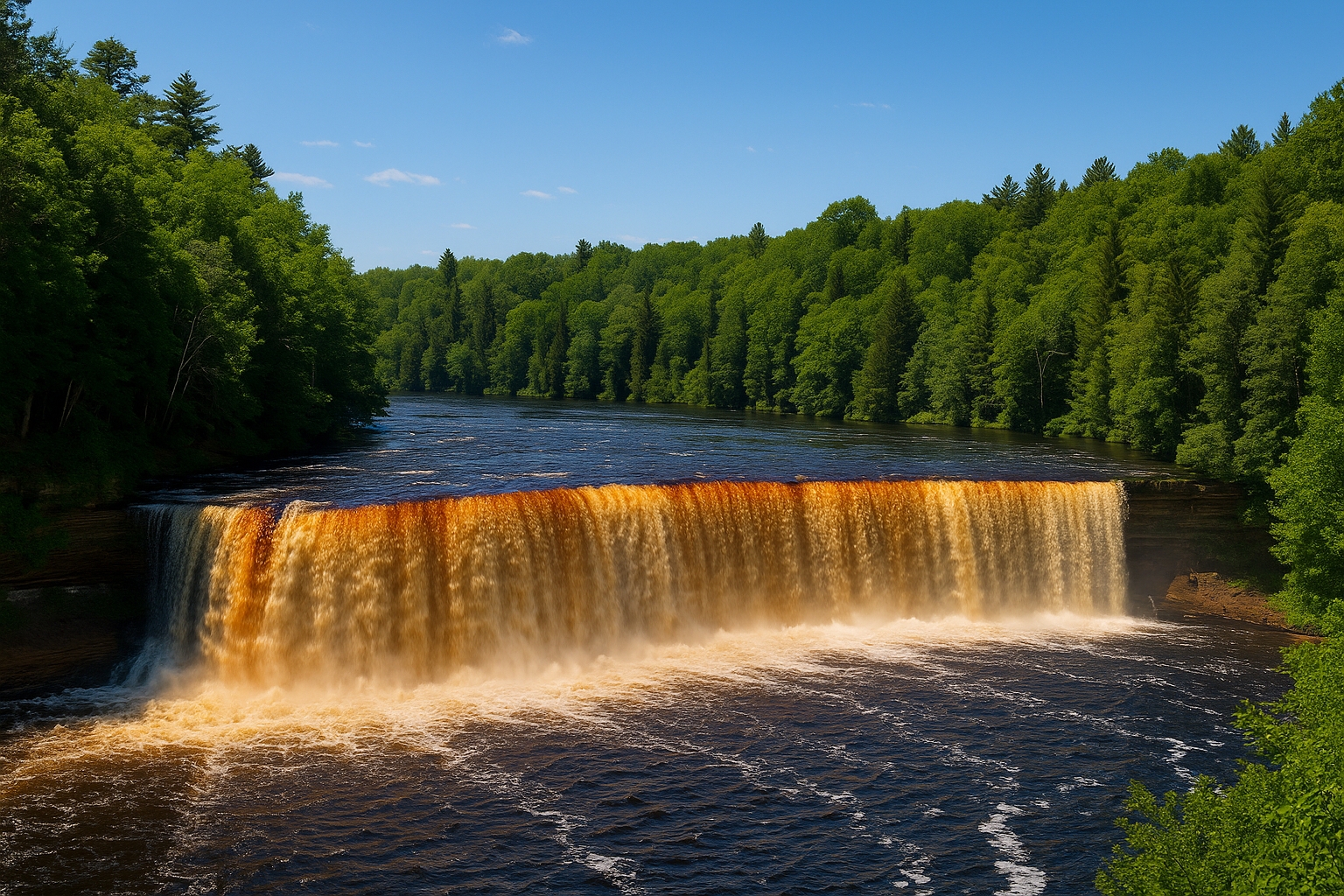
Tahquamenon Falls: The Root-Beer Waterfalls of Michigan
Exploring the Upper Peninsula’s Most Iconic Natural Wonder
Tahquamenon Falls isn’t just a waterfall – it’s a sensory marvel of sound, color, and movement. With its distinct caramel-brown hue, thunderous flow, and rich cultural significance, this destination in Michigan’s Upper Peninsula captures the imagination of adventurers, poets, and photographers alike.
Nicknamed “The Root-Beer Falls” because of its foamy, tannin-stained water, Tahquamenon Falls is one of the largest waterfalls east of the Mississippi – with over 50,000 gallons of water per second surging over its sandstone lip in peak flow.
In this complete guide, you’ll discover:
-
How many waterfalls make up the Tahquamenon system
-
What gives the water its unusual brown color
-
Why Longfellow used the falls as literary inspiration
-
How Tahquamenon compares to Niagara
-
When to visit for the best views (May–October only)
-
Why it’s a perfect summer or fall excursion from Mackinac Island and The Inn at Stonecliffe
Let’s explore one of the most awe-inspiring natural features in the entire Great Lakes region.
What Are the Tahquamenon Falls?
The Tahquamenon Falls are a pair of major waterfalls located along the Tahquamenon River in Michigan’s eastern Upper Peninsula. This 94-mile-long river originates near Newberry and flows into Whitefish Bay on Lake Superior, winding through cedar swamps and forested wilderness.
There are two main sections:
-
Upper Tahquamenon Falls – The iconic “root beer” falls, among the largest in the eastern United States
-
Lower Tahquamenon Falls – A scenic series of smaller cascades, perfect for kayaking, hiking, and family activities
Why Is It Called the Root-Beer Waterfall?
One of the most common questions is:
Why is the water at Tahquamenon Falls brown?
The answer lies in the river’s origins. As it winds through dense forests and cedar swamps, the river water absorbs tannins – organic compounds released by decaying vegetation. These tannins give the water its:
-
Deep amber-brown color
-
White foam resembling the head of a root beer
This natural process causes no pollution – it's purely organic and completely safe. The effect is especially vibrant after spring runoff or summer rains, when the flow volume intensifies.
How Big Is the Upper Tahquamenon Falls?
The Upper Falls is one of the largest waterfalls in the United States east of the Rockies.
| Feature | Measurement |
|---|---|
| Height | 50 feet |
| Width | Over 200 feet across |
| Water Flow (spring peak) | Up to 50,000 gallons per second |
| Average Year-Round Flow | Approximately 7,000–10,000 gallons per second |
| Location | Tahquamenon Falls State Park, Luce County |
While it isn’t taller than Niagara Falls (which drops about 167 feet), it’s wider and more thunderous than many visitors expect – especially when viewed up close from the wooden viewing platforms.
Upper vs. Lower Tahquamenon Falls: What’s the Difference?
| Feature | Upper Falls | Lower Falls |
|---|---|---|
| Waterfall Type | Single, large vertical drop | Cascading series of smaller drops |
| Size | 50 ft high, 200+ ft wide | 4–5 ft high, spread across channels |
| Access | Viewing platforms, trails | Hiking trails, boat rental access |
| Activities | Viewing, photography, hiking | Kayaking, picnics, family wading |
| Distance Between Falls | 4 miles by road or trail | 4 miles by road or trail |
| Best for | Dramatic scenery | Recreation, water play, exploration |
Historical and Cultural Significance of Tahquamenon Falls
Native American Roots
The region surrounding the falls was long inhabited by Ojibwa (Chippewa) people, who believed the river was sacred and called it the Tahquamenaw, possibly meaning “dark water river” or “amber-hued stream.”
Longfellow’s Hiawatha
The falls were immortalized in Henry Wadsworth Longfellow’s 1855 epic poem The Song of Hiawatha, which opens:
“By the rushing Tahquamenaw…”
Longfellow never visited the falls in person – he drew inspiration from Ojibwa legends and stories, but his vivid imagery of a roaring, mystical waterfall closely mirrors the powerful ambiance of the Upper Falls.
Can You Visit Tahquamenon Falls from Mackinac Island?
Yes – and The Inn at Stonecliffe on Mackinac Island makes a beautiful starting point for a day-trip or overnight loop through the eastern Upper Peninsula.
Suggested May–October Itinerary:
-
Ferry from Mackinac Island to St. Ignace
-
Drive northwest via M-123 through dense forest and state parklands (approx. 1 hour 45 minutes)
-
Visit:
-
Upper Falls overlook and trails
-
Lower Falls for kayaking or picnicking
-
-
Optionally stay overnight in Newberry or Paradise, Michigan
-
Loop back to Mackinac Island the next day
Note: The Inn at Stonecliffe is open only May through October. This timeframe aligns beautifully with peak water flow, fall color, and warm-weather exploration.
When Is the Best Time to Visit Tahquamenon Falls?
| Season | Conditions | Highlights |
|---|---|---|
| Spring (May–June) | High water volume from snowmelt | Most powerful flow, lush green surroundings |
| Summer (July–Aug) | Warm weather, accessible hiking | Ideal for day trips, boating, wildlife viewing |
| Fall (Sept–Oct) | Crisp air, changing leaves | Fall foliage backdrop, reduced crowds |
Avoid winter travel if staying at The Inn at Stonecliffe, as Mackinac Island is closed and most ferry access ends in late October. The falls do freeze dramatically in winter, but that is best reserved for future planning if traveling from a mainland base.
Things to Do at Tahquamenon Falls
Upper Falls Activities
-
Paved trails to overlooks and platforms
-
Staircases leading to water-level viewing areas
-
On-site brewery and gift shop
-
Interpretive signage about geology and history
Lower Falls Activities
-
Canoe or rowboat rentals to reach the central island
-
Shallow areas for wading and exploration
-
Looping boardwalk trail
-
Picnic tables and shaded rest areas
Wildlife and Nature Along the Tahquamenon River
The surrounding Tahquamenon Falls State Park spans over 46,000 acres and is home to:
-
Black bears
-
Moose
-
White-tailed deer
-
Otters
-
Bald eagles and herons
-
Over 100 species of wildflowers
The cedar forests and hemlock groves offer dense habitat and an ancient, almost primeval feeling. Birdsong and the sound of falling water echo through the trees in summer and fall.
Photography Tips for the Falls
If you’re planning to photograph the falls (especially from May to October), consider:
-
Morning light for soft tones and less crowding
-
Tripod for long-exposure waterfall blur
-
Polarizing filter to reduce glare and enhance water color
-
Drones prohibited in most park areas
-
Use boardwalks and platforms for safe access
FAQs About Tahquamenon Falls
Why is the water brown at Tahquamenon Falls?
The color comes from natural tannins in cedar swamps that feed the river. It’s clean, organic, and safe.
How tall is Tahquamenon Falls?
The Upper Falls is about 50 feet high and 200 feet wide.
Is Tahquamenon Falls bigger than Niagara Falls?
No – Niagara is taller and wider, but Tahquamenon is still one of the largest waterfalls east of the Mississippi.
Can you swim at the falls?
Swimming is not permitted at the Upper Falls, but wading and water play are allowed in safe areas at the Lower Falls.
Are pets allowed at Tahquamenon Falls State Park?
Yes – dogs are welcome on leashes. Always follow park rules.
Is Tahquamenon Falls accessible to those with limited mobility?
Yes – there are paved walkways and ADA-compliant viewing platforms at the Upper Falls.
How far are the falls from Mackinac Island?
About 85 miles, or 1 hour 45 minutes by car once you reach St. Ignace by ferry.
Final Thoughts: A Root-Beer Waterfall Unlike Any Other
Tahquamenon Falls is more than a waterfall – it’s a natural canvas painted in caramel hues, steeped in history, poetry, and elemental force. From towering cascades to winding river trails, it’s a destination that stirs the soul.
Whether you're seeking nature photography, a peaceful hiking excursion, or a literary connection to Longfellow’s Hiawatha, Tahquamenon Falls delivers a singular experience – especially during Michigan’s lush spring and vibrant fall seasons.
Plan Your Adventure from The Inn at Stonecliffe
Nestled high on Mackinac Island’s West Bluff, The Inn at Stonecliffe offers the perfect basecamp for exploring the region’s most iconic natural wonders – from island vistas to waterfalls worth writing poetry about.
-
Historic estate overlooking the Straits of Mackinac
-
Open May through October – ideal for summer U.P. getaways
-
Secluded, car-free setting with full access to Mackinac trails and ferry departures
Make your next adventure start with The Inn at Stonecliffe – and let Tahquamenon Falls be your next unforgettable chapter.
.
Read other posts