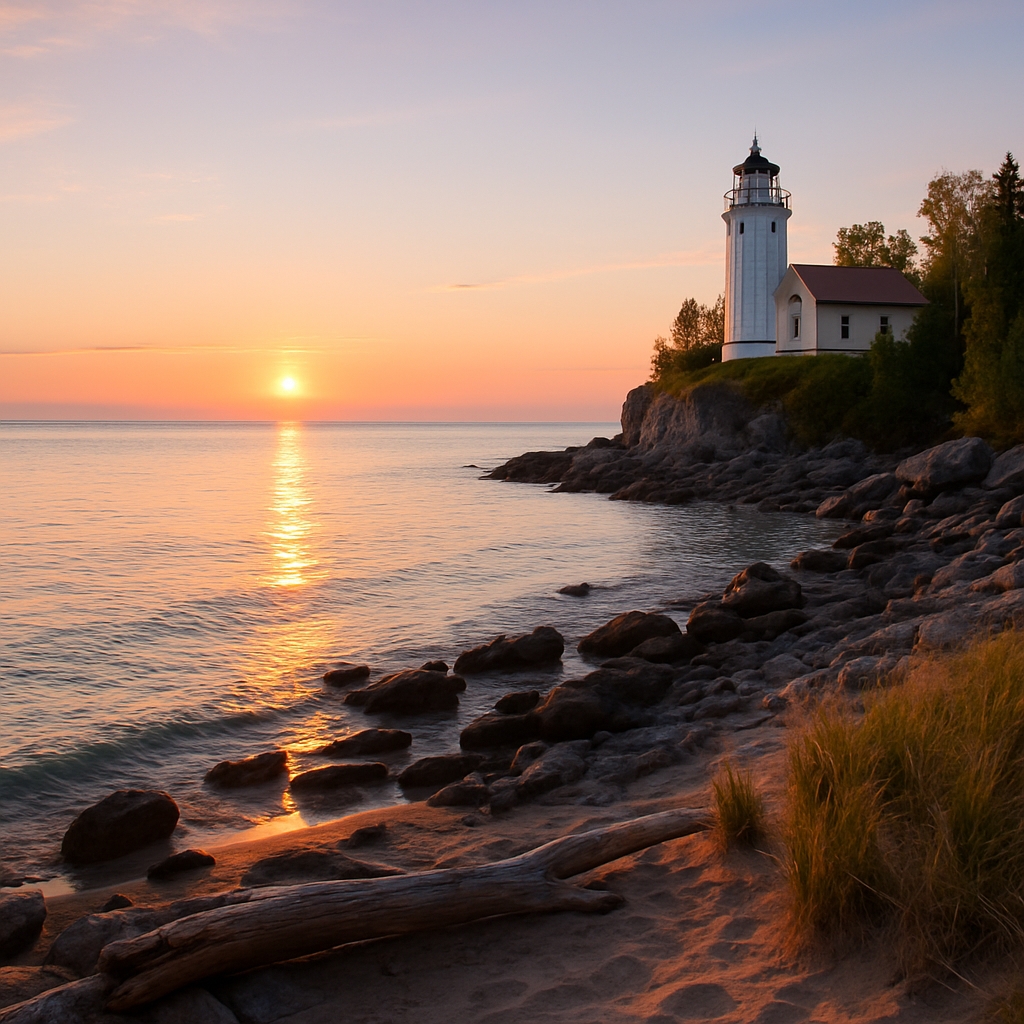
The Deep and Storied History of Michigan: From Indigenous Roots to Modern Identity
Michigan’s identity is a rich mosaic of indigenous culture, French exploration, industrial innovation, and natural beauty. Whether you're exploring its historic trading posts or tracing the Great Lakes’ role in American expansion, understanding Michigan’s past offers essential context to its present. This guide covers everything from prehistoric settlements to 21st-century revitalization—perfect for history buffs, students, and travelers curious about the Great Lakes State.
Please Note: The Inn at Stonecliffe on Mackinac Island is closed during the winter season but invites guests to explore Michigan’s heritage during warmer months when the island is open.
Table of Contents
-
Prehistoric Michigan and Indigenous Cultures
-
The Arrival of French Explorers and Missionaries
-
Michigan Under British Rule
-
Territory to Statehood: The Path to Becoming the 26th State
-
The Impact of the Erie Canal and Early Settlers
-
Michigan in the Civil War
-
Rise of the Auto Industry and Industrial Power
-
Great Depression and Labor Movements
-
Post-War Boom and Suburbanization
-
Detroit’s Decline and Michigan’s Reinvention
-
Environmental Legacy and Great Lakes Preservation
-
Indigenous Sovereignty and Modern Recognition
-
FAQs About Michigan History
-
Planning a Historical Tour of Michigan in Warmer Months
-
Final Reflections
Prehistoric Michigan and Indigenous Cultures
The First Inhabitants
Long before European settlers arrived, Michigan was home to thriving Indigenous nations including the Ojibwe, Odawa, and Potawatomi—collectively known as the Three Fires Confederacy.
-
Archaeological evidence shows human presence dating back over 10,000 years.
-
Early people used copper tools sourced from the Keweenaw Peninsula, establishing trade routes throughout North America.
The Arrival of French Explorers and Missionaries
French Fur Trade and Jesuit Missions
The 1600s brought French fur traders like Étienne Brûlé and Jesuit missionaries such as Father Jacques Marquette.
-
Sault Ste. Marie (1668) and St. Ignace (1671) were among the first European settlements.
-
Mackinac Island became a central fur-trading hub by the early 1700s.
Keyword cluster: French exploration of Michigan, Jesuit missions, fur trade in the Great Lakes
Michigan Under British Rule
Transition After the French and Indian War
In 1763, following the Treaty of Paris, Michigan fell under British control, sparking resentment among Indigenous groups.
-
Pontiac’s Rebellion (1763) was a pivotal uprising against British rule.
-
The region remained under British influence until after the War of 1812.
Territory to Statehood
Becoming the 26th State in 1837
Michigan was declared a U.S. territory in 1805 and became a state in 1837 after resolving a border dispute with Ohio (the “Toledo War”).
Key facts:
-
Capital moved from Detroit to Lansing in 1847 for strategic reasons.
-
Statehood spurred an influx of European immigrants, drawn to fertile farmland and the timber industry.
The Impact of the Erie Canal and Early Settlers
Economic Expansion and Population Growth
The Erie Canal (opened in 1825) connected the Great Lakes to the Atlantic, facilitating a massive migration into Michigan.
-
Towns like Ann Arbor, Grand Rapids, and Flint grew rapidly.
-
Logging and mining became central to Michigan’s economy.
Michigan in the Civil War
A Strong Union Contributor
Though not a battlefield, Michigan played a major role in the American Civil War.
-
Contributed over 90,000 soldiers to the Union Army.
-
General George Armstrong Custer, a Michigan native, rose to fame during the war.
Rise of the Auto Industry and Industrial Power
Birth of the Motor City
In the early 20th century, Henry Ford’s assembly line revolutionized manufacturing, making Detroit the automotive capital of the world.
-
Companies like Ford, General Motors, and Chrysler transformed Michigan’s economy.
-
This era attracted workers from across the country, especially from the South, fueling the Great Migration.
Great Depression and Labor Movements
Struggle and Solidarity
The 1930s were marked by economic hardship and the rise of organized labor.
-
The Flint Sit-Down Strike (1936–37) led to the unionization of GM workers.
-
The UAW (United Auto Workers) became a national labor force rooted in Michigan.
Post-War Boom and Suburbanization
Prosperity and Growth
Post-WWII Michigan enjoyed economic prosperity, suburban sprawl, and population growth.
-
The G.I. Bill spurred homeownership.
-
Infrastructure investments connected cities and created new suburbs around Detroit, Lansing, and Grand Rapids.
Detroit’s Decline and Michigan’s Reinvention
The Fall and Rise of a State
Deindustrialization and racial tensions in the late 20th century led to Detroit’s decline—culminating in its 2013 bankruptcy.
Recent decades have seen:
-
Tech and green-energy investments
-
Detroit’s cultural and architectural revival
-
A return to craft industries and tourism
Environmental Legacy and Great Lakes Preservation
Michigan’s Natural Resources
With over 11,000 inland lakes and surrounded by four of the five Great Lakes, Michigan has long balanced industrial development with conservation.
Important legislation and moments:
-
Clean Water Act
-
Great Lakes Compact
-
Sleeping Bear Dunes and Pictured Rocks named national treasures
Indigenous Sovereignty and Modern Recognition
Honoring the First Nations
Michigan is home to 12 federally recognized Native American tribes, each with sovereign lands and governing councils.
-
Tribal gaming and cultural centers support economic independence and cultural preservation.
-
Many offer public programs, powwows, and museums that educate about native traditions.
FAQs About Michigan History
What is Michigan most historically known for?
Michigan is known for the auto industry, Great Lakes trade, and its pivotal role in American manufacturing.
What was Michigan’s role in the Civil War?
Michigan contributed over 90,000 soldiers and key military leaders to the Union cause.
When did Michigan become a state?
Michigan became the 26th state on January 26, 1837.
Planning a Historical Tour of Michigan in Warmer Months
While The Inn at Stonecliffe is closed in winter, guests can plan ahead for warm-weather stays to explore Michigan’s rich history:
-
Mackinac Island: Fort Mackinac, Grand Hotel, Marquette Park
-
Detroit: The Henry Ford Museum, Motown Museum, Detroit Historical Society
-
UP Adventures: Sault Ste. Marie Canal, Fayette Historic Townsite, and the Keweenaw Peninsula mining tours
-
Lighthouses: Whitefish Point, Big Sable Point, and Old Mackinac Point
Final Reflections
Michigan’s past is as vast and varied as its shoreline. From Indigenous civilizations to global automotive leadership, the Wolverine State tells a story of resilience, innovation, and cultural depth.
Looking ahead to your next adventure? When Mackinac Island reopens in the spring, book your stay at The Inn at Stonecliffe for a historic, tranquil, and luxurious base from which to explore it all.
Read other posts