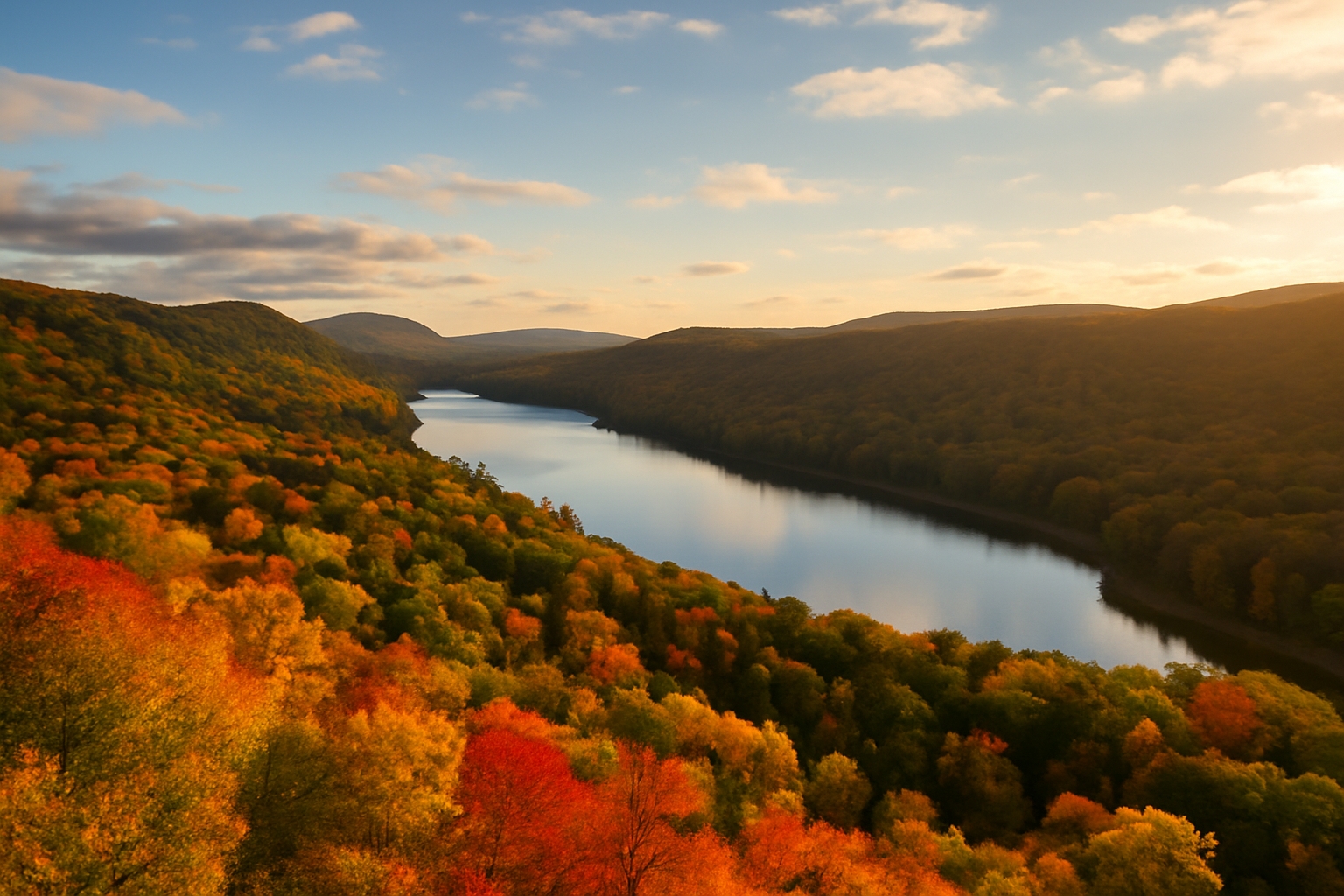
The Porcupine Mountains: Real Mountains in a 'Flat' State
Introduction: Michigan's Surprising Mountain Range
Michigan is often misunderstood as a flat state dominated by lakes and farmland. While the state does boast rolling hills and flatlands in the Lower Peninsula, its Upper Peninsula (U.P.) is home to one of the most rugged and dramatic landscapes east of the Mississippi. Towering above the forest canopy, the Porcupine Mountains Wilderness State Park—known as "The Porkies"—dispels the myth of a pancake-flat Michigan.
With elevations reaching up to 1,978 feet, ancient forests that predate European settlement, and miles of secluded hiking trails and waterfalls, this wild region showcases the raw beauty and topographic drama that many travelers don't expect to find in the Midwest.
This comprehensive guide will explore the real mountains of Michigan, highlight their highest points, showcase the last old-growth forest east of the Rockies, and inspire travelers to plan their adventure between May and October—the best months to visit before The Inn at Stonecliffe closes for the season.
Are There Real Mountains in Michigan?
Yes. While the Lower Peninsula is mostly low-lying, the Upper Peninsula is a different story. The Porcupine Mountains are part of the Superior Upland, a geologic extension of ancient mountain ranges that predate the Appalachian Mountains.
Michigan's Highest Elevations
-
Mount Arvon (1,979 ft): Technically Michigan’s highest point, located in the Huron Mountains
-
Summit Peak (1,958 ft): Highest point in the Porcupine Mountains
-
Government Peak (1,850 ft): Another prominent summit within the park
Porcupine Mountains Quick Facts:
-
Location: Ontonagon County, Western U.P.
-
Size: Over 59,000 acres
-
Established: 1945
-
Trails: Over 90 miles
-
Wildlife: Black bears, moose, bald eagles
-
Geologic Age: 1.1 billion years
What Makes the Porcupine Mountains Unique?
1. The Last Great Wilderness of the Midwest
The Porcupine Mountains represent one of the largest tracts of undeveloped wilderness in the Midwest. You won’t find shopping malls, highways, or chain restaurants—just endless forest, rivers, ridgelines, and solitude.
2. Old-Growth Hemlock Forests
The park contains the largest stand of old-growth hardwood-hemlock forest west of the Adirondacks and east of the Rockies.
Characteristics of the Ancient Forest:
-
Trees over 500 years old
-
Canopy of eastern hemlock, sugar maple, yellow birch
-
Thick moss-covered floors
-
Home to rare fungi and songbirds
3. Unspoiled Backcountry Experience
Unlike more commercialized national parks, the Porcupine Mountains maintain a primitive and quiet character—perfect for serious hikers, nature photographers, and solitude seekers.
4. Geological Significance
-
Part of the Canadian Shield
-
Evidence of ancient lava flows, escarpments, and glacial carving
-
Exposes over 1 billion years of geological history
Top Hiking Trails in the Porcupine Mountains
1. Escarpment Trail
-
Length: 8.4 miles round-trip
-
Elevation Gain: 850+ ft
-
Highlights: Panoramic views of Lake of the Clouds
2. Summit Peak Trail
-
Length: 1 mile (with stairs)
-
Elevation: 1,958 ft
-
Highlights: Summit Peak Observation Tower with views over the entire U.P.
3. Lake Superior Trail
-
Length: 16.2 miles (one way)
-
Highlights: Rugged coastline, secluded beaches, sunsets
4. Big Carp River Trail
-
Length: 9 miles
-
Highlights: River crossings, waterfalls, overlooks
5. Government Peak Trail
-
Length: 7.6 miles round-trip
-
Highlights: Remote summit experience, fewer crowds
Trail Comparison Table
| Trail Name | Distance | Difficulty | Features | Best Season |
|---|---|---|---|---|
| Escarpment Trail | 8.4 mi | Moderate | Lake of the Clouds views | Summer to early Fall |
| Summit Peak Trail | 1.0 mi | Easy | Tower, panoramic views | May–October |
| Lake Superior Trail | 16.2 mi | Difficult | Shoreline, backcountry | Late Summer |
| Big Carp River Trail | 9 mi | Moderate | Waterfalls, forest | Summer |
| Government Peak | 7.6 mi | Moderate | Remote summit experience | Fall |
Waterfalls of the Porcupine Mountains
Must-See Waterfalls:
-
Manabezho Falls – Largest waterfall in the Presque Isle area
-
Manido Falls – Multi-tier cascade with rock ledges
-
Nawadaha Falls – Easy walk, ideal for photography
-
Overlooked Falls – Hidden, less trafficked
Tip: Visit in early summer for peak flow after snowmelt.
Wildlife in the Porcupine Mountains
| Animal | Notable Info | Season Best Seen |
| Black Bear | Common in backcountry | Summer and Fall |
| Moose | Rare but occasionally spotted | Fall |
| Bald Eagle | Nests near Lake of the Clouds | Spring and Summer |
| Timber Wolf | Extremely rare, protected | Year-round |
| Snowshoe Hare | Often spotted in the undergrowth | Summer |
Wildlife Safety Tips:
-
Keep food in bear-proof containers
-
Make noise on trails to avoid surprising animals
-
Do not approach wildlife
-
Use a zoom lens for photography
Best Scenic Overlooks in the Porcupine Mountains
1. Lake of the Clouds Overlook
-
Most photographed spot in the park
-
View the lake nestled between ancient ridgelines
2. Summit Peak Observation Tower
-
Highest vantage point in the park
-
Clear views into Wisconsin and Lake Superior
3. Government Peak Vista
-
Remote and quiet, great for fall color views
4. Shining Cloud Falls Viewpoint
-
Near trail junctions, offers great waterfall perspectives
Best Time to Visit the Porcupine Mountains
The Inn at Stonecliffe is open May through October – perfect for pairing a multi-stop Michigan adventure.
Spring (May – Early June)
-
Melting snow feeds waterfalls
-
Fewer visitors, ideal for solitude
-
Black bears begin emerging from hibernation
Summer (Mid-June – August)
-
All trails accessible
-
Full foliage and wildlife activity
-
Great for camping, hiking, and stargazing
Fall (September – October)
-
Peak fall colors mid to late September
-
Fewer mosquitoes
-
Crisp air and golden light for photographers
Travel Tips for Visiting the Porkies
What to Pack:
-
Hiking boots and layered clothing
-
Topographic trail maps (cell service is limited)
-
Insect repellent and sun protection
-
Water filtration system for backcountry hikes
-
Bear spray and first aid kit
Accessibility:
-
Summit Peak and Lake of the Clouds Overlook offer accessible pathways
-
Most other trails are natural surface and moderate to strenuous
Lodging Nearby:
-
Rustic cabins and yurts within the park
-
Campgrounds with basic facilities
-
Small inns and motels in Ontonagon and Silver City
FAQs: Porcupine Mountains and Michigan’s Mountains
Are the Porcupine Mountains real mountains?
Yes. Though not as tall as Rockies or Appalachians, their rugged elevation and geologic origin qualify them as a true mountain range.
What is the highest point in the Porcupine Mountains?
Summit Peak at 1,958 feet, which includes an observation tower.
Are the Porcupine Mountains in the Upper Peninsula?
Yes, they are located in Ontonagon County in western U.P., near Lake Superior.
What is the oldest forest in Michigan?
The Porcupine Mountains contain the largest remaining old-growth forest of eastern hemlock and northern hardwoods east of the Mississippi.
Are there bears in the Porkies?
Yes. Black bears are common. Always follow bear-safe practices when hiking or camping.
Can I hike the Porcupine Mountains in winter?
Yes, but it’s limited to snowshoeing, backcountry skiing, and winter camping. For first-time visitors, May to October is the recommended window.
Final Thoughts: Plan Your Michigan Mountain Escape
Forget the myth of Michigan being flat. The Porcupine Mountains Wilderness State Park offers jagged ridgelines, hidden waterfalls, ancient forests, and mountain vistas you’d expect to find in national parks—not tucked away in the Great Lakes.
For travelers heading north between May and October, pairing your U.P. adventure with a scenic stay at The Inn at Stonecliffe on Mackinac Island makes for a perfect loop: mountain hikes, island picnics, lakefront serenity.
Whether you're chasing fall colors, photographing wildlife, or standing on the edge of Lake of the Clouds at sunrise, Michigan’s Porcupine Mountains are proof that the Midwest holds majestic secrets—if you know where to look.
Start planning your trip now and include The Inn at Stonecliffe as your relaxing base for exploring Northern Michigan's most breathtaking and unexpected wilderness.
Read other posts