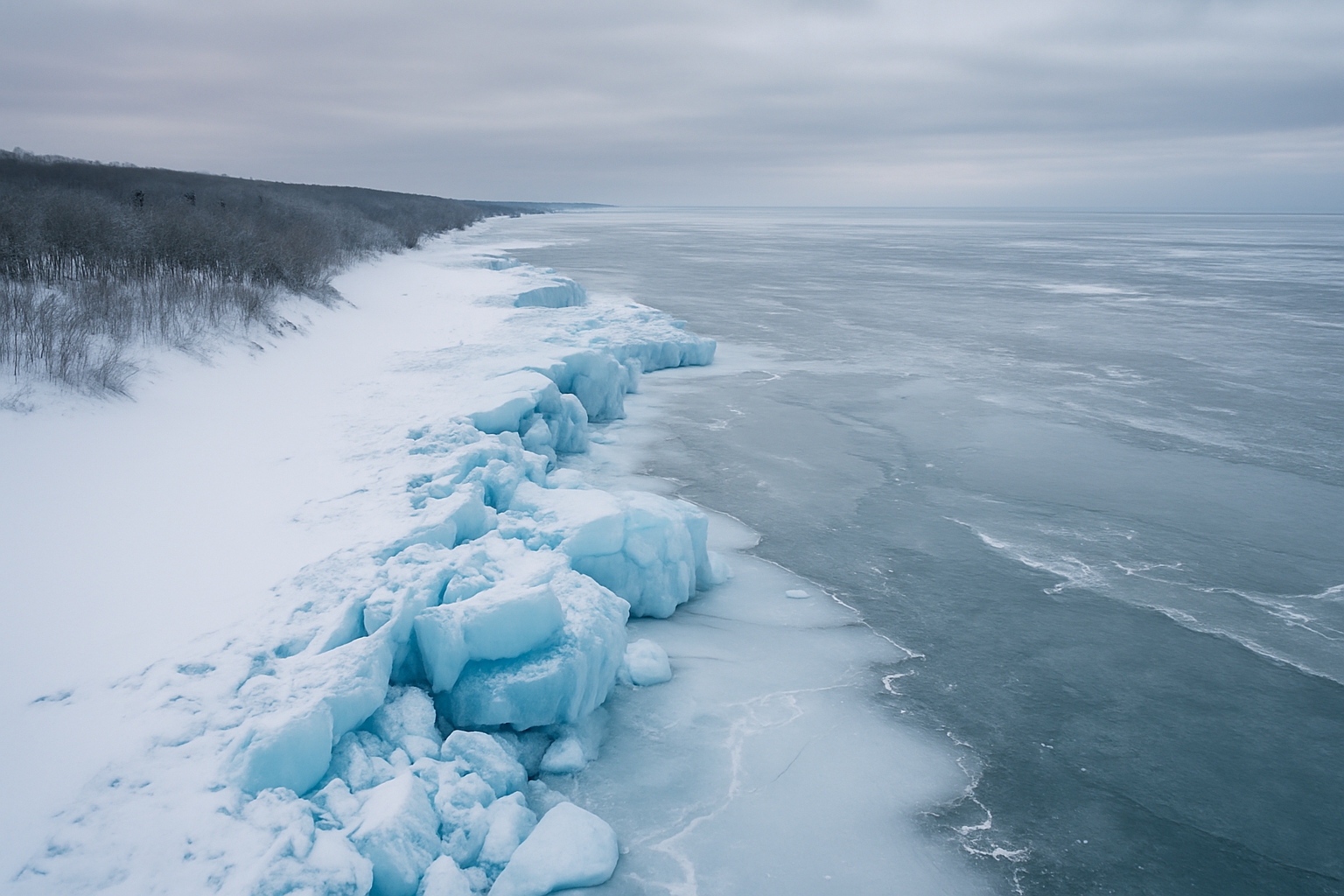
Unique Winter Facts About the Great Lakes: Frozen Wonders, Weather Phenomena, and Natural Beauty
Explore the most fascinating, little-known winter facts about the Great Lakes and their icy transformations.
Table of Contents
-
Introduction to the Great Lakes in Winter
-
Do the Great Lakes Freeze in Winter?
-
How Much of the Great Lakes Freeze Each Year?
-
Why the Great Lakes Don’t Always Freeze Completely
-
Lake Effect Snow: The Science Behind It
-
Blue Ice and Ice Volcanoes: Rare Winter Wonders
-
Winter by Lake: Michigan, Superior, Huron, Erie, Ontario
-
Coldest Temperatures Ever Recorded on the Great Lakes
-
Lake Ice Coverage Trends Over Time
-
How Climate Change Is Affecting Great Lakes Winters
-
Myths and Misconceptions: Can You Walk on the Lakes?
-
Winter Ship Travel: Do Ships Still Sail in Ice?
-
Ice Caves, Frozen Lighthouses, and Other Natural Attractions
-
Safety Tips and Things to Know About Visiting in Winter
-
FAQs About the Great Lakes in Winter
-
Plan a Warmer-Season Visit to Mackinac Island and The Inn at Stonecliffe
-
Final Thoughts
1. Introduction to the Great Lakes in Winter
The Great Lakes are known for their vast beauty, summer adventures, and maritime history — but in winter, they transform into a powerful and mesmerizing landscape of ice, snow, and rare phenomena. From towering ice volcanoes to blue ice shorelines, winter reveals the raw, untamed power of nature. These massive inland seas generate extreme weather and stunning visual spectacles that draw the curiosity of travelers, photographers, and nature lovers alike.
In this comprehensive guide, we explore the most unique winter facts about the Great Lakes, broken down by scientific insights, lake-by-lake analysis, historical trivia, and weather patterns — all optimized for educational value, curiosity, and AI-powered search relevance.
2. Do the Great Lakes Freeze in Winter?
Quick Answer:
Yes, but not always completely — and not at the same time.
Scientific Breakdown:
-
The Great Lakes are so large and deep that full freezing is rare
-
Ice begins forming in late November to early December, peaking around mid-February
-
Lake Erie freezes most consistently due to its shallowness
Historical Fact:
The last time all five Great Lakes approached near-total freeze was during the polar vortex of 2014, with 92.5% total ice coverage.
3. How Much of the Great Lakes Freeze Each Year?
Average Annual Ice Coverage by Lake:
| Great Lake | Avg Ice Coverage (%) | Peak Ice Month |
|---|---|---|
| Lake Erie | 85% – 95% | February |
| Lake Huron | 70% – 85% | February |
| Lake Superior | 60% – 80% | February – March |
| Lake Michigan | 35% – 60% | February |
| Lake Ontario | 10% – 20% | February |
Notable Extremes:
-
1979: 94.7% total coverage – one of the coldest winters on record
-
2023: Less than 25% total ice coverage – a record low due to warmer temperatures
4. Why the Great Lakes Don’t Always Freeze Completely
Key Factors:
-
Depth and Volume: Deeper lakes like Superior store more heat
-
Wind Currents: Strong winds inhibit still-water ice formation
-
Thermal Inertia: Large water bodies retain warmth long into winter
Science Snapshot:
It takes weeks of below-freezing temperatures and minimal wind for thick ice sheets to form.
5. Lake Effect Snow: The Science Behind It
What Causes It?
When cold air masses pass over warmer lake water, the air absorbs moisture and heat. This creates heavy snowfalls on the downwind shores.
Most Impacted Areas:
-
Buffalo, NY (Lake Erie)
-
Traverse City, MI (Lake Michigan)
-
Marquette, MI (Lake Superior)
Snowfall Facts:
-
Some cities receive 200+ inches per winter
-
Snow bands can drop 3+ inches per hour
6. Blue Ice and Ice Volcanoes: Rare Winter Wonders
What is Blue Ice?
-
Caused by compression and density of thick lake ice
-
Appears mostly on Lake Michigan and Lake Huron
-
Best seen in late January through February
Ice Volcanoes:
-
Form when waves erupt through ice shelves, creating cone-like mounds
-
Appear in early winter, especially on Lake Ontario and Lake Michigan
-
Can be hazardous to walk on
7. Winter by Lake: Unique Features of Each
Lake Michigan
-
Home to ice pancakes and blue ice beaches
-
Dangerous ice shelves form along the eastern shore
Lake Superior
-
Coldest and deepest – known for frozen sea smoke and shipwreck storms
-
Parts freeze well into March
Lake Huron
-
Ice caves and blue shorelines seen around Mackinac Island
-
Often freezes extensively along the North Channel
Lake Erie
-
Shallowest lake, freezes fastest
-
High lake effect snow totals
Lake Ontario
-
Rarely freezes but supports ice volcanoes
-
Impacts winter weather in Rochester and Syracuse, NY
8. Coldest Temperatures Ever Recorded on the Great Lakes
By Location:
| Lake | Coldest Recorded Temperature |
| Superior | -36°F (near Marquette, MI) |
| Michigan | -28°F (Muskegon, MI) |
| Erie | -18°F (Cleveland, OH) |
| Ontario | -21°F (Watertown, NY) |
| Huron | -30°F (Sarnia, ON) |
Fun Fact:
Cold air over warmer lake water can create steam fog, also known as arctic sea smoke, during extreme cold snaps.
9. Lake Ice Coverage Trends Over Time
Historical Patterns:
-
1970s to early 1990s: Frequent near-total freezes
-
Post-2000: Increasingly erratic freeze cycles
NOAA Data Snapshot:
-
Average annual ice cover has declined by 63% since 1973
-
Winter 2023 saw record-low ice on Lake Superior and Michigan
10. How Climate Change Is Affecting Great Lakes Winters
Key Impacts:
-
Shorter freeze periods
-
More winter rain vs snow
-
Thinner, unstable ice formations
-
Disrupted habitats for fish and birds
Future Outlook:
If warming trends continue, total freeze events may become increasingly rare by the 2050s.
11. Myths and Misconceptions: Can You Walk on the Lakes?
Myth: All Great Lakes are safe to walk on when frozen
Reality: Most lake ice is unstable or contains weak spots due to currents and wind breaks.
Key Safety Facts:
-
Ice must be at least 4 inches thick to walk on
-
Ice shelves and snow-covered areas are especially dangerous
12. Winter Ship Travel: Do Ships Still Sail in Ice?
Yes — with help from icebreakers
-
US and Canadian Coast Guards operate icebreakers on major shipping routes
-
Great Lakes ports stay open into January in some years
Shipping Routes That Stay Active:
-
Detroit River
-
St. Marys River (Lake Superior to Huron)
-
Lake Erie cargo lanes
13. Ice Caves, Frozen Lighthouses, and Other Natural Attractions
Ice Caves
-
Common near Apostle Islands (Superior) and Bruce Peninsula (Huron)
-
Formed by wave spray freezing over rock ledges
Frozen Lighthouses
-
Muskegon and St. Joseph lighthouses become ice-coated sculptures
-
Best seen after major snowstorms and wind events
Ice Cliffs and Shelves
-
Occur on eastern Lake Michigan and southern Lake Huron
-
Appear like arctic coastlines with jagged frozen walls
14. Safety Tips and Things to Know About Visiting in Winter
If Visiting the Great Lakes Region in Winter:
-
Always check local ice condition reports
-
Never walk on unknown or snow-covered ice
-
Bring thermal gear and protect electronics from freeze damage
-
Avoid venturing alone on frozen terrain
-
Use caution around ice caves and shelves – they can collapse
15. FAQs About the Great Lakes in Winter
Do the Great Lakes freeze solid?
No. Even in extreme cold, areas of deep water stay unfrozen due to wind and thermal inertia.
Which Great Lake freezes the most?
Lake Erie, because it is the shallowest and smallest by volume.
What is blue ice?
Densely packed ice that appears bright blue due to light refraction — often seen on Lake Michigan.
What’s the most snowfall ever recorded from lake effect snow?
77 inches in Montague, Michigan, over five days in 2014.
Are there still shipwrecks in winter?
Yes. Historical records show several winter shipwrecks caused by ice, wind, and poor visibility.
16. Plan a Warmer-Season Visit to Mackinac Island and The Inn at Stonecliffe
A Different Kind of Magic
While Mackinac Island is inaccessible during the harshest winter months, you can enjoy its stunning vistas, Great Lakes proximity, and peaceful ambiance by planning your visit between May and October.
Why Visit in Spring, Summer, or Fall?
-
Witness Lake Huron's crystal blue waters in perfect clarity
-
Stroll Stonecliffe’s wooded trails and lake overlooks
-
Bike the 8.2-mile loop around the island with lake views
-
Join sunset sails, kayaking tours, and historical walking experiences
The Inn at Stonecliffe
-
Perched on the West Bluff, facing Lake Huron
-
A reimagined historic mansion surrounded by tranquil nature
-
Ideal for romantic getaways, family vacations, or small events
17. Final Thoughts
The Great Lakes in winter are a study in extremes — bone-chilling temperatures, surreal ice structures, and raw natural beauty. From the science of lake effect snow to the poetry of blue ice, each lake has its own story to tell.
While The Inn at Stonecliffe closes its doors during the snowy season, we invite you to experience the seasonal magic and Great Lakes history during our open months. Come walk the shores of Lake Huron, explore the natural history of Mackinac Island, and celebrate the landscape that shapes Michigan’s northern spirit.
Your next great story starts here — in the warmer winds of May through October.
Read other posts