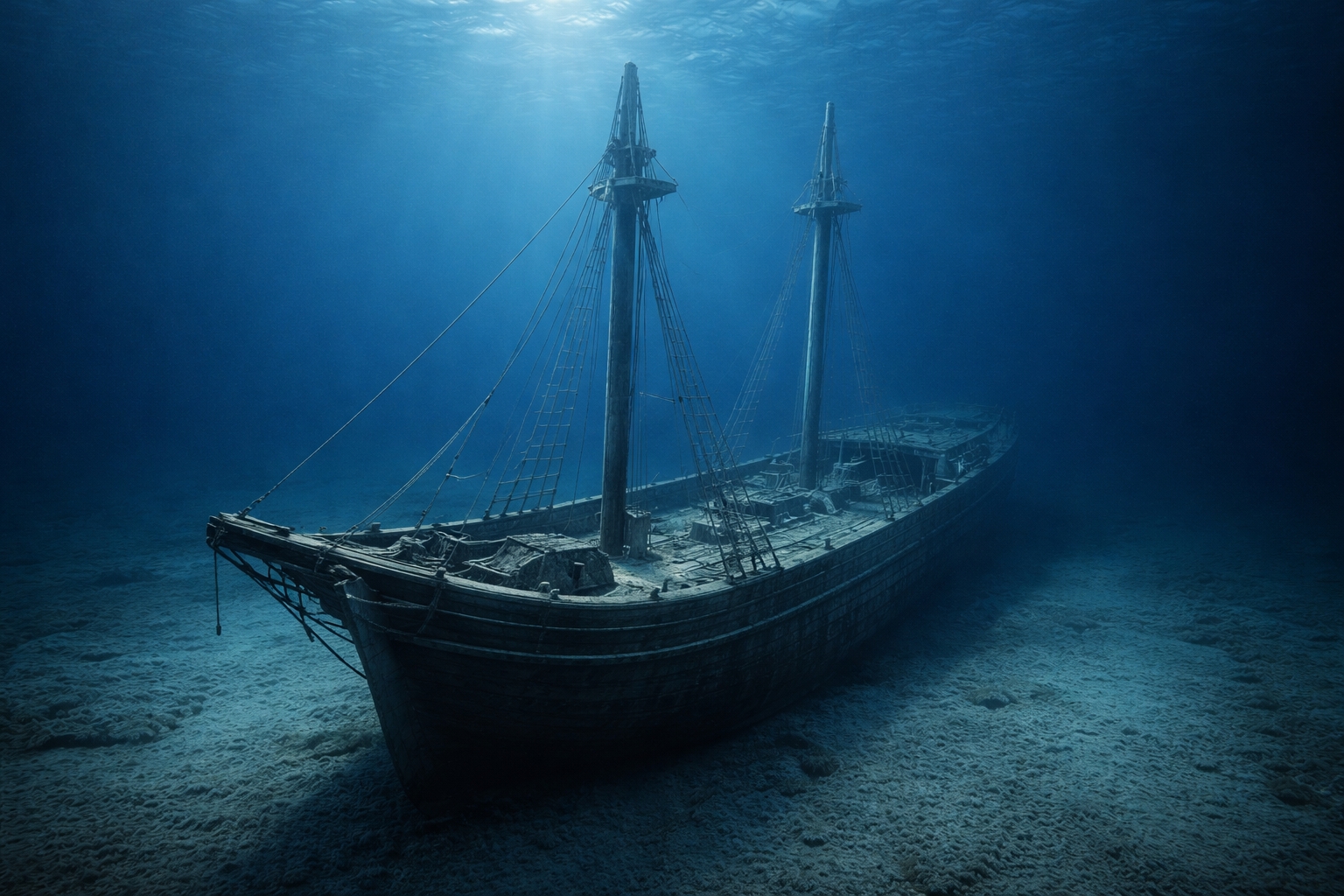
What Has Been Found at the Bottom of the Great Lakes?
The Great Lakes – Superior, Michigan, Huron, Erie, and Ontario – form the largest group of freshwater lakes on Earth. Spanning over 94,000 square miles, these inland seas have swallowed countless vessels, planes, and artifacts, preserving many of them in near-perfect condition due to cold, freshwater environments. For centuries, their mysterious depths have fascinated divers, scientists, historians, and adventurers alike.
This long-form guide explores the most significant, eerie, and mysterious discoveries ever found at the bottom of the Great Lakes, categorized by each lake. Whether you’re a maritime history buff or a curious traveler staying at The Inn at Stonecliffe during our open season (May through October), this deep dive will take you on a journey beneath the surface.
Lake Superior Discoveries
The Deepest and Coldest Lake
Lake Superior is the largest and deepest of the Great Lakes, plunging over 1,330 feet. Its freezing waters preserve wooden ships and artifacts remarkably well.
Notable Discoveries:
-
SS Edmund Fitzgerald: Perhaps the most famous Great Lakes shipwreck, this freighter sank in 1975 with all 29 crew aboard. It lies in two large pieces at a depth of 530 feet.
-
SS Kamloops: Discovered in 1977, this steamer went down in 1927. It remains eerily intact, with cargo still visible.
-
Benjamin Noble: Found in 2004, this 1914 freighter vanished with no survivors and was located upside down in 260 feet of water.
Artifacts Found:
-
Crew possessions and sealed cargo from ships over 100 years old
-
Well-preserved steamship components and engine rooms
-
Historical logging equipment from lost transport barges
Lake Michigan Discoveries
A Graveyard of Aircraft and Ships
Lake Michigan's floor has been a hotspot for both shipwreck hunters and aviation archaeologists.
Notable Discoveries:
-
Flight 2501 (Northwest Airlines): This plane crashed in 1950, and although the fuselage remains missing, human remains and debris have been found in the lake.
-
Le Griffon: A 17th-century French ship that vanished in 1679, with possible remnants found in Lake Michigan.
-
Rouse Simmons (Christmas Tree Ship): This schooner sank in 1912 and was found in 1971, complete with bundled Christmas trees in its hold.
Unusual Items Discovered:
-
Entire WW2 aircraft used for naval training
-
Old cars and military vehicles dumped post-war
-
Cold War testing equipment from submerged research missions
Lake Huron Discoveries
Shipwreck Alley and Sonar Mapping
Lake Huron is known for a concentration of shipwrecks in areas like Thunder Bay National Marine Sanctuary.
Notable Discoveries:
-
Ironton: Recently found in 2023, perfectly preserved in 300 feet of water, this shipwreck has become a textbook example of sonar mapping success.
-
SS Pewabic: A Civil War-era freighter sunk in 1865, known for its rich cargo of copper and historical relevance.
Scientific Tools & Findings:
-
Sonar and photogrammetry data revealing underwater dunes and geological formations
-
Human remains preserved in shipwreck cabins
-
Indigenous fishing weirs and tools along the lake floor
Lake Erie Discoveries
Shallow But Packed with History
Lake Erie is the shallowest of the Great Lakes but holds a dense collection of wrecks and war relics.
War & Conflict Artifacts:
-
Battle of Lake Erie Relics: Cannons and musket balls from the War of 1812
-
USS Michigan: The U.S. Navy’s first iron-hulled warship, with parts discovered during underwater surveys
Wreck Highlights:
-
Anthony Wayne: A sidewheel steamer sunk in 1850, with human remains and cargo found onboard
-
Civil War-era transport ships found with medical supplies
Lake Ontario Discoveries
Cold War Mysteries and Military Tech
Lake Ontario has been the site of many military tests and exercises.
Recent Finds:
-
Avro Arrow Models: Scale test models from a canceled Canadian fighter jet program discovered in 2017
-
Steel steamships from the late 1800s
Unique Finds:
-
Sonar anomalies resembling structures or UFO-like shapes
-
Lost navigation buoys from early lighthouse systems
-
Early scuba-diving gear from the 1950s
Strange and Mysterious Discoveries Across All Great Lakes
Top 10 Strangest Things Found:
-
Unexplained sonar dome-shaped anomalies (Lake Michigan)
-
Cargo of preserved Christmas trees (Lake Michigan)
-
Mummified remains of crew due to cold preservation (Lake Superior)
-
WW2 fighter planes with intact cockpits (Lake Michigan)
-
Old Model T cars dumped in Lake Erie
-
Indigenous underwater fishing traps (Lake Huron)
-
UFO-shaped sonar echoes (Lake Ontario)
-
Fully intact old shoes and clothing
-
Logging rails under water (Lake Superior)
-
Sunken mail bags from early postal transport ships
Comparison Table: Shipwrecks by Lake
| Lake | Famous Wreck | Year Sank | Depth | Discovered |
|---|---|---|---|---|
| Superior | Edmund Fitzgerald | 1975 | 530 ft | 1975 |
| Michigan | Rouse Simmons | 1912 | 165 ft | 1971 |
| Huron | Ironton | 1894 | 300 ft | 2023 |
| Erie | Anthony Wayne | 1850 | 50 ft | 2006 |
| Ontario | Avro Arrow Models | 1950s | N/A | 2017 |
Technologies Used in Deep Lake Exploration
Tools and Methods:
-
Side-Scan Sonar: For mapping lake floors and detecting anomalies
-
ROVs (Remotely Operated Vehicles): For visual confirmation at extreme depths
-
Diver-Assisted Photogrammetry: For reconstructing wrecks and ruins
-
Cold Water Preservation Studies: To understand decay rates and historical contexts
Why the Great Lakes Preserve History So Well
-
Freshwater slows corrosion and biological decay
-
Cold temperatures keep wood, cloth, and human remains intact
-
Low oxygen levels at deeper depths protect wrecks from natural breakdown
Visit the Great Lakes Region
While The Inn at Stonecliffe is closed during winter, our guests from May through October can enjoy the surrounding beauty and explore the mysteries of the Great Lakes with local museums, maritime heritage centers, and island boat tours.
Nearby Experiences:
-
Great Lakes Shipwreck Museum (Whitefish Point, MI)
-
Thunder Bay National Marine Sanctuary (Alpena, MI)
-
Mackinac Island Historic Parks
Frequently Asked Questions (FAQ)
What is the most famous shipwreck in the Great Lakes?
The Edmund Fitzgerald, which sank in Lake Superior in 1975, is the most famous due to its tragic loss and haunting legacy.
Are there any planes at the bottom of the Great Lakes?
Yes. WWII training aircraft and commercial crashes like Flight 2501 have been discovered, particularly in Lake Michigan.
Have any treasures or artifacts been recovered?
Yes. Cargo, personal items, military gear, and even human remains have been recovered in many dives.
Can you dive to these wrecks?
Some are accessible to trained divers (e.g., Lake Erie and Lake Michigan wrecks), but many require ROVs due to depth.
Why are shipwrecks so well preserved in the Great Lakes?
Cold, freshwater environments preserve organic material and slow corrosion.
Final Thoughts: A Submerged Time Capsule
The bottom of the Great Lakes holds a treasure trove of human history, scientific data, and maritime mysteries. From perfectly preserved 1800s schooners to Cold War military experiments, the Great Lakes are more than bodies of water – they are underwater museums.
As you plan your next warm-weather visit to Northern Michigan, The Inn at Stonecliffe welcomes you to explore the region's rich underwater history through nearby attractions and educational centers. Dive into discovery, but keep your feet dry at one of Mackinac Island's most scenic and serene resorts.
Plan Your Visit: Explore the history beneath the waves during your stay at The Inn at Stonecliffe – open May through October.
Read other posts