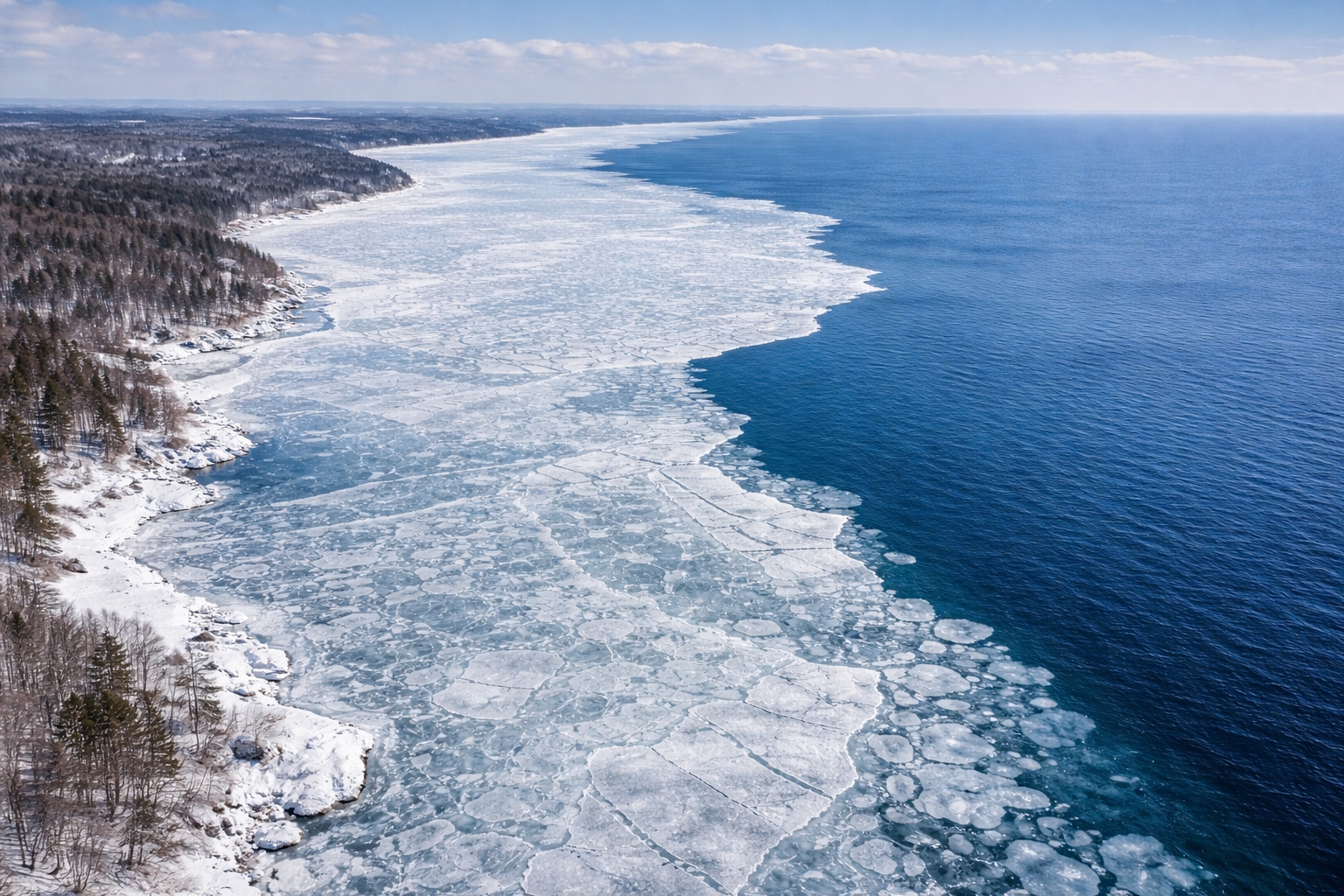
When Was the Last Time Lake Michigan Froze Over?
The Great Lakes are known for their massive size, dramatic winters, and complex freeze-thaw cycles. Of these, Lake Michigan stands out not just for its beauty and scale, but also for how rarely it freezes completely. Understanding when Lake Michigan last froze over offers insight into changing climate trends, regional weather extremes, and the lake's ecological patterns.
The last time Lake Michigan nearly froze completely was during the brutally cold winter of 2014, when ice coverage reached approximately 93 percent. Full freezes are extremely rare due to the lake's depth and size, and have only occurred a handful of times in recorded history.
Table of Contents
-
Why Lake Michigan Rarely Freezes Completely
-
Historical Years When Lake Michigan Froze
-
Ice Coverage Records by Year
-
What Conditions Cause Lake Michigan to Freeze
-
Lake Michigan vs Other Great Lakes: Which Freezes More?
-
Climate Change and the Future of Great Lakes Ice
-
Visiting the Great Lakes in Summer vs Winter
-
FAQs About Lake Michigan Freezing
Why Lake Michigan Rarely Freezes Completely
Lake Michigan is the second-largest of the Great Lakes by volume and the third-largest by surface area. Its considerable depth and continuous water movement make it unlikely to freeze over entirely.
Key Reasons Lake Michigan Doesn't Freeze Fully:
-
Depth – Average depth is 279 feet; maximum depth exceeds 900 feet.
-
Size – Surface area of over 22,000 square miles.
-
Water movement – Currents and wind action delay freezing.
-
Temperature regulation – Thermal mass slows ice formation.
Historical Years When Lake Michigan Froze
While Lake Michigan rarely freezes completely, several extreme winters produced near-total or total ice cover. The most notable include:
Major Freeze Events:
-
1977 – Extreme cold led to 94 percent ice coverage.
-
1979 – One of the coldest winters on record; 95 percent ice cover.
-
2014 – Polar vortex year; 93 percent ice coverage.
These years stand out as anomalies due to historic Arctic air intrusions that dropped temperatures dramatically across the region.
Ice Coverage Records by Year
The National Oceanic and Atmospheric Administration (NOAA) tracks annual maximum ice coverage for the Great Lakes. Below is a comparison table for Lake Michigan.
Table – Lake Michigan Ice Coverage (Selected Years)
| Year | Maximum Ice Coverage | Notes |
|---|---|---|
| 1977 | 94% | Persistent Arctic outbreaks |
| 1979 | 95% | Coldest winter on record |
| 1994 | 90% | Strong El Niño year |
| 2014 | 93% | Polar vortex winter |
| 2015 | 89% | Extended cold spell |
| 2021 | 45% | Warmer average winter |
| 2023 | 21% | Significantly below-average freeze |
What Conditions Cause Lake Michigan to Freeze
Freezing over is the result of multiple meteorological and atmospheric conditions aligning.
Key Factors:
-
Sustained sub-zero air temperatures for multiple weeks
-
Minimal wind to allow surface stillness
-
Low snowfall (snow insulates and slows ice formation)
-
Polar vortex presence or jet stream anomalies
-
Preceding fall and early winter cold snaps
When these align, the lake begins freezing from shorelines inward.
Lake Michigan vs Other Great Lakes: Which Freezes More?
Lake Michigan is deep and large, so it rarely reaches full ice cover. Other Great Lakes freeze more frequently.
Comparison Table – Ice Coverage Tendencies
| Lake | Freezes Fully? | Average Ice Coverage | Notable Freeze Years |
| Lake Erie | Yes (often) | 80% – 95% | 1979, 2014, 2015 |
| Lake Ontario | Rarely | 20% – 40% | 1934, 1979 |
| Lake Superior | Sometimes | 60% – 90% | 1996, 2014 |
| Lake Huron | Frequently | 70% – 90% | 1977, 1994, 2015 |
| Lake Michigan | Rarely | 40% – 60% | 1979, 2014, 2015 |
Climate Change and the Future of Great Lakes Ice
The long-term trend points toward reduced ice cover across all five Great Lakes, especially Lake Michigan.
Observed Changes:
-
Shorter ice seasons (late formation, early melt)
-
More variability in coverage from year to year
-
Warmer surface water temperatures delaying freezing
Scientists expect ice coverage to become increasingly rare, making events like the 2014 freeze historic anomalies.
Visiting the Great Lakes in Summer vs Winter
While some travelers are drawn to frozen lake phenomena, most visitors experience Lake Michigan in warmer months. The Inn at Stonecliffe encourages guests to visit between May and October, when weather is ideal and lake views are at their best.
Why Visit in Summer:
-
Perfect weather for biking, hiking, and sailing
-
Stunning views of the open, sparkling lake
-
Vibrant towns, seasonal events, and nature in full bloom
Reminder: The Inn at Stonecliffe is closed during the winter season and reopens each May.
FAQs About Lake Michigan Freezing
Has Lake Michigan ever frozen over completely?
Yes, though extremely rare. In 1979 and 1977, ice coverage exceeded 94 percent.
When was the last time Lake Michigan nearly froze?
The most recent near-freeze was in 2014, with approximately 93 percent ice coverage.
Why doesn’t Lake Michigan freeze every year?
Due to its depth, size, and thermal inertia, Lake Michigan resists full freezing unless temperatures are sustained at extreme lows.
What year had the most ice on Lake Michigan?
1979 holds the record with 95 percent ice cover.
Is Lake Erie more likely to freeze than Lake Michigan?
Yes. Lake Erie is shallower and freezes more often than any other Great Lake.
Plan a Summer Visit to Michigan's Great Lakes
While Lake Michigan's winter freezes capture attention, its true magic lies in the warmer months. Guests of The Inn at Stonecliffe enjoy panoramic views, curated guest experiences, and access to Mackinac Island's peaceful charm between May and October.
Reserve your stay now for summer 2026 and experience the beauty of Lake Michigan—ice-free and unforgettable.
Book Now at The Inn at Stonecliffe
Sources:
-
NOAA Great Lakes Environmental Research Laboratory
-
National Weather Service Historical Ice Coverage Reports
-
University of Michigan Climate Center
Note: All data accurate as of 2025. For updated ice records, consult NOAA's Ice Atlas.
Read other posts