Types of Ice on the Great Lakes: A Complete Freshwater Ice Guide
The Great Lakes form some of the most complex freshwater ice systems in the world. Unlike small inland lakes that freeze evenly, the Great Lakes produce many different types of ice at the same time due to their size, depth, wind exposure, and wave energy. Understanding the types of ice on the Great Lakes helps explain winter shipping challenges, shoreline protection, ecosystem behavior, and long-term climate patterns. This guide explains how Great Lakes ice forms, the major ice types found across the lakes, and why these formations matter, with clear explanations designed for both casual readers and research-driven audiences.
How Ice Forms on the Great Lakes
Ice formation on the Great Lakes begins when surface water cools to approximately 39°F and sinks, allowing colder water to rise. Once the entire upper layer reaches freezing temperature, ice crystals begin to form at the surface.
Several factors make Great Lakes ice formation unique:
-
Freshwater freezes at a higher temperature than saltwater
-
Constant wave action disrupts uniform freezing
-
Wind redistributes ice across vast distances
-
Large surface area creates multiple freeze zones
-
Depth allows heat to remain stored below the surface
As a result, the lakes rarely freeze evenly. Multiple ice types often exist simultaneously within the same region.
Freshwater Ice Compared to Ocean Ice
Freshwater ice behaves differently from ocean ice due to the absence of salt.
Freshwater ice characteristics:
-
Freezes at 32°F
-
Forms clearer and stronger ice crystals
-
Breaks into larger plates
-
Lacks internal brine channels
Ocean ice characteristics:
-
Freezes below 32°F
-
Contains salt pockets
-
Is more flexible and porous
-
Often appears layered or slushy
Because the Great Lakes are freshwater, their ice tends to fracture dramatically under wind pressure, creating dynamic ice fields rather than soft slush.
Frazil Ice
Frazil ice is usually the first ice type to appear on the Great Lakes. It forms when supercooled water creates tiny, needle-like ice crystals suspended in turbulent water.
Key characteristics of frazil ice:
-
Appears as floating slush or snow
-
Forms during early winter cold snaps
-
Common in rough, fast-moving water
Frazil ice does not immediately create a solid surface but often evolves into other ice types.
Grease Ice
Grease ice forms when frazil ice accumulates at the surface, creating a thin, slick layer that looks oily or matte.
Grease ice features:
-
Thin and soupy consistency
-
Dampens wave motion
-
Dark, glossy appearance
This ice type often signals the transition from open water to more stable ice conditions.
Shuga Ice
Shuga ice forms when frazil or grease ice clumps together into soft, sponge-like masses resembling wet snow.
Shuga ice characteristics:
-
Lumpy, granular texture
-
Floats loosely on the surface
-
Common in calmer nearshore zones
Shuga ice may later consolidate into larger formations as temperatures remain cold.
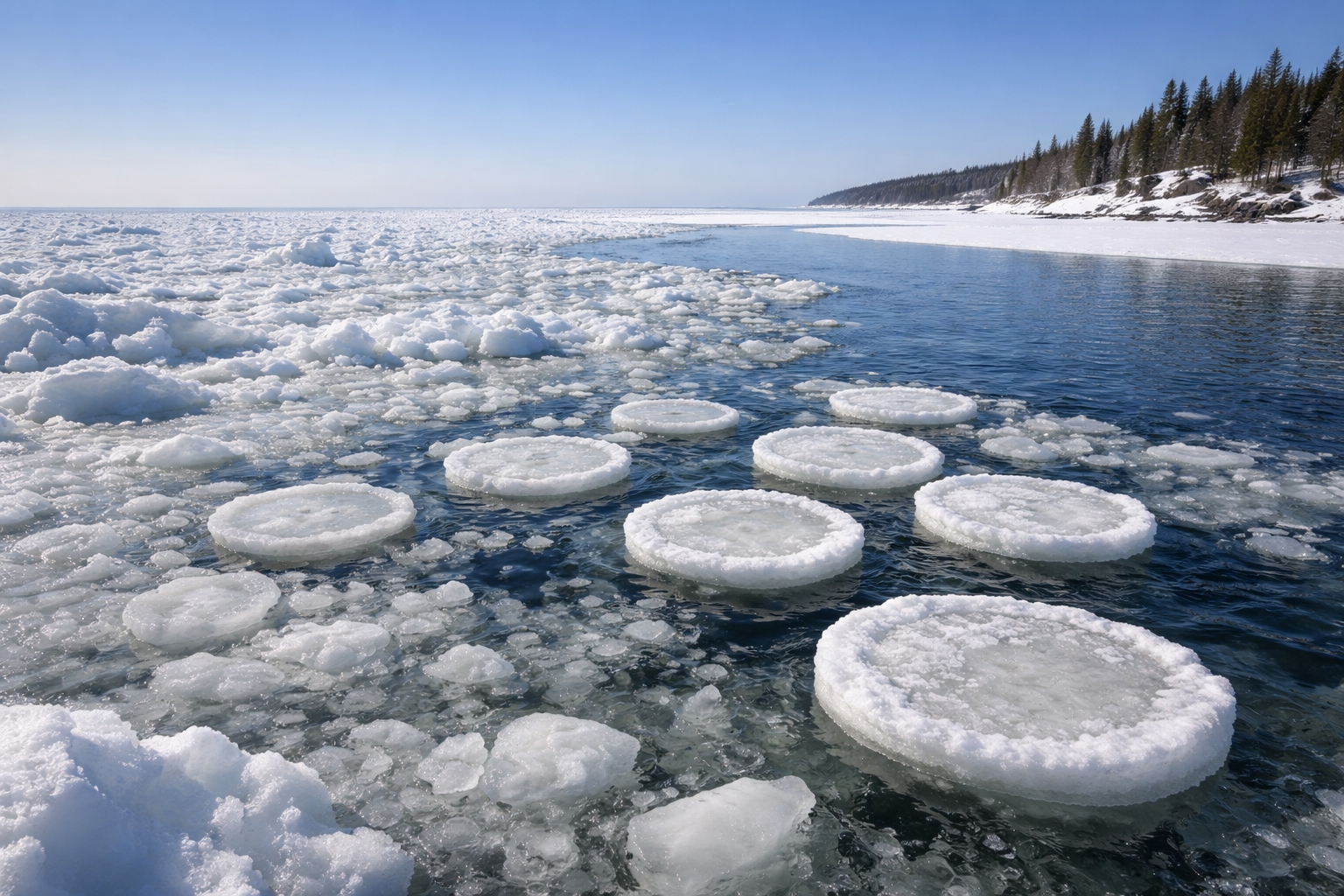
Pancake Ice
Pancake ice is one of the most recognizable Great Lakes ice formations. It forms when wave action rounds shuga or grease ice into circular disks.
Pancake ice traits:
-
Round or oval shapes
-
Raised rims from collisions
-
Sizes ranging from inches to several feet
Pancake ice indicates active wave energy combined with freezing conditions and often merges into larger ice fields.
Brash Ice
Brash ice consists of broken ice fragments created when larger ice sheets fracture due to wind, waves, or temperature shifts.
Brash ice commonly appears:
-
Along shorelines
-
In shipping lanes
-
After storms or rapid warming events
Brash ice can pile up into ridges and create navigation hazards.
Sheet Ice
Sheet ice forms when calm conditions allow water to freeze into a continuous, flat surface.
Sheet ice characteristics:
-
Smooth, uniform appearance
-
Often transparent when newly formed
-
Most common in protected bays
On the Great Lakes, sheet ice is often temporary due to wind exposure.
Pack Ice
Pack ice refers to floating ice that moves freely under the influence of wind and currents rather than remaining anchored to shore.
Pack ice features:
-
Highly mobile and dynamic
-
Forms drifting ice fields
-
Compresses into pressure ridges
Pack ice is responsible for much of the visible movement seen in winter lake imagery.
Fast Ice
Fast ice is ice that remains attached to the shoreline, lakebed, or fixed structures.
Fast ice characteristics:
-
Stationary compared to pack ice
-
Common in shallow nearshore areas
-
Helps protect shorelines from wave erosion
Fast ice often lasts longer than surrounding ice because it is shielded from wind-driven movement.
Anchor Ice
Anchor ice forms beneath the water surface when ice crystals attach to submerged objects such as rocks, plants, or the lake bottom.
Anchor ice impacts include:
-
Altered aquatic habitats
-
Disruption of water intakes
-
Indicators of extreme cold conditions
Although less visible, anchor ice plays an important ecological role.
Ice Ridges and Ice Rafting
Ice ridges form when ice sheets collide and pile upward or downward.
Ice ridge characteristics:
-
Jagged, uneven formations
-
Can reach significant height
-
Common during high-wind events
Ice rafting occurs when one ice sheet slides over another, creating layered ice structures.
Ice Formation Differences Across the Great Lakes
Each Great Lake develops ice differently due to variations in depth, geography, and exposure.
Lake Superior:
-
Coldest Great Lake
-
Extensive ice in bays
-
Rarely freezes completely
Lake Michigan:
-
Moderate ice coverage
-
Strong wind influence
-
Frequent pancake and pack ice
Lake Huron:
-
Complex shoreline
-
Often high overall ice coverage
-
Large fast ice zones in bays
Lake Erie:
-
Shallowest Great Lake
-
Freezes most consistently
-
Thick sheet ice common
Lake Ontario:
-
Deep and relatively warm
-
Least ice coverage
-
Ice largely confined to shorelines
Great Lakes Ice and Climate Trends
Great Lakes ice coverage varies dramatically from year to year. Scientists track ice extent using satellite imagery, buoy data, and aerial observation.
Observed trends include:
-
Long-term decline in average ice cover
-
Increased variability between winters
-
Shorter ice seasons overall
Ice cover affects evaporation rates, lake-effect snow, shoreline erosion, and ecosystem stability.
Why Great Lakes Ice Types Matter
Different ice formations influence:
-
Commercial shipping routes
-
Shoreline erosion and protection
-
Fish spawning habitats
-
Regional climate feedback loops
Understanding ice behavior helps scientists, policymakers, and communities plan for changing lake conditions.
Seasonal Perspective for Great Lakes Travelers
While ice dominates winter discussions, most Great Lakes travel occurs during warmer months. Destinations such as Mackinac Island operate seasonally, with properties like The Inn at Stonecliffe welcoming guests from May through October.
Learning how winter ice shapes the lakes adds context to summer experiences, from calmer waters to protected shorelines formed by months of ice coverage.
Frequently Asked Questions About Great Lakes Ice
What types of ice form on the Great Lakes?
The most common types include frazil ice, grease ice, shuga ice, pancake ice, brash ice, sheet ice, pack ice, fast ice, and anchor ice.
Which Great Lake freezes the most?
Lake Erie typically experiences the highest ice coverage because it is the shallowest Great Lake.
Why does Great Lakes ice move so much?
Wind and currents push floating ice across the lake surface, causing constant motion and collisions.
Is freshwater ice stronger than ocean ice?
Freshwater ice is generally clearer and stronger because it does not contain salt.
How is Great Lakes ice monitored?
Ice coverage is tracked using satellites, weather buoys, and aerial surveys.
When was the last time Lake Michigan Froze?
Learn more here: When was the last time Lake Michigan Froze Over?
Does Lake Huron Freeze Solid?
Learn more here: Does Lake Huron Freeze Solid in the Winter?
Planning Ahead
Understanding the types of ice on the Great Lakes reveals how dynamic these freshwater seas truly are. Each ice formation reflects a balance of temperature, wind, and water movement that shapes the landscape long after winter ends.
Explore seasonal travel inspiration and Mackinac Island experiences at
https://www.theinnatstonecliffe.com